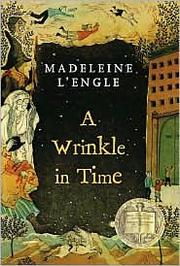
A Wrinkle in Time
2,055-word summary 9 min read 256 pages in the book
- First published
- 1962
- Publisher
- Farrar, Straus and Giroux
- Pages
- 256
- ISBN
- 9780312367541
- Series
- A Wrinkle in Time Quintet (#1)
Reading options
What's inside (9 sections)
I first met this book at ten and remembered only the hot chocolate and the scary brain. Rereading as an adult, I was surprised how odd and brave it is. Madeleine L'Engle published it in 1962 with Farrar, Straus and Giroux after years of rejections. It won the Newbery Medal. My reading follows the 256 page Square Fish paperback. It is short, strange, full of physics talk and prayer, and it trusts kids with big fears about conformity and missing parents.
Meg Murry is fourteen, awkward, bad at school on purpose, quick to fight. Her brother Charles Wallace is five and eerie and kind, speaking in full sentences and reading minds. Her mother is a microbiologist with red hair and equations on the stove. Her father, a physicist, vanished while doing secret government work on the tesseract. Twins Sandy and Dennys fit in fine and tease Meg. Calvin O'Keefe, a tall high school athlete from a crowded house, joins them because he feels called.
Mrs Whatsit and the storm
It starts on a dark and stormy night, the famous first line that is both mocked and perfect. A tramp knocks. Mrs Whatsit, in layers and scarves, asks for food and talks about the tesseract. She steals sheets. She smells of dust. Meg thinks she is mad. Charles Wallace does not. He meets Mrs Who, who speaks in quotations in many languages, and Mrs Which, who barely appears and booms when she does.
Mrs Whatsit tells the kids their father is behind the darkness. She shows them a tessaract by folding her skirt. L'Engle explains it as a wrinkle that lets you skip across space without traveling the distance. The image is homely: an ant walking a fold instead of the whole cloth. Meg, who fails geometry, gets it at once because she wants her father back.
They go. Mrs Whatsit turns into a winged creature and carries them through the tesseract. The first stop is Uriel, a planet with marble seers and song. Mrs Whatsit sings with them. Meg feels light and safe. Then they see the Dark Thing, a cloud of hate around Earth, pulsing. Charles Wallace names it. The joy drains. They must go to Camazotz, where Mr Murry is held, past the shadow.
This early flight is my favorite part. L'Engle lets wonder sit beside dread. The Mrs Ws bicker, lose glasses, quote Shakespeare and the Bible and Goethe in the same breath. Calvin holds Meg's hand and does not let go when she cries. No one explains everything, which annoyed me at ten and pleased me now.
Camazotz
Camazotz is suburbia turned evil. Identical gray houses. Identical mothers calling identical children. One paperboy bouncing one ball in perfect time. A central brain called IT throbs in a dark building and sets the pulse. Everyone is happy because no one chooses. Charles Wallace walks straight up to a boy bouncing and tries to free him with mind talk. IT grabs him through the boy's eyes.
Meg, Calvin and Mr Murry, once found, try to rescue Charles Wallace and fail badly. Mr Murry appears in a glass column, bearded and thin, still in his lab clothes. He does not know how long he has been held. He tessars them away from Camazotz in panic to a two-dimensional planet where they nearly die flat. Mrs Whatsit rescues them and takes them to the Happy Medium, who shows them Earth under the shadow and their mother waiting with soup.
Meg is furious at her father here, and I was glad. He left for work, got caught, and now wants to punch IT. Calvin has to remind Meg that anger is useful but not a plan. They return to Camazotz with gifts: Mrs Who's spectacles, Mrs Whatsit's love, Mrs Which's command to go alone. Meg must go alone because she loves Charles Wallace best and IT does not understand love.
Aunt Beast helps first. On Ixchel, blind tentacled creatures heal Meg with music and food after the two-dimensional freeze burned her. Aunt Beast has no eyes but sees Meg kindly. Meg learns to trust touch and voice. Those ten pages are gentle and weird and necessary before the dark.
IT
The final confrontation is short and hard. Meg finds Charles Wallace in IT's chamber, sitting blank, saying IT is good and mother is a joke. She tries math. She tries shouting. She tries Mrs Who's glasses. IT pulses. Charles Wallace hits her. She remembers Mrs Whatsit's gift is love she already has. She tells Charles Wallace she loves him even though he is difficult and different and hers. She lists his babyhood, his drool, his wrong words for dinner. IT cannot parse stubborn particular love. Charles Wallace blinks, vomits, cries, and runs.
They tessar home through father and through love, landing in the twins' vegetable garden. Mr Murry is thin and shamed. Mrs Murry holds them. Calvin stays for dinner. Charles Wallace eats a huge meal and falls asleep on Meg's lap. The Mrs Ws slip away with a rustle. No parade. Just soup and beds.
What shines is Meg. She is not brave in the noble way. She stamps, sulks, hits her brother, hates her hair and braces. Her gift is not math but refusal to pretend. L'Engle lets a girl who is bad at school save the day by knowing one boy exactly. Calvin is sweet without being soft. Charles Wallace is creepy and lovable. The Mrs Ws feel like church ladies who wandered into physics.
What creaks is the middle lecture. Mr Murry explains the tesseract twice. Mrs Who quotes too long. The Happy Medium shows visions that repeat what we know. At 256 pages the book still has a slow twenty in the center. Readers who want hard science will also wobble. The tesseract is more prayer than physics, and L'Engle mixes Einstein with hymns without apology. I liked the mix, but friends who want rules may bristle.
Calvin, the twins, and home
Calvin O'Keefe earned a second look from me on reread. He is the popular boy from a big crowded house where no one listens, and he follows the Murrys because Mrs Whatsit tells him to come and because Meg's anger feels honest. He holds Meg's hand through the first tessar, figures out Camazotz house rhythms faster than Mr Murry does, and tells Meg she is pretty when she is crying and snotty. That kindness never turns into rescue fantasy. He fails too. He cannot keep Charles Wallace back. He cannot talk Mr Murry out of panicked jumps. He waits with Mrs Murry's letter in his pocket and reads it twice. His ordinariness steadies the weird.
Sandy and Dennys matter by staying home. They play ball, eat stew, tease, and keep the house normal so Meg has somewhere to return. L'Engle gives them little page time but clear function. Not every child is called to stars. Some keep dinner warm. Their normality also sharpens Charles Wallace. The twins fit school and teams. Charles Wallace fits no room except the kitchen with his mother. That contrast lets L'Engle say different minds need different doors without speeches.
Mrs Murry in the lab deserves praise too. She writes letters to a missing husband, feeds four kids, runs experiments, and answers the phone with calm. When the children return she does not ask for explanations first. She makes soup, checks fevers, and lets Meg sleep. That practical love is the book's quiet thesis. The Mrs Ws bring wonder. Mrs Murry brings supper. Both save.
Uriel, Ixchel, and the Happy Medium
I wanted more time on Uriel because those pages glow. The marble seers who sing light, the flowers that breathe, Mrs Whatsit flying as a white mare with rainbow wings, all feel like Narnia crossed with a hymn. Meg sees the Dark Thing from there as a stain, and the beauty makes the stain worse. L'Engle does not explain why evil exists. She shows a song with a hole in it. That image stayed with me longer than any tesseract diagram.
Ixchel heals the hurt Uriel cannot prevent. Aunt Beast has tentacles, no eyes, and a voice like low music. She bathes Meg, feeds her turkey with broth, and talks about sight as small sense. Meg, who trusts only what she can argue, learns to trust being held. Calvin sleeps nearby. Mr Murry paces. The healing takes chapters, not paragraphs, which I respected. Burned lungs from flat planets do not clear with a pep talk.
The Happy Medium with her crystal ball shows the danger of looking without going. She shows Earth, shows the Murrys' mother waiting, shows the shadow spreading. Meg wants to stay and watch. Mrs Which scolds. Watching is not helping. That rebuke hit me as an adult who follows news feeds. L'Engle wrote in 1962 about a temptation we now carry in pockets. The Medium is kind, funny, and firm. Look, then go.
The conformity satire also reads dated and fresh at once. Camazotz as endless identical houses felt like a 1950s fear of communism and suburbs. Now it reads like feeds and metrics. IT promising rest from choice sounds like every app that offers to decide dinner. That update happens without changing a word, which is a mark of a live book.
School, pride, and being odd
Meg's school life hit me harder as an adult. She gets sent to the principal for fighting, called dumb for not showing work, and told to be normal by teachers who mean well. She answers back and gets detention. Charles Wallace gets called idiot by boys and answers with eerie calm that scares them more. L'Engle, who felt out of step as a child herself, writes school as a small Camazotz. Same desks. Same pulse. The Murrys survive by holding home as base. Mrs Murry tells Meg to do things her way. Mr Murry sends letters about continuing. Those small supports let odd kids stay odd without breaking.
Pride runs through Meg like wire. She refuses help with math she could do, refuses to cry when Calvin is kind, refuses to admit fear on Camazotz. That pride nearly kills Charles Wallace because she wants to fight IT with logic. Mrs Which tells her to stop performing strength and start giving love. It sounds soft. It acts hard. Telling a brainwashed brother you love his drool and tantrums while he hits you takes more nerve than punching. I thought of times I chose being right over being kind with siblings. Meg's lesson stung in a useful way.
The twins' garden at the end is a small grace worth noting. Sandy and Dennys pull carrots and talk about supper while the sky holds strange light. They do not ask for adventure tales first. They offer food. That ordinariness welcomes Meg home better than fanfare. L'Engle ends not with medals but with dinner, which is how tired families actually heal.
The book also trusts kids with grief about fathers. Mr Murry missing for a year means Meg sets a plate out of habit, then clears it angry. Charles Wallace sleeps with a photo. The twins joke to cover worry. Mrs Murry writes nightly and cries after bedtime. No one says he is dead, but all live with maybe. That maybe shapes every jump. Meg does not quest for glory. She quests to stop waiting. When Mr Murry finally appears thin and dazed, she is mad he left at all. That anger feels honest and rare in kids books where fathers return to cheers.
Who should try it
Give it to ten to fourteen year olds who feel out of step, especially kids who miss a parent or hate school despite being smart. Read aloud the Aunt Beast chapters. They soothe. Adults who teach should know the Christian language is explicit. L'Engle names Jesus among fighters of the shadow and has characters pray. It never preaches long, but it is there.
I finished in two evenings and sat quiet after. The brain did not scare me now. The ball bouncing in time did. Meg loving her strange brother on purpose felt like instructions for hard days. At 256 pages it earns its medal not by explaining the universe but by insisting one difficult love can wrinkle darkness.
FAQ
What is IT in A Wrinkle in Time?
IT is a vast disembodied brain on Camazotz that pulses rhythm into every house and factory. It holds Charles Wallace and Mr Murry by promising rest from choice, and Meg breaks its hold by stubborn love rather than logic.
Is this the first book in a series?
Yes, as book one of A Wrinkle in Time Quintet published in 1962 by Farrar, Straus and Giroux. Later books follow different Murrys and time slips, with Meg grown.
Similar books
More like A Wrinkle in Time →More from A Wrinkle in Time Quintet first, then related titles.
The Amber Spyglass
Lyra and Will cross worlds with amber spyglass to free ghosts and kill Authority.
2,252-word summary · 10 min read

Howl's Moving Castle
Cursed old by the Witch of the Waste, hatmaker Sophie Hatter talks her way into wizard Howl's moving castle and bargains with fire demon Calcifer to break the…
2,363-word summary · 11 min read

Cress
Imprisoned hacker Cress joins Cinder Scarlet Wolf Thorne to stop Levana's wedding to Kai.
2,534-word summary · 11 min read

Scarlet
Scarlet searches for her grandmother with Wolf while escaped Cinder fights Levana in the Lunar Chronicles sequel.
2,756-word summary · 12 min read

The Time Machine
Wells sends a Victorian inventor to the year 802,701, where idle Eloi and blind Morlocks share a dark human fate.
2,335-word summary · 10 min read

Cinder
Cyborg mechanic Cinder discovers she is Lunar royalty while plague and Queen Levana threaten New Beijing.
3,553-word summary · 16 min read