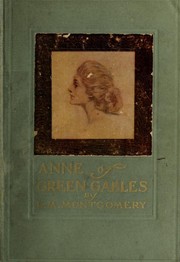
Anne of Green Gables
2,182-word summary 10 min read 336 pages in the book
- First published
- 1908
- Publisher
- L. C. Page
- Pages
- 336
- ISBN
- 9781454945628
- Series
- Anne of Green Gables (#1)
Reading options
What's inside (7 sections)
I picked up this book expecting something sweet and slight, the kind of classic people praise without rereading. What I found instead was funnier and tougher than I remembered from childhood glimpses. L. M. Montgomery published it in 1908 with L. C. Page, and it follows eleven year old Anne Shirley from a train platform to a home she has to earn. I read it slowly over a week, often smiling, sometimes wincing at how sharp Montgomery can be about small town life. By the end I understood why Avonlea still pulls readers back.
The setup is famous, but the details make it work. Marilla and Matthew Cuthbert, a brother and sister past middle age, live at Green Gables on Prince Edward Island. They decide to take in a boy from an orphan asylum to help Matthew with farm work. Through a mix up, a girl arrives instead: thin, freckled, red haired, talking fast. Marilla wants to send her back. Matthew, shy and kind, has already been won over on the drive home. That drive, with Anne naming trees and asking impossible questions, sets the tone for everything after.
A girl instead of a boy
Anne Shirley is eleven when she steps onto the platform at Bright River. She has a worn carpet bag, a faded hat, and a habit of speaking in long, decorated sentences. She has lived in orphanages and in homes where she minded other people's children. She knows she is not what the Cuthberts asked for, and she tries to make herself wanted by sheer force of talk. On the road with Matthew, she renames Barry's pond as the Lake of Shining Waters and tells him she will try to be good if they keep her. Matthew, who barely speaks to neighbors, listens all the way home.
Marilla is harder. She is practical, Presbyterian, and afraid of sentiment. She sees a homely, fanciful child who will be trouble at school and church. She arranges to return Anne through Mrs. Spencer, who brought her from Nova Scotia. Anne pleads and weeps, then resigns herself with dramatic grace. It is Matthew who settles it. He tells Marilla quietly that he wants the girl, that she would be useful and that he has taken to her. Marilla, who loves her brother deeply, agrees to a trial. That decision, made at a kitchen table, shapes the rest of the book.
What I admired here is how Montgomery balances comedy and need. Anne's speeches are funny, full of big words half understood, but they come from a child who has learned that being interesting is a way to avoid being sent away. Marilla's sternness is funny too, until you see it as fear of attachment. Green Gables is tidy and quiet. Anne is noise and color. The house needs her more than it knows.
Mrs. Rachel Lynde visits early and says aloud what Marilla fears: the child is skinny and homely with terrible red hair. Anne, who has been told to be polite, erupts and tells Mrs. Rachel she is rude and unfeeling. The outburst is shocking and completely in character. Montgomery does not excuse it, but she shows why Marilla secretly respects the flash of spirit. Anne later apologizes with grand humility, and Mrs. Rachel forgives her, half amused. The pattern is set. Anne offends, repents theatrically, and learns a little.
Names, friends and disasters
Once Anne stays, she sets about renaming Avonlea. The avenue becomes the White Way of Delight. The pond keeps its shining name. The garden gets pondered over like a poem. Marilla finds this foolish, but Montgomery shows it as Anne's way of claiming beauty where life has been thin. A child who has owned almost nothing owns words, and she spends them freely.
School brings both joy and mishap. Anne befriends Diana Barry, the kind neighbor girl, and the two swear to be bosom friends with vows that would suit heroines in novels. Anne clashes with Gilbert Blythe on her first day when he teases her red hair by calling her Carrots. She smashes her slate over his head and refuses to forgive him for years. Teachers change, lessons proceed, but that grudge holds with comic stubbornness. Gilbert tries to make amends more than once. Anne, proud and hurt, will not bend.
Disasters follow in quick, funny succession. Anne dyes her hair green in an attempt to turn it black and must have it cut short. She serves currant wine to Diana by mistake, thinking it raspberry cordial, and gets Diana banned from play for a time. She walks a ridgepole on a dare and falls onto a henhouse. She bakes a cake with liniment instead of vanilla. Each episode could stand alone as a sketch, but together they show Anne learning cause and effect in a community that watches closely. Avonlea notes every slip. Mrs. Barry, Diana's mother, is strict about propriety. The church ladies comment. Marilla corrects. Anne suffers loudly, then laughs at herself a little sooner each time.
Short falls teach faster than lectures.
One of the best of these is the tea party disaster. Anne, eager to be a fine hostess, misreads labels and pours wine. Diana gets sick. Mrs. Barry forbids further friendship. Anne is heartbroken and Marilla must plead for a second chance. The scene works because both mothers act from understandable care. Mrs. Barry protects her daughter. Marilla protects Anne's one deep friendship. Diana, loyal and plain, waits out the ban. When the girls reunite, their bond is stronger for having survived adult rules.
School rivalry and Miss Stacy
As Anne grows from eleven to fifteen across the book, study becomes central. She is bright, competitive, and hungry to prove that an orphan girl can lead her class. Her rivalry with Gilbert, once pure dislike, turns into a quiet contest for top marks. They do not speak kindly for a long stretch, but they watch each other's scores. Montgomery handles this without turning school into a simple race. Anne loves history and writing and recitation. She hates geometry. She works hard when praised wisely and sulks when shamed.
Miss Stacy, the new teacher, changes Anne's path. Where earlier teachers ruled by rote and strap, Miss Stacy encourages questions, organizes concerts, and prepares older pupils for Queen's Academy, the school that trains teachers. She treats Anne's imagination as an asset rather than a fault. Under her care, Anne forms a small study group with Gilbert, Diana, Jane Andrews, and others. The rivalry with Gilbert sharpens into respect. He is generous about her successes even when she will not thank him. Readers see what Anne cannot yet admit: they are alike in ambition and quickness.
Montgomery also gives Anne two adult women to learn from outside school. Mrs. Allan, the minister's wife, is warm and young and listens without judging. She lends books and invites Anne to tea, showing her a model of kindness joined to faith. Miss Stacy offers a model of work and independence. Marilla offers daily steadiness, correction, and a love that rarely says its name. Together they form a loose education no single classroom could give.
The examinations for Queen's provide the book's academic climax. Anne studies through winter, worries about failing, and passes well, winning the Avery scholarship for English. Avonlea celebrates. Marilla glows. Matthew brags in his shy way. For a girl who arrived with nothing, this is a public answer to every doubt about taking her in. Montgomery lets the triumph stand without irony, which makes what follows hit harder.
Matthew, Marilla and the turn toward home
Matthew Cuthbert is the heart of Green Gables, and his death late in the book still shocks first time readers. He has always been the parent who understood Anne without many words. He buys her a dress with puffed sleeves when Marilla thinks plain clothes are enough. He defends her imagination when Marilla calls it nonsense. He listens to her chatter on the porch and saves newspaper clippings about her school wins. His heart has been weak, though the book mentions it lightly until the strain of money trouble and excitement brings a fatal attack.
The chapters around his death are Montgomery at her most controlled. No long speeches. Marilla finds him in the field. Neighbors come. Anne holds Marilla's hand and faces the fact that bright talk cannot fix loss. The funeral is small and full of real grief. Gilbert, now grown kinder and steadier, does what he can without intruding. Diana stays close. The community that once gossiped about Anne brings food and help. Green Gables feels emptier in a way that has nothing to do with farm work.
Money trouble follows grief. The bank where the Cuthberts keep savings fails, and Marilla's eyesight worsens to the point where a doctor warns she may lose much of it. Anne, fresh from her scholarship win, must decide whether to leave for college or stay. She chooses to stay, giving up the Avery to teach at the local school and help Marilla keep the farm. Gilbert, who had been offered the Avonlea school, steps aside and takes another post so Anne can remain near home. It is his finest act in the book, done quietly and without demand for thanks. Anne finally accepts his friendship fully, and the old slate incident is forgiven in deed rather than words.
I found this ending more moving than any school prize. Anne does not abandon ambition. She delays one path to honor another bond. Marilla, who once feared attachment, leans on the girl she almost sent away. The house that needed noise learns to cherish it. Montgomery closes not with a wedding or a grand prize but with a young woman choosing where she belongs.
What charms and what chafes
The charm is easy to name. Anne's voice carries the book. Her lists, her apologies, her renaming of ordinary places, her delight in puffed sleeves, all of it feels alive more than a century later. Avonlea is drawn with comic precision: Mrs. Rachel's bluntness, Mrs. Barry's rules, Mr. Phillips's poor teaching, the church concerts and picnics that structure a year. Montgomery, who grew up on the Island, writes fields and orchards and winter roads with clear affection. Food matters here in the best way. Apple pickles, plum puffs, teas with raspberry cordial, all mark care and season.
The humor holds up because it is specific. Anne does not simply make mistakes. She makes mistakes from reading too many romances and from wanting life to sound like books. When she calls an apology a solemn vow or describes a dress in three adjectives, Montgomery lets us laugh with her rather than at her. Diana's steadiness, Jane's plain sense, and Gilbert's patience give Anne foils who keep her from floating away. Even Marilla gets funny lines, dry and short, that cut through Anne's floods.
Fair criticism belongs here too. The book is slow in the middle by modern standards. Some episodes repeat the same shape: Anne errs, suffers, is forgiven. Readers who want plot momentum may tire around the second year of school scenes. Montgomery sometimes tells rather than shows growth, noting that Anne is less vain or less quick tempered without letting us watch the change happen. Gilbert's long patience can read as saintly rather than human, though his final sacrifice earns much goodwill.
There are also views that have aged less well. Class judgments run through Avonlea talk, with orphans and poor families discussed as risks. Mrs. Rachel and others speak of Anne's looks with a bluntness that stings, and the book repeats remarks about red hair and plainness until they feel cruel even in context. Servant girls and French neighbors get thin treatment. None of this is hateful by the standards of 1908 popular fiction, but modern readers, especially young ones, will notice who gets interior life and who does not. A classroom reading should name that gap rather than skip it.
Anne's imagination itself can divide readers. Some will love the long speeches. Others will find them tiring after the tenth renaming. I landed in the middle. I skipped a sentence here and there during her most flowered passages, then was glad I had stayed for the plain sentences that follow. Montgomery knows when to let Anne be quiet, especially after Matthew dies, and those quiet pages redeem the louder ones.
I closed Green Gables feeling that the book earns its place not as a simple feel good story but as a study of belonging built act by act. A shy farmer chooses a talkative girl. A stern woman learns to show love. A proud student learns to accept help from a boy she once struck. A community that watches and judges also feeds and mourns. The final image of Anne and Marilla planning a changed life together, with Gilbert as friend rather than rival, feels right because it was worked for across hundreds of small scenes. It is an old book with a young voice, and that voice still carries.
FAQ
Is Anne of Green Gables part of a series?
Yes. Published in 1908 by L. C. Page, it is the first book about Anne Shirley, followed by Anne of Avonlea and later sequels.
Where is Avonlea supposed to be?
Avonlea is based on Prince Edward Island in Canada, where L. M. Montgomery lived and set much of Anne's world.
What age is Anne of Green Gables for?
It suits middle grade readers and adults, with school stories and home life that remain clear without mature content.
Similar books
More like Anne of Green Gables →More from Anne of Green Gables first, then related titles.

Their Eyes Were Watching God
Janie Crawford tells Pheoby about Eatonville life with Logan Killicks, Joe Starks called Jody, and Tea Cake.
2,230-word summary · 10 min read
The Lorax
The Once-ler fells Truffula Trees for Thneed greed despite the Lorax, who speaks for the trees, warning him to stop.
2,563-word summary · 11 min read

The Horse and His Boy
Shasta and Bree flee Calormen to Narnia with Aravis and Hwin.
2,594-word summary · 12 min read

Peter Pan
Wendy, John and Michael fly to Neverland with Peter, face Hook, and learn what growing up costs.
2,502-word summary · 11 min read

Island of the Blue Dolphins
Left alone on San Nicolas Island for eighteen years, Karana builds shelter, faces wild dogs, and finds company with Rontu.
2,559-word summary · 11 min read

Goodnight Moon
A small bunny says goodnight to each object in the green room in this 1947 bedtime classic.
2,600-word summary · 12 min read