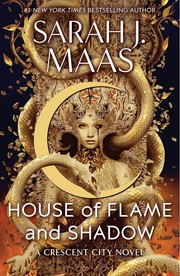
House of Flame and Shadow
2,983-word summary 13 min read 835 pages in the book
- First published
- 2024
- Publisher
- Bloomsbury Publishing
- Pages
- 835
- ISBN
- 9781635574104
- Series
- Crescent City (#3)
Reading options
What's inside (9 sections)
I picked this up the day I finished the last one because that ending left Bryce somewhere else entirely and Hunt locked up, and I do not like leaving people like that. House of Flame and Shadow by Sarah J. Maas was first published in 2024 by Bloomsbury Publishing, 835 pages in the hardcover edition, ISBN 9781635574104, and it is book three in the Crescent City series. I read it in big tired gulps over four nights, partly because I needed answers and partly because every chapter ends with someone in danger.
The setup is simple to say and messy to live through. Bryce Quinlan jumped through a portal at the end of book two and landed outside her own world of Midgard. Hunt Athalar is back in Asteri dungeons under the palace in Lunathion. Their friends, Ruhn, Lidia, Ithan, Tharion, Hypaxia, Jesiba and the rest, are trying to start a war they can actually win while the Asteri feed on magic and tighten control. The book follows all of them at once, plus new faces from the other world Bryce finds, until the two struggles join.
Where Bryce lands
Bryce wakes sore, hungry, and lost in cold mountains under strange stars. No phone. No Hunt. Her Starborn light still in her chest but flickering with exhaustion. She is found by people who do not know Midgard, do not know Asteri, and have their own wars and courts and rules. Nesta Archeron finds her first, sharp and guarded, carrying her own grief and power. Azriel comes next, quiet, wings scarred, good at reading fear. Then Rhysand, the High Lord figure who is polite in a way that makes Bryce more nervous, not less.
I liked these chapters best at the start because Bryce is finally small again. In Lunathion she was becoming a weapon and a symbol. Here she is a wet girl in borrowed clothes asking for soup and a map. She barters with honesty, offers starlight to heal in exchange for shelter, asks too many questions too fast. Nesta calls her out for talking instead of listening, which is fair. Bryce talks when she is scared. Azriel teaches her how to move in snow without sound. A scene where she tries to pay for bread with a Midgard coin that means nothing here, and Nesta just pays and tells her to stop flashing strange metal, felt human and funny amid multiverse stakes.
The other world has its own magic system, courts, inner circles, and old wounds with prisons and cauldrons and star lore. Maas does not re-explain that whole series, which will frustrate newcomers. I have read some of it, enough to know names, and I still had to look up two terms. If you have not read the ACOTAR books, you will feel Bryce's confusion as your own for about a hundred pages. That is intentional, but it slows the book. Stick with it. The point is not lore mastery. The point is Bryce learning that other worlds also suffer under hungry rulers, and that help has to be asked for, not demanded.
Her arc here is about asking well. She wants help to save Hunt and Midgard. Rhysand wants to protect his own people first. Nesta wants proof Bryce will not run when it hurts. Bryce has to earn trust by training and by sharing what the Asteri really are, parasites who eat magic and hop worlds. A training yard scene where Nesta corrects her stance without softening, then shares bread in silence after, did more for me than the portal talk.
Hunt in the dungeons
Hunt's chapters are the hardest to read and the shortest, which feels right. He is caged under the palace with damp stone, a halo that shocks, chains that burn, and guards who enjoy their work. Pollux, the Hammer, runs the cells with cheerful cruelty. Rigelus Brighthand, the Bright Hand of the Asteri, visits to gloat and threaten. Apollion, another Asteri, watches with colder interest. Hunt is starved, beaten, and shown images of Bryce gone to break him.
What saves these chapters from pure misery is Hunt's head. He counts breaths. He replays Bryce's laugh to stay oriented. He protects younger prisoners when he can, sharing water, taking a beating meant for a kid messenger. He refuses to give up names even when the halo is turned up until his wings smoke. There is a moment where he is offered a deal, serve again as the Asteri's lightning and live in relative comfort, and he laughs in Rigelus's face because comfort without Bryce and without choice is just a nicer cage. I believed him.
He also gets company. Not rescue, not yet, but voices through walls and a guard with divided loyalties who slips extra bread. Those small kindnesses matter in a book this big. Maas writes torture without lingering on gore for pages, focusing instead on aftermath, shaking hands, ringing ears, shame at screaming. Hunt worries he failed Bryce by getting caught. That guilt is more painful than the chains. When he finally hears real news from outside, that Bryce is alive but not in Midgard, he cries and then forces himself to eat because hope needs calories. Practical hope. I liked that detail.
Ruhn, Lidia, and the paperwork of rebellion
Back in Lunathion, Ruhn Danaan tries to hold the rebellion together without Bryce or Hunt. He has the Starsword, a famous blade tied to starlight, a father who disapproves, a sister missing, and a new bond with Lidia Cervos that he does not fully trust yet. Lidia is the Hind, the Asteri's enforcer and tracker, feared across the city for hunting rebels. She is also, secretly, feeding information to the rebels while trying to protect her sons, hidden children the Asteri would use against her. That secret shapes every scene she is in.
Ruhn and Lidia together are my favorite part of this book. Not because they are steamy, though they are, but because they argue about method. Ruhn wants to charge the palace. Lidia wants lists, routes, bribes, safe houses. She knows how the Asteri think because she worked for them. She teaches the group to think like hunters, where cameras sit, which sewers flood, which officials can be bought with medicine rather than money. A planning scene around Jesiba's table, with maps stained by coffee and Tharion complaining about damp boots while Lidia calmly marks guard rotations, felt like real resistance work, boring and vital.
Lidia's chapters with her boys broke me a little. She visits in disguise, brings sweets, checks homework, leaves before dawn. She cannot claim them openly without painting targets on them. Ruhn learns this and stops pushing her to go public. He sits outside in the car while she goes in, keeping watch. That restraint, loving someone by waiting in the cold, is better written than any declaration. When her cover starts to crack and Pollux begins to suspect, the tension spikes because the cost is her kids' safety as well as her own life.
Ruhn also grows as a brother. He keeps Bryce's apartment clean. He waters her plants badly. He answers Ithan's panicked calls at 2 a.m. He tells Day, his rebel contact from before, the truth about Lidia even though it risks jealousy and mission security, because secrets got them into this war. The Starsword reacts to his honesty in small ways, humming when he chooses protection over pride. Corny, sure. I still liked it.
Ithan, Tharion, Hypaxia, Jesiba
The middle of the book belongs to the pack and the water and the witches, and I needed that warmth between dungeon chapters.
Ithan Holstrom is still wolf without a pack, trying to earn a place after Danika's death and his exile from wolf politics. He trains with the Aux, Lunathion's volunteer fighters, runs patrols, carries groceries for old neighbors to prove wolves can serve. He investigates what happened to Danika's research, follows scent trails to old labs, gets beaten for asking. His loyalty to Bryce is absolute, but this book lets him have his own oath, to protect innocent wolves and kids caught between Asteri and rebels. A scene where he stands between city guards and a teenage wolf thief, taking a baton hit rather than moving, shows who he has become. No longer follower. Shield.
Tharion Ketos, mer liaison with too many jokes, gets sobered fast. The River Queen holds his sister hostage to force his obedience. The Ocean Queen offers deals with hooks. He ferries messages through canals while being hunted, hides rebels in a boathouse that smells of oil and fish, falls for a healer he cannot keep. His humor stays, flirting with a guard to get past a checkpoint, naming his boat something rude, but the fear underneath is clearer now. When he chooses to warn Ruhn about a trap rather than obey the River Queen, knowing it may cost his sister visits, I felt the price. Playboy with a spine.
Hypaxia Enador, witch queen, leads a tired coven while healing. She grieves her lost love in private, then treats Aux kids with burns while Ithan distracts them with bad jokes. Found family doing dishes after war.
Jesiba Roga, sorceress and Bryce's boss, finally opens her vaults, rebel books, star charts, and old weapons the Asteri wanted burned. She still bargains hard, then forgives debts when friends bleed. Wars need money and storage, and she keeps both.
Gates, starlight, and the war for two worlds
The last third is all motion. Bryce negotiates a narrow path home with help from her new allies, not an army but a door, a window, a loan of power with strict terms. Nesta and Azriel help her practice opening between spaces with starlight instead of tearing. Rhysand sets boundaries. No conquest. No gods dragged across. Help to close the Asteri's feeding gates, not to rule. Bryce agrees because she finally understands ruling was never the goal. Closing mouths that eat worlds is the goal.
Back in Midgard, the rebels hit several targets at once. Power stations that feed Asteri siphons. Dungeons where Hunt and others are held. Archives where proof of Asteri feeding can be broadcast. Lidia turns openly, shooting her own enforcers to free prisoners, which costs her cover forever. Ruhn leads with Starsword and a borrowed gun that hums with starlight. Ithan holds a bridge with wolves who finally choose him. Tharion floods a tunnel to block reinforcements, nearly drowning himself. Hypaxia shields a hospital while Jesiba reads old words to shut a gate. It is a lot. At times too much, cutting every three pages, names blurring. I kept a list on paper to track who was where.
Hunt's rescue lands because it is not clean. He is half dead, wings torn, halo still on. Bryce finds him not in a heroic charge but in smoke and screaming, calling his name until he answers. She cannot remove the halo with starlight alone. Lidia knows the release sequence from her enforcer days and talks Hunt through pain while Ruhn holds him down. That scene, enemies turned allies working on a friend's body while the ceiling shakes, is the book in one image. No single hero. Hands together.
The Asteri fight back with true forms, light and teeth and hunger, no longer pretending to be benevolent rulers. Rigelus and Apollion and the others show what they are, things that eat magic and wear crowns to hide mouths. Bryce and Hunt together, star and lightning, can hurt them but not alone. It takes Nesta's borrowed power and Azriel's shadows through the cracked door, plus Ruhn and Lidia and Ithan holding the line in Midgard, plus Hypaxia sealing ley lines, plus Jesiba speaking binding words. Teamwork as plot, not theme. I liked that the win costs. Buildings fall. Friends die. A side character I loved does not make it out of the archives, and the book does not bring them back with a trick.
The gates close, or most of them. The Asteri are driven back, starved, killed, or fled, depending on which one, and I will not spoil each fate. Midgard is left smoking but breathing. The other world seals its side with new wards and a promise to watch the sky. Bryce and Hunt live. That is not a spoiler at this length. The cost is written on their bodies. Scars, limp, nightmares, a halo scar that aches in rain.
What I liked and what tired me out
What I liked most is the adult honesty about aftermath. Bryce can open worlds and still needs soup and sleep. Hunt can survive torture and still flinch at chains. Lidia can save a city and still miss bedtime with her kids. Ruhn can win a battle and still feel like a disappointment to his father. Maas lets victory be messy, with paperwork, funerals, and awkward reunions. The wedding and mating and pregnancy talk that closes some threads felt earned because the book shows the boring work after, more than the kiss.
Fair criticism, because 835 pages needs it. The middle repeats. Planning meetings, capture, rescue plan, betrayal, new planning meeting. I skimmed two council scenes that restated what Lidia already explained. The crossover chapters, fun as they are, demand homework. If you have not read the other series, you will miss jokes and weight. Even if you have, the power levels get fuzzy. Who can beat whom with star versus night versus death powers becomes whatever the scene needs. I stopped tracking and followed feelings, which worked but felt loose.
Pacing around Tharion and Ithan also wobbles. Both get strong moments, then vanish for a hundred pages, then return for a big beat that would hit harder with more buildup. Hypaxia's grief is touching but brief. Jesiba's shop talk charms then stalls. With this many point of view characters, someone always waits off page too long. I kept flipping back to remember where Tharion's sister was and why a canal mattered.
Steam level is high and explicit, as expected. Bryce and Hunt get several long scenes. Ruhn and Lidia get slower, more secretive ones built around trust and kids asleep in the next room. All consensual, all with aftercare shown, all with birth control and boundaries discussed in passing which I appreciated. If you prefer fade to black, this is not your series. I found the Bryce and Hunt scenes affirming after torture separation, two people proving they are alive and choosing each other, but one mid book scene could have been cut without losing meaning.
A smaller gripe. The Asteri as villains are frightening in concept, ancient parasites eating magic across worlds, but thin as people. Rigelus sneers. Pollux hits. Apollion schemes. Only Lidia's history with them gives them texture. Compared to the time spent on fae courts and wolf packs, the final enemy feels abstract, hunger with a crown. The win works because we love the friends, not because we hate the foe in particular.
Who should read this. Readers who finished House of Earth and Blood and House of Sky and Breath and need the end of Bryce and Hunt's war. Do not start here. You need two books of relationships for the rescues to hurt right. Expect explicit sex, strong language, torture and captivity, death of side characters, PTSD, and child endangerment around Lidia's sons handled with care but present. Read with water and breaks. The dungeon chapters are rough in one sitting.
I closed the book tired and fond. Not because every twist surprised me, several did not, but because the group I started with in a nightclub in book one felt like neighbors by the end. Bryce learning to ask for help instead of buying it. Hunt learning to accept care without earning it through pain. Ruhn learning to lead without posturing. Lidia learning to be seen. Ithan learning to belong without obeying. Tharion learning to stay. That is a lot of growth to carry across 835 pages, and most of it lands. The war for two worlds ends with doors shut, lights low, and people choosing each other on purpose. Good enough for me, and then some.
Lidia's choice and why it holds the book
I want to give Lidia Cervos her own space because she is the reason the war plot feels moral rather than just loud. She spent years as the Hind, hunting her own future allies to protect her children and stay close to Asteri secrets. Every kindness she shows risks exposure. Every report she falsifies risks her sons. When she finally turns, it is not with a speech but with a shot, killing a fellow enforcer to stop a massacre of prisoners, then dropping her badge in blood and walking to Ruhn's side.
The book does not forgive her quickly, which I respected. Ithan does not trust her for a long while. Jesiba charges her double. Hypaxia watches her hands around kids. Lidia accepts it, keeps showing up, brings medicine, remembers names, takes night watch so tired wolves can sleep. Trust rebuilt through chores, not apologies. By the time she stands with Bryce to face Rigelus, I believed her place in the group because I saw the dishes and the guard shifts, more than her shooting.
Her story with Ruhn also avoids easy beats. They do not marry in a day. They plan around kids, around trauma, around a city that fears her old title. A quiet scene where Ruhn meets her sons properly for the first time, bringing a cheap puzzle and sitting on the floor to do it wrong while they laugh, tells you more than any mating ceremony could. Family made in small rooms. That is the heart of Crescent City for me, more than star swords or portals, and this book remembers it at the end when noise fades.
FAQ
When was House of Flame and Shadow published?
Bloomsbury Publishing published it in 2024. The hardcover runs 835 pages and the ISBN is 9781635574104.
Is it part of a series?
Yes, it is book three in the Crescent City series, after House of Earth and Blood and House of Sky and Breath.
Who are the main people?
Bryce Quinlan, Hunt Athalar, Ruhn Danaan, Lidia Cervos, Ithan Holstrom, Tharion Ketos, Hypaxia Enador and Jesiba Roga, plus Nesta, Azriel and Rhysand in the other world.
Similar books
More like House of Flame and Shadow →More from Crescent City first, then related titles.

House of Earth and Blood
Bryce Quinlan hunts a killer in Crescent City with fallen angel Hunt Athalar.
2,496-word summary · 11 min read

House of Sky and Breath
Bryce and Hunt want normal love but rebels and Asteri pull them to war and portals.
2,204-word summary · 10 min read

A Court of Wings and Ruin
ACOTAR book 3 retold: Feyre spies in Spring, the cauldron war, and the High Lords against Hybern.
2,454-word summary · 11 min read

Stardust
Tristran Thorn climbs over the wall of Wall to fetch a fallen star and finds Yvaine, witches, and princes hunting her.
2,490-word summary · 11 min read

Graceling
Katsa, Graced with killing, breaks from her uncle's use of her and follows a kidnapped prince toward a hidden king.
2,517-word summary · 11 min read

A Kingdom of Flesh and Fire
Poppy travels to Atlantia with Hawke as Casteel while war, prophecies, and her own gifts close in.
3,048-word summary · 14 min read