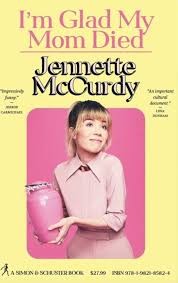
I'm Glad My Mom Died
2,049-word summary 9 min read 320 pages in the book
- First published
- 2022
- Publisher
- Simon & Schuster
- Pages
- 320
- ISBN
- 9781982185824
Reading options
What's inside (7 sections)
I put off reading I'm Glad My Mom Died because the title felt harsh and I worried the book would be built around shock. A friend who grew up watching iCarly told me the title is honest, not cruel, and that the writing is plain and funny in a sad way. She was right. I read it in two sittings, mostly on a train, and kept thinking about how clear McCurdy's voice is. She writes in short scenes, present tense memories mixed with later reflection, with jokes that do not soften what happened. By the end I did not feel she hates her mother. I felt she finally sees her mother as a whole person and herself as someone separate.
A childhood organized around auditions
McCurdy grows up in Garden Grove, California, in a Mormon family with little money and a lot of stress. Her mother Debra, called Deb, had wanted to act as a young woman and pushes that wish onto Jennette, the only daughter among four children. Her father Mark works long hours. Her older brothers Marcus, Dustin, and Scott orbit the house with their own needs. Deb runs the home with strict rules about food, dress, cleanliness, and church. Hoarding fills rooms. Cancer scares shape every plan. Deb has had breast cancer and lives with fear of return, which she shares with Jennette in detail far beyond what a child can carry.
Acting starts at age six, not because Jennette lights up on stage but because Deb lights up when Jennette books work. Auditions follow auditions. Rejections sting. Small roles in commercials and guest spots on shows like Malcolm in the Middle and Law and Order SVU bring brief hope. McCurdy describes waiting rooms with tired parents, headshots, acting coaches, and Deb brushing her hair and choosing outfits to look younger and smaller. Food becomes a tool early. Deb teaches calorie counting, weighs Jennette, praises thinness, and frames hunger as discipline. Showers and personal care are monitored long past the age when privacy is normal. The pattern is set. Love feels close to obedience, and obedience is measured in bookings and body size.
The memoir is careful with chronology here. Chapters move from early childhood to age ten to twelve, with each audition season adding pressure. McCurdy wants her mother to be calm and proud. Calm only comes with good news from casting. When work slows, Deb cries, prays, argues with Mark, and talks about money and illness. Jennette learns to scan moods and fix them by performing. She practices crying on cue, smiling on cue, being likable in rooms where adults decide fast. She is good at it. That skill will later make her famous and miserable at once.
Sam, secrets, and being hungry on set
The break comes with iCarly. McCurdy is cast as Sam Puckett, the loud, funny best friend who loves meat and trouble, opposite Miranda Cosgrove as Carly and Nathan Kress as Freddie, with Jerry Trainor as Spencer. The show, created by Dan Schneider, whom McCurdy calls the Creator, becomes a hit on Nickelodeon. Set days are long. School happens in trailers. Fans recognize her in malls. Paychecks help the family. From the outside it looks like arrival. Inside, McCurdy is splitting into two people. Sam is bold and hungry on camera. Jennette is anxious and shrinking off camera, living with anorexia that Deb actively supports as a way to stay young for roles.
She details the tricks without glamour. Counting bites, chewing and spitting, hiding food, exercising in secret, faintness between takes. Deb praises smallness and schedules weigh ins. Doctors raise concerns that get managed or dodged. At home Deb still controls food, mail, friendships, and dating. McCurdy is not allowed normal teen privacy. She describes Deb reading her diaries, sleeping in her bed during travel, and making medical choices for her. The close bond reads as both tender and suffocating. Deb remembers every line, brings soup to set, defends Jennette fiercely. She also shames her for growing, for wanting space, for eating.
Fame adds its own strain. Reporters ask about favorite foods while she is starving. Fans quote Sam's jokes about ham and fried chicken. Cast bonds are real but uneven. She likes and respects Miranda, admires Jerry's kindness, fights and repairs with Nathan in the way tired young coworkers do. She fears the Creator, who can be warm and generous with episodes and cold with control, offering alcohol and massages that cross lines and leave her confused about power. She does not present set life as one villain story. It is a mix of fun takes, boring waits, strict network rules, and adults who fail to protect kids working adult hours.
Mom did not get better. And I got smaller trying to keep her world steady.
That sentence, in different forms across chapters, holds the early half together. McCurdy keeps trying to earn steadiness by getting smaller, funnier, more employable. It never holds for long.
Sam and Cat and the loss that changed the frame
After iCarly ends, McCurdy stars with Ariana Grande in Sam and Cat. The schedule is harder, the attention is hotter, and the comparison game is brutal. Ariana arrives with music fame and a growing fan base. Press pits them against each other. McCurdy feels older, less supported, and angry about pay and treatment differences. She drinks more. She starts binge eating after years of restriction, then moves into bulimia. She hides vomiting between scenes. She describes the shame spiral with blunt detail. Eat in secret, purge, promise to stop, repeat. Workmates notice weight shifts and mood swings but the machine keeps moving.
During this run Deb's cancer returns and worsens. McCurdy shuttles between set and hospital, learning medical terms, watching her strong willed mother weaken. Deb dies in 2013. McCurdy is twenty one. The grief is tangled. She misses her mother fiercely and feels guilty for feeling relief. Relief that no one weighs her that morning. Relief that she can shower alone. Relief that auditions might be hers to choose. Then shame for the relief. She keeps working because work is identity and income. She takes roles, tries music, posts online, smiles for photos, while eating disorders and OCD and drinking run her private hours.
The chapters after the death do not offer quick freedom. Without Deb's rules, McCurdy swings between strict control and collapse. She dates men who repeat old dynamics. She fights with family about money and memory. She resents Mark for not shielding her and loves him for his gentler steadiness. She argues with brothers who remember a different mother. She tries to honor Deb by being successful, then realizes success on Deb's terms keeps her sick. A short lived engagement, bad auditions, tabloid stories, and panic attacks pile up. The memoir shows how grief can look like numbness, busyness, jokes, and sudden crying in parking lots rather than neat stages.
Therapy, quitting acting, writing a new life
Change starts with therapy, though not smoothly. McCurdy first goes to please others or to fix eating alone, and quits when it gets hard. Later she finds a therapist who names enmeshment, control, and abuse without flinching. Sessions focus on boundaries, body cues, and the link between restriction and anxiety. She learns to eat regular meals, to notice fullness, to tolerate weight gain without panic, to sit with anger at Deb without erasing love. Recovery is not linear. She relapses, lies to her therapist, comes back, tries again. The honesty about relapse makes those chapters credible. She does not present a clean before and after photo. She shows months of small wins and bad weekends.
Quitting acting is part of the same work. She realizes she never chose it. She hated auditions, feared rejection, felt hollow on sets she once begged to join. The decision brings money fear and identity fear. Who is she without Sam? She tries writing and directing, first with fear that she has no skill, then with growing ease. She makes a short film, performs a one woman show that becomes the seed for the book, writes essays about family and fame. Directing gives her a different kind of control. Instead of being looked at, she looks, frames, chooses. The memoir tracks that shift from performed likability to plain speech.
Later chapters cover family repair in progress rather than closure. She sets limits with Mark, talks more openly with her brothers, clears hoarded rooms that hold Deb's things, keeps some objects and lets others go. She addresses Mormon faith as another inherited frame she must examine. She writes about friendships with women her age that feel safer than set friendships. She writes about dating with more care. Humor stays throughout, dry and self aware. She jokes about child star advice books, about red carpet interviews, about therapists who cry before she does. The jokes never punch down at sick people. They point at absurd rules and at her own past efforts to follow them.
What hits hard and what feels thin
The strength of the book is voice and structure. Scenes are short, often three to six pages, with dialogue that sounds like real kitchens and trailers rather than speeches. McCurdy names foods, shows, outfits, and hospital details with care, which grounds memory. She does not hide her own unkind moments. She is rude to assistants, jealous of costars, cruel to her body, dishonest with people trying to help. That self portrait keeps the memoir from reading as revenge. The title promise is kept in a serious way. She is glad her mother died because death ended control and forced her to live, not because she lacks love. She writes both grief and relief as true at once.
A fair criticism is that the pace crowds the last years. Early childhood and iCarly get rich detail, while recovery work, writing growth, and directing get fewer scenes. Readers who want to know how therapy tools work day to day may want more than summaries of progress. Some set stories also blur names and roles for legal and personal reasons, which is understandable but can confuse readers trying to follow who knew what. The Creator sections, for example, are chilling yet brief. They name behavior without a full account of Nickelodeon systems, which leaves questions about oversight unanswered.
The book is also intense by design. Chapters about anorexia, bulimia, OCD rituals, alcohol abuse, and emotional abuse arrive in clusters. Readers with their own eating disorder history may find calorie counts and purge descriptions hard to sit with, even though McCurdy avoids how to guides and focuses on harm. It helps to read slowly and to skip back when needed. This is not a light celebrity memoir with backstage gossip. It is a family story where Hollywood is the workplace that made private harm harder to see.
One stretch I kept thinking about comes after Deb dies, when McCurdy tries to enjoy ordinary food without panic. She describes sitting with a full plate while her thoughts race about weight and auditions, then eating anyway because her therapist asked her to practice. Another strong passage covers sorting through stored boxes of costumes, scripts, and church papers with her brothers, where small objects bring back sharp fights and sudden laughs in the same hour. She also writes about trying standup style storytelling on stage in Los Angeles, shaking before shows, then feeling steadier when audiences laugh at true lines about mothers who read diaries. Those pages show progress as daily practice rather than a single breakthrough, with setbacks after holidays, family calls, and bad press days.
I closed it thinking about how much of McCurdy's childhood was spent reading her mother's face for cues. Audition rooms, kitchen scales, hospital chairs. The same watchfulness made her good on camera and tired off it. Her way out was not one brave speech but many small refusals. Eat breakfast. Keep a diary no one reads. Say no to a role. Stay in therapy after a bad week. Write a true sentence and keep it. For readers who know child actors only from screens, with clear memories of Sam Puckett and loud laugh tracks, this memoir replaces the character with a person. That replacement aches, and it feels necessary.
FAQ
Why did Jennette McCurdy write this memoir?
She wrote to explain her child acting years, her difficult bond with her mother Debra, and her recovery from eating disorders after her mother died in 2013.
Does the book cover iCarly and Sam and Cat?
Yes, she writes about auditions, long set days, fame pressures, and why she later stepped away from acting to try writing and directing.
Is the book only sad?
It covers painful topics, but McCurdy uses dry jokes and short scenes, and later chapters focus on therapy and new choices.
Similar books
More like I'm Glad My Mom Died →
The Last Lecture
Dying professor Pausch lectures really achieving childhood dreams.
2,579-word summary · 11 min read

Running with Scissors
A boy sent to live with his mother's psychiatrist grows up in a chaotic house with no rules.
2,036-word summary · 9 min read

Maus I: A Survivor's Tale: My Father Bleeds History
Art Spiegelman interviews his father Vladek about Sosnowiec and Auschwitz, drawing Jews as mice in this tense father and son memoir.
2,223-word summary · 10 min read

Greenlights
McConaughey shares outlaw stories and greenlight catching from Texas to Hollywood.
2,577-word summary · 11 min read

Untamed
Glennon Doyle leaves a strained marriage, falls for Abby Wambach, and rebuilds life around honesty and desire.
2,561-word summary · 11 min read

The Woman in Me
Britney Spears tells her own story from teen stardom to a thirteen year conservatorship, and how she fought to reclaim her voice and freedom.
2,505-word summary · 11 min read