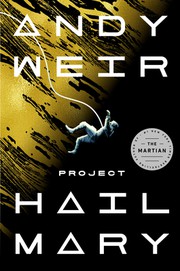
Project Hail Mary
2,293-word summary 10 min read 496 pages in the book
- First published
- 2021
- Publisher
- Ballantine Books
- Pages
- 496
- ISBN
- 9780593135204
Reading options
What's inside (6 sections)
I started Project Hail Mary on a plane and missed my connection because I would not put it down. Andy Weir published it with Ballantine Books in 2021, a 496 page science fiction novel about Ryland Grace, a middle school science teacher who wakes up on a spaceship with no memory, two dead crewmates, and a mission to save the sun. If you liked The Martian for the problem solving and the voice, this is that energy aimed at a bigger question. Can one ordinary man and one very unordinary friend do enough science in time?
The opening is disorienting on purpose. Ryland wakes to alarms, a robot voice asking math questions, tubes in his arms. He does not know his name. He does not know where he is. He vomits. He sleeps. He wakes again. Weir feeds memory back in flashes. A classroom. A student asking about the sun dimming. A woman from the UN task force showing up at school. Slowly Ryland remembers he was not supposed to go. He was supposed to teach others. Then people died and plans changed.
I love amnesia as a device when it forces the reader to learn alongside the character. Here it works because every recovered memory raises the stakes. Oh, the sun is dimming. Oh, Astrophage is eating it. Oh, Venus is infected too. Oh, the crew is dead and I am alone. Weir times these reveals to match practical problems. Ryland needs to eat, so he remembers food systems. He needs to move, so he remembers gravity.
Astrophage and a dying sun
The science premise is simple to state and hard to solve. Astronomers notice the sun is putting out less light. Not much less, but enough. Other nearby stars are dimming too, except one. Tau Ceti still shines normal. Something is traveling between stars, feeding on energy, multiplying. They call it Astrophage. It lives in the outer layers of stars, stores huge energy, and can be herded with magnetic fields. It also explains why a probe to Venus found strange heat.
Weir gives Astrophage clear rules. It needs carbon dioxide to reproduce. It migrates along magnetic lines. It can be bred like algae. It can power ships if you contain it. These rules matter because the whole book is built on them. Ryland does not win by luck. He wins by testing each rule until it breaks or holds.
The mission that follows is desperate and global. Find a star that resists Astrophage. Send a ship. Learn why. Bring back an answer. The ship is the Hail Mary, powered by Astrophage itself, spinning for gravity, stocked for years. The crew is three. Ryland is the science guy who understands Astrophage biology. Two others are engineers and pilots. They accept they will not come home. Fuel is one way. Data can be sent back by small probes.
I found the Earth chapters, told in flashback, surprisingly moving. Weir shows scientists arguing, governments paying, teachers training astronauts. A key figure is Eva Stratt, the task force lead who drafts Ryland and refuses to take no. She is blunt to the point of rudeness. She requisitions labs. She threatens. She also carries the weight of choosing who lives. Ryland hates her methods and later understands them. Their scenes together give the book spine. Science needs money and permission, not just ideas.
There is also Ryland's past as a failed academic turned beloved teacher. He loves explaining. He loves the moment a kid gets it. That voice carries the narration. He jokes when scared. He swears at equipment. He measures everything. Readers who found Mark Watney fun will find Ryland familiar but softer, more guilty, more aware he is out of his depth.
Alone until he is not
For the first third, life aboard is survival puzzles. How to get water. How to bury crewmates in space. How to check the lab without breaking quarantine. How to slow spin without tearing the ship. Weir writes procedures with care. Each chapter is basically: problem, idea, test, failure, new idea, partial win. It should get repetitive. It does not, because the failures cost time and Ryland knows Earth is cooling while he fumbles.
Then the book changes. Another ship is at Tau Ceti. Not human. Alien. Ryland panics, then does science. He taps the hull. Something taps back. He rigs cameras. He learns the other ship has similar damage, similar mission. Its home star is dimming too.
Enter Rocky. I will say plainly that Rocky is one of my favorite characters in recent science fiction. Rocky is from Erid, a high gravity, high pressure ammonia world. Rocky looks like a spider made of rock, has perfect pitch hearing, sees with sound, sleeps little, builds everything. Rocky cannot survive in Ryland's air and Ryland cannot survive in Rocky's. They meet through a shared wall, exchange models, learn each other's numbers.
Weir handles first contact as engineering. No universal translator. Just prime numbers, units, periodic tables, patience. Ryland teaches metric. Rocky teaches Eridian music based math. They build a shared language out of physics. There is a wonderful long stretch where they argue about xenon, pressure, and fuel using balls, lines, and tones. I laughed out loud more than once. It reminded me of being a kid trading game rules on a playground until both sides agree.
Rocky has a crew too, or had. Rocky is also alone now. Rocky also wants to save home. That shared grief bonds them fast. They start trading food, tools, jokes. Rocky loves coffee break style pauses. Rocky snores like gravel. Ryland plays disco. Rocky calls humans strange for needing sleep. Their friendship feels earned because it is built on work. They fix each other's ships. They share data. They risk contamination to help.
A fair point to raise is that Rocky is very likable, almost designed to be loved. Some readers may find him too cute for hard science fiction. He says things like “good good good” and fusses over Ryland like a parent. I did not mind. After the lonely opening, warmth is relief. Weir needs you to care about both so the final choice hurts.
Experiments at Tau Ceti
The middle becomes a detective story. Why is Tau Ceti immune? Both crews sample its planets, its light, its system. They find Astrophage has a natural predator there, a microbe that eats Astrophage and dies in certain conditions. They call it Taumoeba. If it can be bred to survive interstellar travel and hotter stars, it could clean the sun and Erid's star.
This is where Weir is at his best and, for some, most trying. He walks through breeding generations, temperature limits, nitrogen barriers, containment. Ryland fails a lot. Taumoeba dies. Or escapes. Or evolves wrong. Rocky suggests pressure solutions Ryland would never think of because Rocky lives under crushing weight. Ryland suggests biology tricks Rocky misses because Eridian life is different. Their combined knowledge moves faster than either alone.
I liked that Weir shows lab work as boring and tense at once. Waiting for cultures. Checking seals. Doing math on napkins. Arguing about sample size. It respects the reader's smarts without demanding a degree. He explains with analogies a teacher would use. At one point Ryland compares Astrophage farming to sourdough starter. It is silly and it helps.
There are setbacks that cost more than time. A breach hurts. A miscalculation wastes fuel. A storm on the alien ship forces hard calls. Ryland gets injured and has to treat himself with limited meds while Rocky talks him through pain from the other side of the wall. That chapter is strong on friendship. Two people who cannot touch trying to keep each other alive with words and tools.
Earth keeps intruding via memory. Ryland remembers training, goodbyes, the launch. He remembers learning his crewmates better. Commander Yáo, steady and kind. Engineer Ilyukhina, brave and funny. Their deaths weigh on him. He feels he stole their chance by surviving in coma while they died from a mechanical failure he might have caught awake. Survivor guilt threads through his jokes. Weir does not overplay it, but it is there whenever Ryland hesitates to sleep.
Stratt's flashbacks also sharpen. She forces nations to cooperate. She takes blame. She sends Ryland up knowing he does not consent fully. Later Ryland understands she gave him coma to survive the trip and gave Earth a chance. Forgiveness comes slowly. I appreciated that Weir does not make her a villain or a hero. She is a person who did hard math about lives.
Going home or going on
The last quarter forces choices. Taumoeba works, but with limits. It cannot survive the heat of some stars without evolving, and evolving in the wild is risky. They find a way to breed a tougher strain, but testing takes time they may not have. Fuel is low. Food is low. Messages from Earth show cooling, crop failures, fear.
Ryland plans to send beetles, small return probes, with data and samples. Rocky plans the same for Erid. Then failures cascade. Without spoiling the exact mechanics, Ryland learns he cannot both save Earth and save Rocky’s people with what he has, at least not the way he hoped. He has to choose where to go, who to help first, what to risk.
Weir sets up a classic trolley problem but makes it personal. Rocky has saved Ryland's life twice. Rocky has a family waiting, children in hibernation, a culture that values duty. Ryland has Earth, his students, a promise. The math says one thing. The heart says another. Ryland does math, then does something else.
I will not detail the final maneuvers because they are fun to discover. Expect slingshots, fuel transfers, sleep sacrifices, music. Expect Rocky doing Eridian engineering that looks like magic until Ryland explains it. Expect Ryland doing human improvisation that looks reckless until it works. The science stays consistent with earlier rules, which made the payoff satisfying for me. Nothing comes from nowhere. Even the wildest fix uses tools introduced chapters before.
The ending divided some readers I talked to. It is hopeful but not tidy. Ryland pays a price. Earth gets an answer but not a guarantee. Friendship costs trajectory. I found it moving because Weir lets Ryland choose connection over protocol. A teacher who started the book avoiding responsibility ends it taking total responsibility for someone else's kids. That arc landed.
Criticisms are fair too. The book is long at 496 pages and the middle lab stretch will test patience if you do not enjoy procedure. Ryland's voice, while funny, can sound like Watney 2.0. A few coincidences help, like both ships arriving close in time. And the physics sometimes bends for story, especially around Astrophage energy density. Weir explains fast and hopes you keep up. I kept up, but I skimmed a calculation or two.
I want to add more about Stratt and the Earth project because those flashbacks give weight to jokes aboard. Stratt starts as a caricature of force, requisitioning ships, labs, lives with signed orders. Over chapters you see her visiting families of the chosen crew, memorizing names, refusing sleep. She tells Ryland she will be hated and that is fine if Earth lives. One scene where she eats vending machine food while explaining why she picked a cowardly teacher for backup stuck with me. She wanted someone who would question orders, not follow them into silence. That choice saves the mission later when Ryland disobeys a plan to save Rocky. Weir suggests stubborn teachers can be as useful as brave pilots.
The crewmates Yáo and Ilyukhina deserve more than summary too. Yáo, the commander, keeps a small garden of herbs and prays quietly. Ilyukhina, the engineer, smuggles vodka and humor, fixes seals with spare wire and curses in three languages. Ryland remembers their kindness in fragments. Yáo covering him during centrifuge training. Ilyukhina showing him how to sleep strapped without panic. Their deaths from a breach during coma travel are not described in gory detail. They are found, cold, still strapped. Ryland buries them in space with shaking hands and recorded words. He replays whether he could have woken sooner. That guilt drives his care for Rocky. He will not lose another crew to silence.
Food and body details also build believability. Ryland lives on pastes, then on alien assisted farming of lettuce under lamps, then on careful rations counted by day. He exercises against bone loss. He treats rashes, sore eyes, bad teeth with a small kit. Rocky, who breathes ammonia under crushing pressure, finds human air thin and cold as mountain air to us. They trade safe gifts. Rocky carves metal into shapes. Ryland shares music. A long passage where Rocky tries to understand why humans laugh when scared, and Ryland tries to explain crying at weddings, is both funny and sad. Translation fails where feeling lives, and they laugh at failure.
Who should read it? Anyone who likes survival puzzles, space friendship, and clear explanations. Teachers will enjoy Ryland. Engineers will enjoy Rocky. If you bounced off The Martian because of swearing or solo log style, know this has more heart and two voices, even if one speaks in chords. If you want dark or literary science fiction, this is not that. It is optimistic about smarts and kindness.
I closed it feeling oddly comforted. The sun in the book dims because something eats light. The answer is not a weapon. It is understanding how living things eat, move, and share. Ryland starts alone with dead friends and ends with a living friend he cannot breathe near. Distance does not end care. That is a good thing to carry off a plane.
FAQ
When was Project Hail Mary published?
Ballantine Books published it on May 4, 2021. The hardcover runs 496 pages and the ISBN is 9780593135204.
Who are the main characters?
Ryland Grace, a middle-school science teacher, and Rocky, an alien engineer from Erid, plus the crew of the Hail Mary.
Is Project Hail Mary part of a series?
No, it stands alone, separate from The Martian and Artemis.
Similar books
More like Project Hail Mary →
The Martian
Mark Watney is stranded on Mars after his crew leaves him for dead, and survives with botany, repairs, and stubborn humor.
2,271-word summary · 10 min read

The Three-Body Problem
A physicist meets a secret from the Cultural Revolution and a game that models a dying alien sky.
2,465-word summary · 11 min read

The Death Cure
Thomas refuses WICKED's final test, remembers too much, and runs with the Gladers toward a last cure and a ship north.
2,955-word summary · 13 min read

The 5th Wave
Cassie Sullivan crosses ruined Ohio to save Sammy after four alien waves, trusting Evan Walker while doubting him.
3,063-word summary · 14 min read

The Scorch Trials
Thomas and the Gladers cross a burned wasteland to reach haven while WICKED watches.
2,097-word summary · 9 min read

The Maze Runner
Maze Runner retold: Thomas wakes in Glade, walls move, Grievers sting, Teresa triggers end.
1,907-word summary · 8 min read