
The Color Purple
2,053-word summary 9 min read 245 pages in the book
- First published
- 1982
- Publisher
- Harcourt Brace Jovanovich
- Pages
- 245
- ISBN
- 9780151191536
Reading options
What's inside (10 sections)
I read The Color Purple with growing admiration and occasional resistance, which seems the right response to a book this bold. Alice Walker published it with Harcourt Brace Jovanovich in 1982, a 245 page epistolary novel that won the Pulitzer Prize and the National Book Award, making her the first Black woman to win the Pulitzer for fiction. Celie, poor, Black, abused, nearly illiterate, writes letters to God and later to her sister Nettie, narrating a life the world would rather not hear. The book is about survival, sisterhood, and the slow reclamation of a self. It is also one of the most challenged books in American schools, which tells you it hit nerves worth hitting.
Celie's voice is the novel's miracle. She writes in Black Southern dialect, plain and devastating. Dear God, I am fourteen years old. I have always been a good girl. The opening pages detail abuse by the man she believes is her father, the loss of two children, and a forced marriage to Albert, called Mister, who wants a servant and takes a wife. Celie endures by making herself small. She does not fight. She survives. Walker's decision to let Celie narrate in her own language, unmediated and uncorrected, is the book's founding act of respect. Celie speaks. The world must listen on her terms.
The letters structure everything. Early letters go to God, the only safe recipient. Later, discovering Mister has hidden Nettie's letters from Africa for years, Celie writes to her sister instead. The shift from God to Nettie mirrors the novel's movement from endurance to action. God listens silently. Nettie answers. The Africa letters, meanwhile, open a second world. Nettie joins missionaries, discovers their own children are alive, and witnesses colonialism's damage. Her story reframes Celie's. Both sisters survive men and empires that claim them. Their reunion, decades delayed, is the novel's promised land.
Shug, Sofia, and the education of Celie
Shug Avery changes everything. A blues singer, beautiful and free, Mister's longtime lover, she arrives sick and stays to recover in Celie's care. Their relationship becomes the novel's center, friendship shading into love, mentorship, and liberation. Shug teaches Celie her body can feel pleasure. Her singing matters. Her pants, literally, wearing trousers in defiance of convention, model freedom. Their intimacy unfolds through care, conversation, and the discovery that Celie is beautiful. Shug's theology, God as everything that loves you back, the color purple in a field, gives Celie a spirituality beyond the punitive church of her youth. Their love scene, tender and brief, was revolutionary in 1982 and remains moving.
Sofia provides the novel's other pole. Harpo's wife, big and defiant, she refuses every submission the world demands. Her refusal to serve the white mayor's wife lands her in prison, beaten and broken for years. Sofia's arc is the book's harshest lesson. Defiance has costs, and Black women pay them in flesh. Her survival, working as the mayor's maid, then freed into bitterness, then slowly reclaimed, parallels Celie's with opposite strategy. Where Celie bends, Sofia breaks and mends. Both arrive at selfhood. The novel honors both roads without ranking them.
Harpo and Mister complete the male spectrum. Harpo, weak and loving, tries to beat Sofia into obedience on his father's advice and fails completely. His arc bends toward gentleness. Mister, brutal and pathetic, uses Celie for decades and loses everything when she leaves. His late transformation, told rather than shown, divides readers. He redeems himself through work and remorse, or the novel claims he does. Whether abusers earn such arcs is the book's open question. Walker grants it. Not all readers do.
Leaving, sewing, and coming home
The middle act turns on discovery and departure. Finding Nettie's hidden letters, Celie learns her children live, her sister thrives, and Mister's cruelty had dimensions she never guessed. Her rage erupts in the novel's most quoted passage, cursing Mister with everything until he withers. Shug takes her to Memphis. Celie starts a pants-making business, sewing for women who want freedom in their clothes. Economic independence follows emotional liberation, in that order, deliberately. Walker insists freedom needs a paycheck. The business succeeds. Celie returns home on her own terms.
The homecoming chapters glow. Celie reclaims her house, her land, her family. Mister, diminished, seeks friendship and partly earns it. The children return. Nettie arrives from Africa with family in tow. The final reunion, sisters together after thirty years, closes the circle the first letter opened. The last line, celebrating everything and everyone, has divided critics. Too tidy, some say, after such horror. Earnedly joyful, say others. Both readings fit. Walker chose celebration over realism, and the choice is political. Black joy as ending, not footnote.
The novel's language deserves final praise. Celie's dialect narration sustains 245 pages without faltering. Nettie's missionary letters shift register convincingly. Shug's dialogue snaps. The epistolary form, old-fashioned even in 1982, proves perfect for voices history silenced. Letters are what the powerless have. Walker makes them enough.
Bans, film, and legacy
The Color Purple has been challenged in schools for decades, for language, sexuality, and violence. Each challenge proves its necessity. The book tells truths about abuse that comfort never will. The 1985 Spielberg film brought Celie to millions, with Whoopi Goldberg's debut and Oprah's breakthrough, though Walker herself noted the film softened the lesbian relationship and the political edges. The musical adaptation restored both. The novel remains the fullest version, unsoftened and complete.
Its literary legacy is secure. First Black woman Pulitzer for fiction. A cornerstone of African American literature. A feminist classic across colors. And a book that changed what American fiction could say about Black women's interior lives. Walker wrote Celie's voice when few would publish it. The world caught up.
Nettie's Africa and the colonial mirror
Nettie's letters deserve extended attention because they double the novel's scope. In Liberia with missionaries Samuel and Corrine, Nettie discovers colonialism's machinery from inside the mission. The Olinka people's land seized for rubber. Their culture dismissed as savagery. The missionaries' good intentions paving familiar roads. Nettie's awakening parallels Celie's. Both sisters learn the systems claiming them are lies. Walker's pairing is deliberate. Racism at home and imperialism abroad share roots. The sisters' correspondence becomes resistance across oceans.
The revelation about Celie's children lands through Nettie's thread. Samuel and Corrine adopted Celie's lost son and daughter unknowingly. The family separated by violence reunites through coincidence that feels like providence. Critics call it contrived. Readers call it earned. Either way it functions. The children lived. They thrived. Celie's losses were not final. Hope, deferred for decades, arrives by post. The letters carrying this news are the novel's most joyful pages. After so much pain, relief floods in.
Nettie's own growth matters independently. From runaway girl to educated woman to questioning missionary, her arc mirrors Celie's from silence to voice. Her observations on African patriarchy complicate easy narratives. Olinka men oppress Olinka women much as Southern men oppress Celie. Walker refuses simple binaries. Oppression adapts to every culture. Resistance must too. Nettie's feminism, forged abroad, returns home with Celie's. Sisters learning the same lesson on different continents.
God, purple, and Shug's theology
Shug's religious vision deserves theological attention because it anchors the novel's spirituality. Her God is not the white man's punisher of Celie's childhood church. It is everything that delights, the color purple in a field, pleasure, beauty, love returned. This immanent divinity liberates Celie from fear-based faith into wonder-based living. Critics debate whether Walker replaces religion with pantheism. The text supports the reading. God as creation loving itself. Worship as attention. Sin as missing the purple. It is a coherent theology, stated in Shug's vernacular, and it works dramatically whether or not it convinces doctrinally.
Celie's spiritual journey moves through three phases. Terror of a watching God. Abandonment of that God for Nettie. Discovery of Shug's God in everything. Each phase corresponds to a narrative movement. The letters' addressees track her salvation. Dear God becomes Dear Nettie becomes Dear Everything. The final letters address stars, trees, sky, and people, a litany of belonging. Walker structures redemption as expanding address. Who Celie can speak to measures who she has become. By the end she speaks to all.
The church scenes ground this journey in community. The Southern Black church of Celie's youth offers both solace and judgment. Walker treats it with complex respect. It sustained generations and sanctioned patriarchy both. Shug's blues-club spirituality and the church's gospel tradition are presented as siblings, not enemies. Music carries faith in both spaces. The novel's soundscape, moans and hymns and blues, unifies what doctrine divides. Listen, the book suggests, and you hear one song.
Albert's transformation and its discontents
Mister's late change deserves scrutiny because it divides readers sharply. After Celie leaves, Albert collapses into squalor, then slowly rebuilds through work, sobriety, and remorse. He befriends Harpo. He sews with Celie? Actually he makes shirts? He attempts amends. The novel presents his transformation as genuine, ending with friendship between ex-husband and ex-wife. Walker clearly believes people can change. Whether Albert earns it is the question. Decades of rape and cruelty washed away by late kindness? Many readers balk. The math feels off.
Defenders argue the arc serves theme over realism. Albert represents patriarchy learning, slowly and incompletely, to humanize. His change models possibility, not probability. The novel needs living proof that men can grow, lest its worldview curdle into separatism. Sofia's Harpo provides one example. Albert provides another, harder one. If even Mister can learn, anyone can. That hope is political. Walker writes toward a world where reconciliation is possible. Albert embodies the wager.
Critics answer that the wager costs Celie too much. Her abuser gets comfort while she did the suffering. Real survivors rarely see such transformations. Granting Albert peace risks minimizing his crimes. The objection has force. Walker's response, implicit in the text, is that Celie's peace does not depend on his punishment. She frees herself regardless. His change is his business. Hers is hers. That separation is arguably the novel's most radical claim. Victims owe abusers nothing, not even vengeance. Freedom is internal first.
Quilts, pants, and women's work
The sewing motif deserves attention because Walker makes craft political. Celie's pants business is liberation in stitches. Women sewing for themselves, wearing trousers, earning money, each seam defies convention. The famous quilt? Actually the sewing circle generally. Women working together, talking freely, building economy. Craft as community. Labor as liberation. Walker honors work readers might dismiss as domestic. The needle is mightier than submission.
Quilts pattern the novel's imagery throughout. Pieces sewn whole. Scraps made beautiful. Separate lives stitched together. The metaphor is traditional and perfectly deployed. Celie's life quilts itself from fragments. Abuse scraps. Sister scraps. Lover scraps. The finished pattern surprises. Beauty from breakage. Walker does not belabor the symbolism. It works quietly, background warmth. Readers feel coherence without analyzing it. That subtlety distinguishes art from argument.
Women's work generally gets its due. Cooking. Cleaning. Child-raising. Farming. The novel shows labor's dignity without romanticizing its burden. Celie works her whole life, unpaid then paid. The transition matters enormously. Paid work means selfhood in Walker's economics. The pants business is not subplot but thesis. Freedom needs income. Love needs leisure. Both need work respected. The final prosperity is earned stitch by stitch. No prince rescues. Needles do.
What works and what drags
What works is voice and courage. Celie's narration is unforgettable. Shug and Sofia rank among fiction's great creations. The sisterhood theme resonates across divides. The ending's joy, however debated, moves most readers. At 245 pages it wastes nothing.
What drags is unevenness critics have long noted. Mister's redemption feels rushed. The Africa chapters, while vital, slow the middle. Some dialogue moralizes. The final reunion piles coincidences. And the novel's treatment of men, nearly all abusive or weak, troubles readers who want complexity for everyone. Walker wrote back to centuries of Black women's erasure. The imbalance is the point, but it costs nuance.
Still, The Color Purple endures because Celie endures. Read it for her voice alone. Stay for Shug's theology, Sofia's spine, and Nettie's Africa. The book asks who gets to speak and answers, everyone, in letters if necessary. Dear reader, she is still writing. We are still catching up.
FAQ
When was The Color Purple published?
Harcourt Brace Jovanovich published it in 1982. The first edition runs 245 pages and the ISBN is 9780151191536.
Who are the main characters?
Celie, who narrates in letters, her sister Nettie in Africa, Shug Avery, Sofia, and Celie's husband Albert, called Mister.
Is it part of a series?
Yes, it is followed by The Temple of My Familiar and Possessing the Secret of Joy, though it stands complete alone.
Similar books
More like The Color Purple →
The Count of Monte Cristo
Edmond Dantes escapes Chateau d'If and returns as the Count to repay friends and ruin betrayers.
3,879-word summary · 17 min read
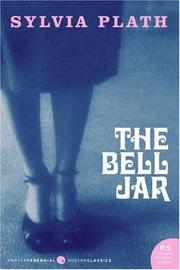
The Bell Jar
Esther Greenwood wins a New York internship that should feel bright, then sinks into depression at home. Plath's 1963 novel follows her breakdown, treatment,…
2,504-word summary · 11 min read

A Tale of Two Cities
Lucie Manette frees her father from the Bastille while Sydney Carton loves her from afar through London and Paris revolt.
3,595-word summary · 16 min read

The Handmaid's Tale
Atwood's The Handmaid's Tale retold: Offred in Gilead, the Commander, Serena Joy, Mayday, and the van.
2,369-word summary · 11 min read

Dracula
Count Dracula sails for England in letters and diaries, and Van Helsing leads the hunt to stop him.
2,860-word summary · 13 min read

War and Peace
Pierre, Natasha, and Andrei search for meaning amid the Napoleonic wars.
2,536-word summary · 11 min read