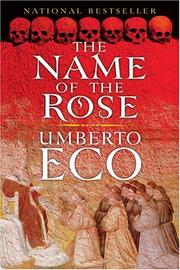
The Name of the Rose
2,580-word summary 11 min read 512 pages in the book
- First published
- 1980
- Publisher
- Harcourt
- Pages
- 512
- ISBN
- 9780156001311
- Original title
- Il nome della rosa
Reading options
What's inside (8 sections)
I picked up The Name of the Rose after a friend called it a murder mystery for people who like footnotes. Published in 1980 in Italian as Il nome della rosa, and read here in the Harcourt edition that runs 512 pages, it is both a crime story and a portrait of faith and fear in the Middle Ages. I read it slowly over two weeks, often with a list of names close by. It rewards patience. It also tests it.
The setup is plain at first. In late November 1327, in a rich Benedictine abbey in northern Italy, William of Baskerville arrives with his novice Adso of Melk. Adso narrates as an old man recalling his youth. William, a Franciscan, has come before a meeting between papal envoys and Franciscans over poverty and power. At once the Abbot asks him to look into a death. The abbey wants quiet. William wants facts. Those aims pull apart from the start.
William is tall, sharp eyed, fond of logic, herbs, and lenses. He owes much to Sherlock Holmes, and Eco does not hide the debt. Adso is young, devout, curious about manuscripts, meals, girls, and signs. He loves William and trusts him even when William errs. Their bond warms the book. Without Adso, William would feel cold. Without William, Adso would drown in routine.
Arrival in Late November 1327
The abbey stands on a hill above a village, walled and wealthy, with church, cloister, dormitories, stables, kitchens, and above the scriptorium a vast library built like a fortress. Abo of Fossanova, the Abbot, greets William with courtesy and worry. Adelmo of Otranto, a young illuminator, has died at the foot of the cliff below the east tower. Fall, leap, or push, no one knows. The Abbot wants a discreet answer before guests arrive for the debate.
William begins by looking. He studies snow, slope,Body position, and windows above. Adso follows and records. Eco shows the method early. Form a guess from signs, test it, drop it if it fails. William warns Adso never to trust one sign alone. That lesson shapes all that follows. Each death seems plain. Each plain reading proves partial.
We learn the daily round. Matins before dawn, lauds, prime, mass, silent meals with reading aloud, long copying in the scriptorium, vespers, compline, sleep. We meet the men. Malachi of Hildesheim guards the library. Severinus of Sankt Wendel keeps the infirmary. Berengar of Arundel assists in the library, vain and nervous. Venantius of Salvemec translates Greek and likes debate. Benno of Uppsala studies rhetoric. Alinardo of Grottaferrata is old and full of warnings. Salvatore, a rough lay brother, speaks a mix of tongues. Remigio of Varagine, the cellarer, runs stores and kitchens. And in shadow sits Jorge of Burgos, old and blind, bent with years, still feared for memory and voice.
Adso takes it in with open eyes. He notes stone, cold, food, dress. He pities the peasants below while monks dispute high doctrine above. That gap between abbey wealth and village hunger will matter when heresy and law arrive.
The First Deaths: Adelmo, Venantius, and Berengar
Adelmo drew vivid and comic illuminations, with twisted bodies and grinning fiends. Talk says he killed himself for shame tied to forbidden love. William doubts quick talk. He learns Adelmo quarreled with Berengar. He learns Venantius knew both. He finds Adelmo liked strange art that made strict monks uneasy. Adso wonders if laughter itself can be sin.
Then Venantius is found head down in a vat of pig blood. His fingers are black. His tongue is dark. Severinus helps William view the corpse. No wound explains death. Poison seems likely. But where would poison come from in a house of prayer, and why the stained skin. Fear spreads through choir and kitchen.
Berengar vanishes next. After search and prayer, his body is found drowned in the bathhouse, fingers also stained. Monks whisper of Revelation. Blood recalls the trumpet where the sea turns to blood. Bitter waters recall the next trumpet. William dislikes prophecy as proof, yet notes it. Adso is torn between faith in wonders and trust in William.
The library staff close ranks. William asks for the catalogue and is refused. Malachi says only the librarian may enter the upper rooms. Others must request books through him. That rule sounds like order. It works like a wall.
Adso finds his own trouble. In the kitchen he meets a poor village girl, sent by Salvatore to trade her body for bread. Adso, burning with youth and guilt, lies with her. Eco writes the scene with care, not scorn. It shows Adso as human, not a mere pen. It shows how hunger reaches even holy ground. The girl has no name in his tale. She stays in his memory as pity and loss.
William pulls threads. Venantius worked on something secret with Adelmo and Berengar. Notes in cipher appear. A hidden book is named. Berengar was seen pale and restless late in the scriptorium. Servants speak of lights in the tower. Alinardo mutters of old secrets waking. Jorge praises silence and warns that laughter kills fear, and fear guards faith. Adso writes the line down and shivers.
The Library Labyrinth and the Finis Africae
The library is the heart of the book. From outside it rises walled above the scriptorium, with an east tower. Inside lies a maze of rooms marked by letters and verses, with mirrors, blocked doors, and stairs that lead nowhere. Only Malachi and his aide know the paths well. Even old monks lose their way. Eco maps it room by room so the reader feels cold air and dust.
William and Adso enter at night without leave, through a hidden passage behind a chapel mirror, carrying an oil lamp. The pages that follow are the finest night writing in the novel. Shut doors. Greek and Latin marks. Rooms named for lands and tribes. Chained books. Bestiaries, grammars, histories, banned tracts kept apart. Drafts that slam. Adso shakes and prays. William stays calm, marking turns with chalk and memory.
They learn the maze guards a sealed room at its far edge, called the finis Africae. The words point to the end of Africa on old maps, where the known world stops. No window opens there. Its door stays locked. Its entry is missing from lists. Monks who ask are told it holds nothing, or things best left alone. William judges it holds a book someone wants hidden, and that the deaths link to that book.
Day work firms the guess. Venantius left a scrap in cipher. William breaks it with patience. The note points to the finis Africae and to a text on laughter. Berengar stole a book from a scriptorium desk and hid it. Severinus later finds a strange volume in the infirmary with stiff pages and odd edges. William warns no one to wet a finger to turn its leaves. That warning will prove true in a cruel way.
Eco pauses here to show how such libraries ran. Copying by hand. Parchment scraped and reused. Notes in margins. Lists kept apart from shelves, so only the librarian knows where each work rests. Such care saved texts, yet gave one man rule over memory. Malachi holds that rule by office. Jorge holds it by age and will. When Malachi bars William by day, it is policy built over years. Knowledge is guarded because souls are thought at risk.
These chapters slow the pace. There are long talks on signs, on comedy, on whether Christ ever laughed. Latin lines go untranslated. Lists of books fill pages. I found worth in them on a second pass, since clues hide inside dull talk, a note on mirrors, a note on drafts, a note on poison. Still, the middle drags. Readers who want swift kills should know this now.
Heresy, Dolcinians, and Remigio the Cellarer
As William hunts the book, guests fill the abbey for the debate on poverty. Franciscans argue Christ and the apostles owned nothing. Papal envoys argue the Church may hold goods for holy ends. In 1327 this meant taxes, armies, and who could name whom heretic. William favors a plain life, yet dislikes wild claims and blood shed for purity.
The past enters with Salvatore and Remigio the cellarer. Both once followed the Dolcinians, poor fierce folk led by Fra Dolcino. Eco gives their tale through William and others. Dolcino preached penance and a new age. His people lived rough in hills, begged and stole bread, faced siege and snow. They were hunted and crushed. Remigio lived by hiding his youth and taking abbey work. Salvatore lived by serving strong men and trading secrets for bread.
Remigio is large, friendly, fond of kitchen talk, quick to laugh with workers, yet marked by old fear. He knows paths, stores, and gossip. He helps William, then pulls back when questions touch his past. Salvatore keeps odd herbs and a black cat, which makes plain monks call him a sorcerer. The village girl moves near them. Poverty binds the three. The abbey stays rich. The village stays thin. Fine words on poverty in the chapter house ring hollow to those who carry wood.
William tries to keep his inquiry apart from church politics, but the house will not allow it. The debate fails amid anger. The papal side wants order. The Franciscans want leave to preach. The Abbot wants the deaths closed before Rome hears. Remigio, with stained youth, would make a ready scapegoat. William sees it and bids him stay quiet. Fear makes quiet hard.
Severinus is killed in this stretch, struck down in the infirmary with his skull broken. The room is wrecked. A book is gone. That murder breaks the poison pattern and shows haste. Someone feared what Severinus had found. Adso watches Remigio drink and weep. Salvatore runs and hides. Jorge sits in choir with blind eyes open, as if hearing steps no one else hears.
Bernard Gui and the Inquisition
Then Bernard Gui arrives, a Dominican inquisitor drawn from history, polite, tireless, and without mercy. He brings guards, records, and method. Ask, write, press, compare, punish. He has no care for lost books. He hunts heretics.
Gui seizes on Salvatore and the girl first. Salvatore is caught with charms and strange rites. The girl is caught out of place with food that looks stolen. Gui reads witchcraft and lust into hunger and fear. Adso aches for the girl but stays mute. He is young and afraid, and speech might doom them both. William speaks for reason, but Gui answers with law. The girl is flogged and led away to a fate Adso never learns. That loss marks him for life. His old voice still shakes telling it.
Remigio is next. Under threat and pain he confesses to wild years with the Dolcinians, to theft, to false faith, to deeds done and not done. Gui blends true guilt with forced lies till Remigio signs a tale fit for fire. William argues Remigio is not the abbey killer. Gui replies that a heretic burned is still justice, though other sins hide. Remigio goes to the stake. Salvatore, judged lesser, goes to prison. Law, as Gui names it, is done before the murders are solved.
Eco stays fair here, not cheap. Gui thinks pain saves souls. The Abbot thinks a culprit buys peace. William thinks truth needs proof, not screams. The clash shows how courts can serve power in holy dress.
The envoys leave. Hopes for accord fail. William loses standing and works in quiet hours with fewer friends. Monks copy with eyes down. Benno shifts sides to save his skin. Alinardo raves of the end. It grows clear the killer used Gui as cover, letting the trials draw eyes while the last links closed.
I admired this part even as it hurt. Eco will not let William play hero at the stake. One friar cannot stop Church force. That failure gives the book weight missing in neat mysteries.
Jorge, Aristotle on Comedy, and the Abbey Fire
At last William sees the shape. The deaths point to one guarded text in the finis Africae, a lost second book of Aristotle on comedy, as Eco boldly imagines it. In this telling Aristotle praised laughter and the lowly as paths to truth. Jorge of Burgos judged that praise poison to souls. If men learn to laugh at holy things, fear dies, and with fear, rule dies. So Jorge hid the book and tainted its pages with poison, so any reader who licked fingers to turn leaves would die by mouth.
The chain now reads clear. Adelmo learned of the book through Berengar, felt shame for what he did to see it, and fell from the east tower by his own step or by dread. Venantius took the book, read in secret, took poison from its leaves, and was cast into blood to hide the stain. Berengar took it next, handled it with damp hands, and drowned in the baths in seizure or panic. Severinus found the volume and was struck down for it before he could warn William. Malachi, who loved Berengar and obeyed Jorge, took the book at Jorge's word and died at office with black tongue after turning its leaves.
William and Adso force the finis Africae by tracing mirrors, drafts, and Alinardo's hints. The room is small and lined with books. Inside waits Jorge, blind and calm, the tainted volume in hand. What follows is dispute, not swordplay, on laughter, truth, and rule. Jorge holds that faith needs bounds. William holds that truth needs trial. Jorge says laughter frees men from fear of hell. William says even holy fear should face questions. Neither yields. Jorge eats the poisoned leaves to keep the book from William. He tears, chews, mocks. William tries to stop him and fails.
Then fire takes the abbey. In the struggle a lamp falls on oil and dry parchment. Flames race through shelves. Drafts in the maze feed them. Adso and William flee through smoke and falling wood. Monks run with buckets that cannot reach the tower. Villagers watch from below. Benno dies in the stacks trying to save pages. Jorge dies in the flames with his secret. The great library burns to ash with works no living hand had copied twice. The abbey stands gutted on its hill.
Adso ends as an old man. William leaves with honor dimmed, later dying in plague, Adso says. The girl is never found. The abbey never regains its store. Adso keeps only memory and scraps saved from fire. His last line on names and roses has puzzled readers for years. I read it as grief for what pride loses when it guards knowledge too well. A name stays after the rose dies. A list stays after books burn. Signs stay after men fail.
Fair blame belongs with praise. The book is dense with Latin, long pleas on heresy, lists of books, and dreams that slow the hunt. Some talks repeat. Adso's visions in church, rich as they are, stall the pace. New readers may feel shut out. The Harcourt text at 512 pages asks for work. I skimmed some hymns on first pass without shame. Take it as a winter book, not a swift read. Give it an hour a day. Keep a list of names. The murders will pull you through the hard parts if you let them.
FAQ
Who are William and Adso in the story?
William of Baskerville is a Franciscan friar sent to an Italian abbey in 1327, and Adso of Melk is his young novice who narrates the events in old age.
What is the finis Africae?
It is the locked room at the heart of the abbey library that hides a rare book, a lost volume of Aristotle on comedy that has been poisoned to kill readers.
Is The Name of the Rose hard to read?
Yes for many readers. Published in 1980 with 512 pages in the Harcourt edition, it holds dense debates, Latin lines, and slow stretches between murders.
Similar books
More like The Name of the Rose →
War and Peace
Pierre, Natasha, and Andrei search for meaning amid the Napoleonic wars.
2,536-word summary · 11 min read

Things Fall Apart
Proud Igbo wrestler Okonkwo rises in 1890s Umuofia, then loses standing through hard exile, a son's conversion, and British missionaries and courts remaking…
2,518-word summary · 11 min read

The Trial
Josef K. is arrested one morning on an unknown charge and pulled into an endless court he can never leave.
2,318-word summary · 10 min read

The Three Musketeers
Young dArtagnan joins Athos, Porthos and Aramis to recover the queens diamonds and face Milady.
2,569-word summary · 11 min read

The Prince
Machiavelli advises Lorenzo on rule through fear and love, fortune, cruelty and mercy.
2,204-word summary · 10 min read

The Karamazov Brothers
Dmitri, Ivan, and Alyosha Karamazov face their father, murder, faith, and doubt in Dostoevsky's final novel.
2,512-word summary · 11 min read