
The Pelican Brief
2,994-word summary 13 min read 371 pages in the book
- First published
- 1992
- Publisher
- Doubleday
- Pages
- 371
- ISBN
- 9780385421980
Reading options
What's inside (8 sections)
I picked up The Pelican Brief after The Firm and A Time to Kill, curious what Grisham would do outside a courtroom. John Grisham published it in 1992 with Doubleday, and the hardcover runs 371 pages. It was his third novel, and you can feel him stretching toward a chase story. The law is still there in memos and firm offices, but much of this book happens in parking lots, cheap hotels, and newsrooms. I read it in three sittings, and the second one kept me up late because Darby never gets to rest long.
The setup is brutal and simple. Two justices of the United States Supreme Court are murdered on the same night by the same professional killer. The country wakes up to a vacancy crisis, a grieving Court, a panicked White House, and an FBI investigation with no motive. A second year law student in New Orleans writes a speculative memo about who might have wanted both men dead. That memo, meant as an academic exercise, turns out to be close to true. From that point on, people who have touched it start to die.
What kept me turning pages was not the legal theory alone but the way Grisham pairs two amateurs against a system. Darby Shaw can research and reason. Gray Grantham, a reporter for the Washington Post, can call and knock and publish. Neither one can shoot or fight their way out. They have to think, hide, and trust each other in small increments while the FBI, the CIA, the White House, and a very rich oil man all move around them.
Two murders on the same night
Justice Abraham Rosenberg is ninety one, liberal, abrasive, half paralyzed, breathing with oxygen tubes, still working from a wheelchair. Grisham opens with him watching protesters from the Supreme Court building on the first Monday in October, deaf and delighted by the crowd. That night in Georgetown, a killer slips into his home and shoots him in the head. The companion in the house is killed too. Rosenberg had refused FBI protection, and that stubbornness costs him his life.
Justice Glenn Jensen is the opposite on paper and the surprise in the middle. He is younger, appointed by a Republican president, expected to vote conservative. In a seedy adult theater in Washington, he is garroted quickly among patrons who notice nothing until later. Jensen also refused a security detail. Grisham does not linger. He gives you the sticky floor, the flickering screen, the killer moving without hurry, and then the shock of identification.
Washington reacts with grief and calculation. The remaining justices are rattled. FBI Director F. Denton Voyles takes charge. At the White House, the president, a conservative facing reelection, and his chief of staff Fletcher Coal see an opening. Two seats at once means a chance to reshape the Court if they can get nominees through before the election. Coal keeps lists and counts votes. Voyles distrusts him on sight, and that friction drives much of the Washington half.
The killer is Khamel, described as the most wanted hit man in the world, who changes passports and kills without monologue. Grisham uses him sparingly at first. You see the practiced hands, the exit routes, the lack of wasted motion. The FBI floats theories about terrorists and lone fanatics because the victims do not match. One is the Court's liberal lion. The other is a Republican appointee. If it was politics in the usual left versus right sense, why these two together.
The law student and her professor in New Orleans
Darby Shaw is a second year student at Tulane Law School in New Orleans, near the top of her class, living on coffee and library hours. She is dating Thomas Callahan, her constitutional law professor, who is charming and flawed in equal measure. Callahan drinks too much and runs a loose class where he dares students to think like conspirators. Their age gap dates the book a little now, and I will come back to it.
After the assassinations, Callahan turns his class into a workshop. Forget the manifestos, he says. Ask who benefits. Look at pending cases. Look at voting records. Students toss out abortion, civil rights, business regulation, criminal procedure. Darby goes quiet and goes to the library.
She pulls opinions, concurrences, dissents, cert votes. She reads Rosenberg first because he is obvious. Decades of liberal votes on speech, criminal defendants, civil rights, and above all the environment. Then she reads Jensen and finds the wrinkle. On many social issues he voted with the conservatives who put him there, but on environmental cases he broke ranks again and again. He loved birds, wilderness, clean water law. He had written or joined opinions that blocked drilling, development, and takings claims. Put side by side, the two dead justices shared one consistent overlap despite their reputations as opposites. Both were reliable green votes.
Darby writes it up as a lark, a few pages with case cites and a guess, the kind of memo a good student writes at midnight to impress a professor she likes. She calls it the pelican brief in her own head because the test case at the center involves a Louisiana marsh, an endangered brown pelican, and an oil company that wants to drill. She shows it to Callahan. He is impressed enough to show it to a friend.
That friend is Gavin Verheek, special counsel to Director Voyles, a former classmate of Callahan who still answers his calls. Verheek reads the memo, passes it up the chain as one theory among many, and suddenly a student exercise is stamped and filed and read in rooms with no windows. Darby thinks she is playing a classroom game. She has in fact mailed her name into a file that powerful men will soon treat as a threat.
What the brief actually claims
The theory is specific, which is why it scares people. Victor Mattiece, a reclusive oil billionaire based in Louisiana, wants to drill on tens of thousands of acres of marshland that the state leased or sold years ago. The land holds perhaps billions in oil and gas. It is also habitat for the brown pelican and other wildlife, and a small environmental group, the Green Fund, has sued in federal court to block drilling. The case is climbing toward the Supreme Court. If it gets there under the current lineup, Mattiece loses, because Rosenberg and Jensen would both vote to protect the habitat under existing environmental statutes.
Remove those two, Darby argues, and replace them with nominees chosen by the current president, and the math flips. Five to four becomes four to five. A drilling ban becomes a drilling permit. Billions move. That is motive on a scale that makes terrorism theories look small.
Grisham fills in Mattiece with oil patch texture. He made his fortune in the Gulf, bought politicians and geologists with equal ease, built a private world of lawyers and security men, and in recent years slid toward paranoia and obsession. He rarely appears in public. He works through a big New Orleans firm, White and Blazevich, where partners bill him by the hour and look away from his stranger requests. One junior lawyer there, Curtis Morgan, later known as Garcia, stumbles on internal memos and billing records that suggest someone connected to Mattiece paid for research on the justices and then for something worse. Morgan says nothing at first because saying anything would end his career and maybe his life. He copies papers, records a video, tells his wife only pieces, and waits.
The brief also names the mechanism in Washington. The president owes Mattiece or people around Mattiece for campaign support, or at least fears the appearance of it. Coal keeps the nomination lists close. When a Post story by Gray Grantham correctly names two likely nominees before anyone else has them, the White House assumes a leak and tightens the circle. When Verheek's copy of Darby's memo lands on Coal's desk, the circle tightens further. Grisham is good at this bureaucratic dread. No one says kill the girl in a memo. They say contain, assess, find the source, protect the process. The killers hear the rest anyway.
I found this section the most satisfying to retell because it shows a student doing what she was trained to do. Shepardize, compare, distinguish. Darby is not a detective with a gun. She is a reader who notices a pattern. The pelican detail gives the stakes a smell. Salt marsh, shrimp boats, survey stakes in black water. You understand why both men had to die for a drilling map.
New Orleans turns deadly
Callahan dies in a car bomb meant in part for Darby, and Grisham stages it with awful timing. They have been drinking with friends in the French Quarter, arguing about the brief, laughing a little too loud. Darby steps away for a moment. The car explodes on a New Orleans street, killing Callahan instantly and throwing glass and fire across parked cars. Darby sees it happen. She also sees men watching her in the crowd, and a police officer who asks too many narrow questions. She does the only smart thing she can think of. She does not go home. She does not go to the law school. She calls Verheek from a pay phone and then she vanishes into cash motels.
Verheek flies to New Orleans for the funeral and to bring her in. He wants to put her under FBI protection, which in his mind means a safe house, agents at the door, a statement on record. Darby refuses, and the book earns that refusal. She has watched the Bureau fumble the theater investigation, leak to the press, and posture for the White House. She trusts Callahan's friend but not his building. She agrees to meet him in person to hand over her notes and talk through options.
That meeting is one of the best set pieces Grisham ever wrote. Khamel, who has been tracking both of them, kills Verheek first and then impersonates him to lure Darby to a meeting spot. Darby walks into a parking area expecting a sad, kind lawyer in a rental car. She sees a man who looks right at a glance but moves wrong, speaks a shade too formally, asks one question too many about where she is staying. Before he can shoot her, he is himself shot by an unseen watcher, likely CIA, and Darby runs through traffic with her ears ringing. She does not learn who saved her for a long time. She only learns that paper and friendship will not protect her.
From here the book becomes a road story. Darby dyes her hair, buys cheap clothes with cash, sleeps in motels under false names, rides buses and planes on short hops. She keeps her research in a bag she will not let go. In New Orleans she survives another close attempt in a parking garage that taught me to check stairwells in fiction and in life. She phones the FBI only to hang up. She phones Gray Grantham at the Post because a reporter can publish, and publication feels safer than custody.
Some readers find this stretch repetitive, and I get it. There are many rooms with humming air conditioners and many scenes where Darby counts money. I did not mind as much as I expected because Grisham varies the fear. Once it is a tail on foot in the Quarter. Once it is a car that stays two lengths back on a bridge over Lake Pontchartrain. The tradecraft is simple but plausible. Do not use credit cards. Do not tell anyone your next city until you are already there.
Gray Grantham and the run through Washington
Gray Grantham is ambitious in the way good reporters are ambitious. He works for the Washington Post, wants a story bigger than mayoral scandals, cultivates sources with lunches he cannot afford, and got lucky once with a tip about Supreme Court nominees that made his editors trust him. Then a frightened caller using the name Garcia tells him he saw something in his law firm about the assassinated justices and wants to talk off the record. Garcia sets conditions, misses meetings, calls back whispering, and then goes silent. Grantham, who has chased empty tips before, keeps the number anyway.
Darby calls him because she needs a megaphone. Their first talks are prickly. She will not give her name. He will not promise to hold a story if lives depend on it. Slowly they trade. She explains Rosenberg and Jensen as environmental votes. He explains nomination politics and Coal's operation. They meet in New York rather than Washington because Washington is watched.
The Washington cover story tightens in parallel. The president, worried about reelection and about Mattiece money stories, orders Voyles to pause work on the pelican theory and asks CIA Director Bob Gminski to run a quieter inquiry. Voyles, a stubborn Texan who dislikes being used, obeys in public and keeps investigating in private. He sends or allows an emissary to approach Mattiece to ask, in rich man language, whether the brief is true. Mattiece, by now isolated and half mad in his compound, has the man killed. That murder, more than any memo, convinces Voyles that Darby guessed right.
The Garcia thread pays off in the saddest way. Curtis Morgan, the White and Blazevich associate who copied files and taped a statement, is found dead in what looks like a mugging. Grantham and Darby find the widow, who kept her husband's envelope because she promised she would. Inside are memos about Mattiece, billing entries for research on Rosenberg and Jensen, and a videotape in which Morgan says he saw what he saw and fears what will happen if anyone knows. Darby helps retrieve one more document by impersonating the widow, a scene played with held breath rather than gadgets.
The climax is journalistic rather than explosive, which I admired. Grantham takes the affidavit, the tape, Darby's brief, and Voyles's quiet confirmation to his editors and the paper's lawyer. They argue about libel and whether one dead associate and a student memo are enough. Voyles walks in with his own insurance, a tape of the president telling him to lay off the brief, and offers Darby a plane and a new name if she will stand behind the story. The Post publishes. A named lawyer kills himself. The president is expected to announce he will not seek another term. Mattiece vanishes.
Darby ends on an island in the Caribbean, healing, swimming, reading her own obituaries in American papers. Grantham flies down after the dust settles, and they agree to try living together month by month, no promises. It is a soft landing after so much concrete and gunfire, and Grisham does not pretend the system is fixed. Two seats will still be filled. Oil will still be under the marsh. The only win is that the murders have authors now, printed where they cannot be unpublished.
What holds up and what wears thin
What holds up best is pace married to procedure. Grisham in 1992 could explain cert petitions and firm billing and newsroom libel review without slowing the chase, because he had practiced law. Darby reads like a real top student. She briefs cases, she sees the environmental overlap because she did the reading, she writes clearly. For a male writer in the early nineties to center a young woman who saves herself with research felt fresh, and it still reads as respectful more often than not.
Place helps too. New Orleans is not postcard Bourbon Street here. It is Tulane classrooms with humming fluorescents, Callahan's cluttered office, rain on Canal, the causeway lights over dark water. Washington is Beltway traffic, basement parking, Post desks piled with coffee cups. Louisiana marsh gets a few loving pages. Egrets, survey flags, shrimpers who know the channels better than company men. You believe Mattiece wants what is under that mud because Grisham shows you the mud.
What wears thin is the middle, as many readers have said since publication. Around the fourth safe house and the third alias, the tension sags. Darby is brilliant in the library and oddly passive on the street, waiting for men to tell her where to stand. Khamel is terrifying in the first fifty pages and then becomes a plot device who appears when Grisham needs a scare. Mattiece himself barely appears except as a voice on a phone and a silhouette behind glass, which makes the central villain feel thin after such careful buildup about oil leases and firm memos. The romance between Darby and Gray grows fast on little shared ground beyond danger, and one love scene reads as studio note rather than character need.
There is also a trope problem that bothered me more on reread. Darby must hide while powerful men debate her fate in rooms she cannot enter. Voyles and Gminski and Coal get long scenes. She gets motel rooms. Grisham tries to balance it by letting her solve the Morgan puzzle, but the structure still parks its smartest person on the bench while the FBI and CIA play. The film version from 1993 with Julia Roberts and Denzel Washington gave them more equal time, yet the book sometimes treats Darby as evidence to be guarded rather than as counsel to be heard.
Still, at 371 pages this moves faster than many longer legal thrillers that came after, and the pelican mechanism is clever without feeling like a trick. Two justices who looked like opposites shared one vote that mattered to one rich man. A student saw it because she looked at opinions instead of headlines. A reporter printed it because he found paper and a widow willing to trust him. If you want less courtroom and more running, this is the Grisham to pick.
FAQ
When was The Pelican Brief published?
John Grisham published it in 1992 with Doubleday. The hardcover runs 371 pages and it was his third novel after A Time to Kill and The Firm.
What is Darby Shaw's theory in the brief?
She argues both murdered justices were reliable environmental votes. Oil billionaire Victor Mattiece wanted them replaced so the Supreme Court would allow drilling in Louisiana pelican habitat.
Is The Pelican Brief part of a series?
No. It is a standalone legal thriller with no series order, unlike Grisham's Jake Brigance books.
Similar books
More like The Pelican Brief →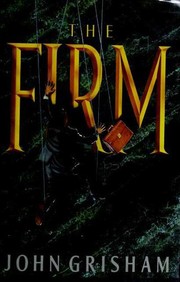
The Firm
Young lawyer Mitch joins a Memphis firm with great pay, then learns clients die and the FBI watches.
2,079-word summary · 9 min read

The Client
Eleven-year-old Mark Sway learns a mob secret in Memphis and hires lawyer Reggie Love for one dollar.
2,536-word summary · 11 min read

The Only One Left
Caregiver Kit tends mute Lenora Hope accused of 1929 family murders.
2,592-word summary · 12 min read

The Maidens
Therapist Mariana hunts Cambridge professor Edward Fosca after a Maidens murder.
2,234-word summary · 10 min read

The Locked Door
Surgeon Nora Davis hides serial killer father while patients die.
2,465-word summary · 11 min read

The Coworker
When odd accountant Dawn vanishes, star salesperson Natalie becomes the prime suspect in a tense office thriller with turtles, lies and revenge.
2,511-word summary · 11 min read