The Prophet
2,852-word summary 13 min read 128 pages in the book
- First published
- 1923
- Publisher
- Knopf
- Pages
- 128
- ISBN
- 9780394404288
Reading options
What's inside (7 sections)
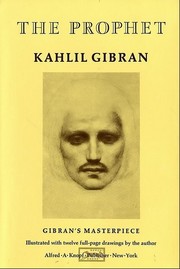
I picked up The Prophet because I kept seeing it at weddings and funerals, quoted on cards, read aloud by nervous uncles. That made me suspicious. A book that small, that loved by that many people, usually turns out thin. Kahlil Gibran published it in English in 1923 with Knopf in New York. The modern Knopf hardcover runs 128 pages and carries his own drawings, twelve of them, pale figures with heavy eyes. The first edition was even shorter, about 107 pages. You can read it in an afternoon. I did, on a couch, with tea going cold, and then I sat there longer than I expected.
There is almost no plot. A man named Almustafa has lived in the city of Orphalese for twelve years, waiting for a ship to take him home. When the ship finally shows on the horizon, the people gather. A seeress named Almitra, who believed in him early when others did not, asks him to speak before he leaves. He walks to the square before the temple. People step forward one by one and ask for counsel. What of love. What of children. What of work. He answers. Then he says goodbye and boards. That is the whole frame.
What fills the middle are twenty six short prose poems, each an answer. No chapters in the novel sense, just voices calling out and Almustafa replying in slow, rhythmic prose. It reads like a town meeting mixed with prayer. I found myself reading a section, staring out the window, then reading the next. Some parts felt true at once. Some parts annoyed me. Both reactions seemed part of the point.
Love, marriage, and children
Almitra asks first about love, which sets the tone. Almustafa does not describe romance as comfort. He describes it as movement that both crowns and bruises. Love, in his telling, asks you to open even when opening hurts, to let yourself be shaped the way grain is ground or cloth is worked. I read that as his way of saying love is not a safe place to hide. It changes you. That part landed for me because he refuses to split joy from risk.
Then she asks about marriage. His answer leaves room. He pictures two people staying together through death and memory, yet he keeps insisting on space. Eat separately sometimes. Keep solitude inside closeness. Stand apart the way temple pillars stand apart, holding up the same roof without leaning. The oak and the cypress grow near each other but not in each other’s shade. Gibran wrote this in the early 1920s, so the fact that he does not preach ownership felt fresh. He leans on old roles in places, which reads dated now, but the core advice, love without caging, still holds.
The children section is the one most people know, even if they have never opened the book. A mother holding a baby asks, and Almustafa says your children arrive through you but they are not your property. They belong to life itself, to a tomorrow you cannot visit. You can give them affection and shelter, but not your thoughts, because they have their own. Parents are like bows, children like arrows sent forward. I paraphrase because the exact lines are famous and I do not want to lean on memory, but the shape is right. It pushes back against copying yourself into a smaller person. At the same time, it says almost nothing about sleepless nights and school forms. He gives the sky view, not the kitchen floor view.
Giving, food, work, joy and sorrow
A rich man asks about giving, and Almustafa turns the question around. Giving from surplus, he says, is small. Real giving is giving part of yourself. He pokes at fear, the habit of storing because tomorrow might hurt. He sketches different givers, people who give to be seen, people who give little though they have much, people who have little and give all, people who give gladly or with pain, people who give without making a story of it. That is easy to say when you have enough, harder when you do not, and the book never quite wrestles with poverty as a system. Still, as a personal check, it works.
Then an old innkeeper asks about eating and drinking. This was stranger and lovelier than I expected. Almustafa wishes we could live on light and air, then admits we kill to eat and take milk meant for young animals. So make the meal an act of respect. See the table as an altar. When you eat bread or crush fruit, remember you join a cycle where your body will also feed something later. When grapes become wine, remember autumn and the vineyard in winter. I am not someone who says grace, but this made me pause before lunch the next day. He does not preach diet rules. He asks for attention. Food becomes connection rather than fuel.
The plowman asks about work, and here Gibran is at his most idealistic. Work is how you keep pace with the earth. He rejects the idea that labor is a curse. Work with affection, he says, and you bind yourself to others. Work bored or resentful, and the product sours. If you hate your task, he says, better to sit at the temple gate and accept gifts than to poison the work. I laughed. It is impractical advice for anyone with rent due, and I think Gibran knew it. Yet I have eaten bread baked by someone who cared, and bread baked by someone counting minutes. You can taste the difference.
A woman asks about joy and sorrow, and this section is short and strong. Your joy, he says, is your sorrow with the mask off. The same well gives both laughter and tears. The deeper sorrow cuts, the more joy you can hold. A cup burned in fire holds wine. Wood cut hollow becomes a lute. When you feel glad, remember what shaped you. When you grieve, remember delight lives in the same heart. I have heard versions of this in therapy offices and in songs. Gibran says it cleanly. It helped me because he does not tell you to chase joy or fix sorrow. He tells you they live together.
Houses, clothes, trade, crime and law
A mason asks about houses, and Almustafa warns against loving walls more than life. Build, yes, but do not let the house become a tomb. Your home is your body writ large, he suggests, and it should shelter without imprisoning. Keep a sense of the wild inside, sky, garden, memory of open fields. I read this in my small apartment and looked at my shelves. He has a point about clutter as fear. He says less about housing as safety, especially for people who have never felt safe. That is a blind spot. For someone renting a damp room, a solid house is not a spiritual trap. It is rest.
Then a weaver, in some editions a fuller or cloth maker, asks about clothes. Gibran is playful here. Clothes cover much of your beauty but they do not cover what is unlovely in you. They can hide and they can adorn, but the wind and sun will strip vanity in time. Skin freer than fabric. Do not dress to prove worth. I like that he treats vanity gently rather than scolding. He knows people enjoy fine cloth. He just asks them not to mistake it for self.
A merchant asks about buying and selling, and this is where the book feels both old and current. Almustafa imagines trade as exchange of gifts rather than trickery. Let the market be a meeting place where need meets plenty, where bargaining stays honest. Do not let empty handed buyers leave shamed, and do not let sellers inflate. I thought of farmers markets and also of online carts at midnight. His vision is sweet and, frankly, innocent about scale. He pictures people face to face. He does not picture supply chains or ads that follow you. Still, the reminder to trade as if the other person matters landed.
Then a judge asks about crime and punishment, and a lawyer follows about laws. Almustafa says no one is separate from wrongdoing. The thief lives in all of us. Punishment that only hurts without teaching repeats harm. On laws, he is skeptical of rules carved too hard. People fence themselves in, then break them in secret. I found this moving and slippery at once. Moving because it asks for mercy. Slippery because it offers no help for real harm. He wants remorse and repair, which I respect, but he skips the hard cases where mercy alone fails.
On freedom, asked by an orator, he goes further. Freedom is not the absence of chains only. It is also release from inner hunger that drives you at night. He pictures townspeople proud of being free while still ruled by fear and craving. True liberty, he says, includes freedom from your own grasping. I underlined this in my head. It connects back to giving and work. The same worry threads through. Stop clutching and you breathe easier. Easy to write. Hard to live.
Reason, pain, teaching and the people around us
A priestess asks about reason and passion, and Gibran gives one of his best images. Reason and passion are like rudder and sail on a soul at sea. You need both. Reason alone grounds you. Passion alone burns you. Let them work together, reason guiding, passion lifting. He also warns against making reason a tyrant that beats feeling into silence. I liked the balance. He does not pick intellect over heart or heart over intellect. He wants a voyage, not a courtroom.
A woman asks about pain, and he treats it as breaking open. Pain cracks the shell so something larger can enter. I am wary of books that praise suffering. Gibran stays just short of praise. He says pain can teach, not that you should seek it. That distinction matters to me. Sometimes pain clarifies. Sometimes it just hurts and you need help, rest, medicine, a friend.
Then a priest asks about self knowledge, and Almustafa says do not chase definitions. Your deeper self is already moving in sleep and waking, building, dreaming, longing. Watch actions more than labels. Do not say I found truth, say I found a truth. Do not say I found the path, say I met a path. That humility pleased me. It fits the whole book. He speaks in certainties most of the time, then slips in this caution against grand claims.
A schoolmaster asks about teaching, and his answer is famous for a reason. No one can give you wisdom that is already asleep in you. A teacher walks beside you to the door of your own mind. I thought of good teachers I had, the ones who asked better questions. He underplays basics, though. Children need times tables and grammar before they can wander freely.
On friendship, asked by a youth, he is warm. Friendship is not a trade for hours. It is sweetness you share without chasing profit. When your friend speaks, listen without fear of no or yes. When silent, let your heart still listen. Meet in good times to laugh, in hard times to be present without fixing. I liked how undemanding this is. He does not ask friends to save each other. He asks them to show up.
On talking, asked by a scholar, he pokes at noise. We talk when thought grows lonely, when we cannot bear silence. Much speech is half murder of attention, people interrupting, performing, filling air. True talk happens when minds meet in quiet first. Then words carry. I felt called out in a good way. I talk too much when nervous. His remedy is simple. Think first. Leave space.
On time, asked by an astronomer, he gets mystical. Time is not a river outside you only. Past and future live in present memory and desire. Do not call time an enemy. Live the hour as if it holds all. Clocks exist, I know, and deadlines exist. But as mood, I get it.
Good and evil, prayer, pleasure, beauty, faith and goodbye
A politician asks about good and evil, and Almustafa refuses the neat split. Good and evil are not rival armies so much as conditions of one hunger. People are good when hungry for light and evil when hungry in the dark, but hunger itself is human. Even the good in you can harden into judgment. Even the lost in you can turn toward growth. I found this helpful and incomplete. Helpful because shame freezes change, and he loosens shame. Incomplete because some acts are evil in a way that needs naming, not softening. He prefers inner language to social language. That is his strength and his limit.
Then a priestess asks about prayer, and he moves it out of the temple. Prayer is not begging for favors. It is expansion, meeting the larger life, speaking your deep need and listening back. Pray in joy and in need, in house and field, alone and with others, but pray from honesty rather than habit. I am not religious in a formal way, yet I liked this. It made prayer sound like attention rather than performance.
A hermit asks about pleasure, and Gibran is careful. Pleasure is not sin by itself. It becomes poison when hoarded, when chased until it rules. Take pleasure as a guest, not a master. I appreciated that he does not scold youth here. He wants delight without addiction.
A poet asks about beauty, and his answer is short and elusive. Beauty is not a needy thing you catch. It is power that moves you, a rhythm you glimpse in a flower, a child, a noble act, then lose when you try to own it. Do not ask beauty what it is for. Let it pass through. I wanted more here. He circles rather than lands. Maybe that is honest. Beauty resists definition. Still, after strong sections, this one felt thin to me, pretty mist rather than bread.
An old priest asks about religion, and Almustafa says your daily life is your temple. Religion is not hours set apart but how you work, give, love, eat. Readers from many backgrounds have felt welcome here. Readers who want sharp theology will find it vague.
Then Almitra asks last about death, and the book rises. Death, he says, is not an end but a standing naked in wind and sun, a melting into larger air. The body rests. What lived in you continues in life around you. Singers die but songs pass mouth to mouth. Lovers part but love remains in children and kindness. Fear death less, he urges, and you will live more freely now. I do not share his certainty about what follows, and I wish he left more room for grief that does not console quickly. Yet as a farewell speech before a voyage, it works. He gives courage, not proof.
The farewell itself is brief and tender. Almustafa blesses Orphalese, its streets, its workers, its children, its joy and its pain. He says he will return in another form, in another love born in the city. He boards with sorrow and hope mixed. Almitra watches. The ship moves. I felt the same lift I feel at train platforms, sad to leave people who taught me, glad to carry them.
What stays with me days later is not any single rule but a mood. Loosen grip. Make room. Work with care. Listen longer. That mood helped me in small ways. I left my phone in another room during dinner. I gave money without telling the story later.
What drags. The book floats above bodies and bills. It speaks of freedom to people who may lack food, of calm work to people with cruel bosses, of houses as traps to people without homes. Women appear mostly as mothers, brides, friends in supportive roles, rarely as makers in their own right, though Almitra leads the asking and holds real authority. The language, even in plain translation of feeling, can turn grand and repeat its own music until sections blur. If you need plot, argument, evidence, you will not find them. This is counsel, not story. It tells you how to feel about life more than how life works.
I still recommend it, with that warning. Read it slowly, a few answers at a time, not straight through like a novel. Keep a pencil nearby. Argue in margins. Take what steadies you and leave the mist. For a book from 1923 that never went out of print, that has sold millions and been translated again and again, its staying power is not mystery to me now. People bring it to weddings and funerals because it gives words when ordinary words fail. It does not solve love or grief or work. It stands beside you while you face them, and sometimes that is enough.
FAQ
When was The Prophet published?
Knopf published it in New York in September 1923. The modern hardcover runs 128 pages and the ISBN is 9780394404288.
Is The Prophet part of a series?
No. It is a standalone collection of 26 prose poems with a coming and farewell frame, followed later by The Garden of the Prophet.
Do I need to read it in order?
Yes, it helps. The questions build from love and family toward law, faith and death before Almustafa boards his ship.
Similar books
More like The Prophet →
The Holy Bible: King James Version
The 1611 King James Bible in a 1,472-page Thomas Nelson edition: from Genesis to Revelation, law, prophets, Gospels, and letters.
2,904-word summary · 13 min read

The Fountainhead
An architect who will not copy faces a rival who pleases everyone, a lover who fears the world, and a trial over dynamite.
2,988-word summary · 13 min read

The Complete Works of Edgar Allan Poe
The full Poe shelf in one volume: mad narrators, rotting houses, Dupin, and the Raven.
2,183-word summary · 10 min read

Meditations
Marcus Aurelius, Roman emperor, reminds himself in Greek on campaign: mind your thoughts, do your work, accept nature, face death calmly.
2,827-word summary · 13 min read

Don Quixote
A poor gentleman maddened by knight romances rides out as Don Quixote with Sancho Panza, until the world answers back.
3,785-word summary · 17 min read

Candide
Voltaire's Candide follows a sheltered boy across earthquakes, wars, and Eldorado as his tutor's sunny optimism falls apart. Short, savage, and still funny.
2,614-word summary · 12 min read