
Reading options
What's inside (8 sections)
I grabbed A Flicker in the Dark on a weekend when I wanted something tense but still focused on people. It was published in 2022 by Minotaor? No, by Minotaur Books, and the standard hardcover runs 368 pages. I had seen it described as a debut about a psychologist whose father was a serial killer, and that hook was enough. I read the first fifty pages late at night and then carried it around for three days. Part of me expected a straightforward copycat story. What I got was messier and sadder, in a way that kept me thinking after I finished.
The setup is simple to explain and hard to live inside. Chloe Davis is a psychologist in Baton Rouge, Louisiana. When she was twelve, her father Richard Davis confessed to murdering six teenage girls. Police found evidence tied to him. He went to prison. Her mother fell apart. Her older brother Cooper drifted away and into trouble. Chloe changed how she presented herself, worked hard in school, built an adult life that looked stable from outside. Now, twenty years later, she has a practice, she prescribes structure for herself, she is engaged to a kind man named Daniel Briggs, and she tries to help young clients who harm themselves or who cannot sleep. Then teenage girls start disappearing again around Baton Rouge. The details sound familiar. That familiarity is what breaks her routine open.
What pulled me in early was how Willingham stays close to Chloe’s daily life instead of jumping straight to police procedure. You see intake notes. You see Chloe listening to a fifteen year old who cuts. You see her washing mugs in the office kitchen and checking the locks twice at home. You see her avoiding local news and then failing to avoid it. Her anxiety feels physical. She counts. She replays conversations. She takes medication and sometimes skips it and then feels worse. I found those small scenes believable. They show a woman who knows the language of trauma because she uses it at work, and who still cannot apply it cleanly to herself.
The father who confessed
Richard Davis is the shadow over the whole book, even though he spends most of it behind bars. When Chloe was a child, he was a repairman type, present but not warm in the way neighbors remember. After two girls vanished from nearby towns, police started asking questions. Chloe, only twelve, found something that pointed toward him. I will not spoil the exact object here because the book returns to it later with more weight, but her discovery helped push the case forward. Richard eventually admitted to killing six girls. He pleaded out and went to prison. The town treated the Davis family as stained after that.
Willingham does good work showing what that stain does to kids. Chloe learns to introduce herself without her last name when she can. She learns which teachers pity her and which ones watch her for signs. Her mother drinks more and works less. Cooper, four years older, gets angry in a loud way while Chloe gets quiet in a way adults praise as maturity. That praise always felt false to me while reading. She was not mature. She was scared and trying to be invisible.
One detail that stayed with me is how Chloe remembers the search years. The volunteers. The dogs. The flyers at gas stations with smiling school photos. The way parents stopped letting daughters walk to a friend’s house alone. That period shaped Baton Rouge for her generation. Even after Richard was locked up, girls her age talked about him in whispers at sleepovers. Boys made jokes to cover fear. Chloe learned to smile and change the subject. As an adult, she tells herself she has processed this history. Her work as a psychologist is part of that story she tells herself. If she can help other girls feel safe, perhaps she can feel less responsible for the ones her father buried.
The book keeps returning to one painful question. Did Chloe do enough at twelve. Could she have spoken sooner. Would that have saved someone. Her therapist training tells her a child is not responsible for a parent’s crimes. Her gut tells her something else at 2 a.m. That split drives many of her bad decisions later. She wants to prove she is different from him, and she also fears she carries something of him. Willingham never makes this preachy. She lets Chloe miss appointments, snap at Daniel, forget to eat, and then apologize too much. Those beats felt human to me.
A careful life with Daniel and Cooper
By the time the main events start, Chloe has built something fragile and good. She shares a house with Daniel Briggs, who works in a medical field and who seems steady in the ways she is not. He cooks. He remembers her prescription refills. He wants to marry her and give her a normal family. He also does not fully grasp what it means to love someone whose father is famous for murder. He tries. He reads articles. He suggests she cut back on news. Sometimes his care lands as control, and Chloe bristles. Sometimes his patience is exactly what keeps her upright.
Her practice matters to her. She sees teenage clients, many with anxiety and eating issues and self harm. She is good at listening without flinching. One client in particular, a sharp girl who tests boundaries, brings out both Chloe’s skill and her blind spots. Chloe overidentifies. She stays late to write notes. She worries she is projecting her own past onto a kid who just needs help with school pressure and a divorce at home. Her supervisor warns her about boundaries. Chloe nods and then crosses them anyway when she gets scared.
Cooper is the other pole. He left Louisiana for a while, worked odd jobs, drank, got sober, relapsed in spirit if not always in fact. He calls rarely. When he does, Chloe feels twelve again. She loves him and does not trust his version of events. Their mother died some years before, which removed the one person who could confirm small family memories. Now brother and sister remember their father differently. Cooper remembers more violence at home. Chloe remembers longer silences. Both may be right. Their phone calls are short and loaded. He teases her about her tidy house. She asks if he is sleeping. Neither answers honestly.
I liked how Willingham writes these relationships without making anyone a simple support or obstacle. Daniel has his own past losses that come out slowly. Cooper has moments of tenderness that make you hope he will stay. Chloe lies to both of them in small ways that grow. She says she took her pills when she did not. She says she is not following the missing girls cases when she is checking updates every hour. Those lies are not thrilling in themselves, but they erode trust in a way that matters when danger gets closer.
When girls vanish again
The present day trouble starts with a missing teenager. A fifteen year old from the area does not come home. Her phone goes straight to voicemail. Her friends say she was meeting someone. Police search a wooded spot and a drainage ditch. Volunteers bring flashlights. Chloe hears the name on the radio and feels sick. Then a second girl disappears. The ages match the old victims. The locations rhyme. A reporter uses the phrase copycat on air. Chloe’s patients talk about it in session. Her fiance tells her to stop reading comments.
What makes this section work is the slow tightening rather than sudden shocks. Willingham shows how a town remembers. Parents form carpools. Coaches cancel evening practices. A candlelight vigil draws old faces Chloe recognizes from twenty years ago. Someone spray paints her father’s name on a wall near her office. A journalist leaves voicemails asking for the daughter’s perspective. Chloe starts having dreams where she is twelve and searching a shed behind her childhood home. She wakes with her heart pounding and checks the windows.
Chloe also notices details that police dismiss. A car seen twice near a trailhead. A man who volunteers for searches but asks strange questions. A timeline that does not fit the official theory. Because she is not a detective, she has no authority to ask for records. She asks anyway. She calls a former detective who worked her father’s case. She reads old newspaper archives at the library. She makes a map on her kitchen table with pins and string, the kind of thing she would tell a client to avoid as rumination. Daniel finds the map and is hurt more than angry. He asks why she did not tell him she was scared. She has no good answer.
The anxiety representation here can be a lot. Chloe vomits before work. She scratches her arms. She hears ringing. If you live with panic, some scenes may feel close to home in a useful way. If you came only for plot, you may find the middle slows. I felt both things. The dread built well for me, but I started skimming some repeated checking rituals around page 180. The point was made. She is unraveling. I wanted the story to let her act sooner.
Digging when she was told to rest
Chloe decides she cannot wait. She starts asking questions in person. She visits the family of one missing girl with a casserole and leaves with more fear than information. She talks to friends of the victims at a coffee shop and hears about a party, a ride offered, a phone left in a bathroom. She follows up on a tip about a house on the edge of town where a man lives alone and keeps odd hours. She does not tell Daniel where she is going. She tells herself she is careful. She is not careful.
This is the part where I argued with Chloe in my head, which I take as a sign the character works even when she frustrates. She withholds information from police because she fears they will see her as the killer’s daughter seeking attention. She deletes a voicemail. She meets a source late. She takes a client’s story and bends a confidentiality line to get an address. Each choice makes sense in the moment and looks worse the next morning. Willingham lets consequences accumulate. Chloe misses work. A client’s mother complains. Her prescription runs low. Daniel finds texts she hid.
There is a strong scene at a parish festival where Chloe thinks she sees one of the missing girls in a crowd. She pushes through people, calls a name, grabs a stranger’s sleeve. The girl turns. It is not her. The stranger is kind. Chloe cries in her car after. I found that scene more upsetting than any chase because it shows how grief and fear narrow vision. She wants a rescue so badly she invents one for three seconds.
The police procedural side stays in the background, which may bother readers who prefer detective leads. Detectives are present but thin. They hold press conferences. They ask Chloe not to insert herself. They follow leads she cannot see. Willingham keeps the focus on Chloe’s amateur search, and that choice has costs. A few breakthroughs rely on luck and on people talking to Chloe because of who her father is rather than because she earns it. I accepted most of it because Baton Rouge is written as a small enough world for those overlaps, but one interview near the end felt staged to deliver a clue rather than to sound like real talk.
One thing Willingham handles well is how trauma warps memory. Chloe misremembers a phone call time by an hour. She is sure she locked a door she left open. She accuses someone and then replays the talk and softens. Those slips make her an uneven narrator without turning the book into a trick. You learn to check her conclusions. You also learn to feel for her when she gets something right and no one believes her because she got smaller things wrong all week.
Cooper and Daniel up close
The middle to late chapters narrow to the two men closest to Chloe, and this is where the book finds its ache. Cooper comes back to town as the disappearances grow. He looks older than his age. He is defensive about his record and tender with Chloe in flashes. He fixes her porch light without being asked. He sleeps on her couch and leaves his boots by the door like he did as a teen. He also lies about where he was on certain nights. He has a temper that flares fast. Police look at him because brothers of killers make easy suspects and because his movements are hard to account for. Chloe defends him to Daniel and doubts him alone.
Daniel, meanwhile, tries to hold their life together. He plans wedding details Chloe cannot care about. He talks to her psychiatrist about how to help. He offers to move. He asks her to take leave from work. His steadiness starts to feel tight to Chloe. She wonders if he loves the idea of saving her. He wonders if she will ever let him in fully. There are quiet dinners where both try hard and fail. There is a weekend trip meant to calm her that ends with her checking her phone in a bathroom. I recognized those failures. Love does not fix hypervigilance. It can only sit beside it.
Without giving away every turn, I can say Willingham uses both men to test Chloe’s judgment. She has to decide whom to trust with what she remembers from childhood. A memory surfaces about her father’s tools, about a night when Cooper came home late with mud on his shoes, about a story her mother told that changed over time. Each memory feels true when it arrives and less solid when examined. Chloe asks Cooper directly about one night twenty years ago. His answer is angry and incomplete. She asks Daniel to tell her where he was during one recent disappearance. His answer is smooth and slightly off. That slight wrongness kept me uneasy for a hundred pages.
The family scenes are the strongest writing for me. A kitchen table talk between Chloe and Cooper about their mother made me put the book down for a minute. They disagree about whether their mother knew more than she said. Cooper thinks she protected Richard longer than she admitted. Chloe thinks her mother was depressed and checked out, not complicit. Both argue with love underneath. Neither can prove their version. That unresolved quality feels true to how siblings carry the same house differently.
The reveal and the cost
The last hundred pages move fast after a slow build, and they reframe much of what came before. The recent disappearances are linked to someone in Chloe’s close circle, a person who studied her father’s crimes and who wanted connection to that history. The motive mixes obsession with a need to be seen. Willingham connects it to fandom around violent men, to how news coverage can feed imitation, to how a quiet person can hide fixation behind helpful behavior. I found the explanation for the copycat pattern believable in broad strokes, even if one logistical step near the end asked me to accept a quick drive and a faster cleanup than seemed likely.
The book also revisits the old case. Without spelling out every detail, the ending suggests Chloe’s understanding of her father at twelve was incomplete. Cooper’s role in that summer looks different in hindsight. A confession she took as total truth turns out to have gaps. That shift is painful for Chloe because it means she built an identity around a story that was only partly right. She thought she knew which monster to fear. She learns fear was closer and more ordinary. I will leave the exact mechanics for you to read, but the emotional point lands. She has to grieve her father again, differently, as an adult.
What works in the close is pace and feeling. Short chapters. Phone calls interrupted. A search in rain. A house that looks normal and feels wrong. Chloe stops theorizing and acts with her body, running, shouting, making a choice she cannot undo. Willingham writes action clearly. I never lost track of rooms or roads. The final confrontation is tense without turning gory for shock. Afterward, there is no neat healing. Chloe loses trust she cannot get back. She keeps some relationships and releases others. She returns to work changed, more honest about limits.
What did not fully work for me is how much hinges on Chloe not asking one direct question earlier. A single candid talk with Cooper in the first third would have cleared fog that the plot needs for suspense. Willingham explains the silence through shame and old habits, and I bought it partly, but not fully. Daniel’s inner life also stays thin until late. He is kind, then odd, then explained quickly. I wanted more small signs earlier so the reveal felt planted rather than switched on. A couple of police decisions in the final act also lean convenient, with a lab result and a witness arriving just in time to point Chloe where she needs to go.
I finished sad rather than thrilled, which I mean as praise. The book cares about the girls who vanished, old and new, not just the puzzle. It names their school activities, their part time jobs, their fights with parents. It shows mothers keeping bedrooms intact and fathers driving past search sites at night. It shows Chloe, at thirty two, learning to say out loud that she is the daughter of a man who did terrible things and also a person who deserves care. That line between inheritance and identity is where the novel lives. If you like character driven thrillers set in the South, with family history pressing on present crime, this 2022 Minotaur Books novel at 368 pages is worth your evenings. Read the middle patiently. The payoff respects your time, even when it hurts.
A note I kept coming back to: safety in this story is not a locked door, it is who you allow past it.
FAQ
When was A Flicker in the Dark published?
It was first published in 2022 by Minotaur Books. The standard hardcover runs 368 pages.
Who are the central figures in A Flicker in the Dark?
Psychologist Chloe Davis, her brother Cooper, her fiance Daniel Briggs and her father Richard Davis, whose confession shapes the present disappearances.
Is A Flicker in the Dark part of a series?
No, it is a standalone debut thriller by Stacy Willingham, not part of a series.
Similar books
More like A Flicker in the Dark →
The Locked Door
Surgeon Nora Davis hides serial killer father while patients die.
2,465-word summary · 11 min read

The Family Upstairs
Libby Jones inherits a Chelsea mansion and a past tied to a cult house, two runaways, and a baby left waiting.
3,300-word summary · 15 min read
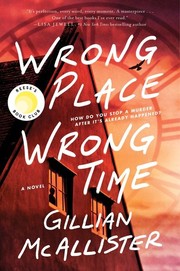
Wrong Place Wrong Time
Jen sees her son Todd kill a stranger, then wakes the day before, slipping back in time to stop the murder.
2,522-word summary · 11 min read

The Only One Left
Caregiver Kit tends mute Lenora Hope accused of 1929 family murders.
2,592-word summary · 12 min read

The Maidens
Therapist Mariana hunts Cambridge professor Edward Fosca after a Maidens murder.
2,234-word summary · 10 min read

The Coworker
When odd accountant Dawn vanishes, star salesperson Natalie becomes the prime suspect in a tense office thriller with turtles, lies and revenge.
2,511-word summary · 11 min read