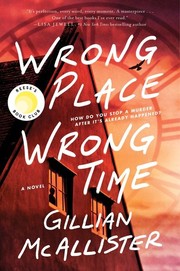
Wrong Place Wrong Time
2,522-word summary 11 min read 400 pages in the book
- First published
- 2022
- Publisher
- Scout Press
- Pages
- 400
- ISBN
- 9781982185145
Reading options
What's inside (8 sections)
I picked up Wrong Place Wrong Time because a friend said it starts with a mother watching her son kill someone and then runs backward. Gillian McAllister published it in 2022, Scout Press put out the US edition at 400 pages, and it became one of those books people discuss without spoiling. I wanted to see how one night could fill a whole novel. The answer is that time moves in reverse, day by day, while a mother relearns her family from the end toward the start.
The setup is simple to say and strange to sit with. Jen is waiting up late for her eighteen year old son Todd. Her husband Kelly has gone to sleep. It is just after midnight in late October, close to Halloween, and she hears Todd outside with someone on their quiet street in Liverpool. She looks out and sees Todd pull a knife and stab a man. The victim is Ryan Larkin, a local man Jen barely knows. Jen runs out screaming. Kelly follows, barefoot and confused. Police arrive fast. Paramedics try and fail. Todd is arrested with blood on him and almost nothing to say.
I found that opening hard to shake because McAllister keeps it plain. No chase. Jen in pajamas on cold pavement. Neighbors opening doors and shutting them again. Blue lights on brick. Todd standing still after, hands shaking, not running. Jen keeps thinking it must be self defense or mistaken identity, but what she saw looked direct. She goes to bed with her son in custody and her head full of noise.
Then she wakes up and it is yesterday.
Each time Jen sleeps, she wakes one day earlier. She moves backward through October while everyone else moves forward. At first she thinks it is shock. Then she tests it. She knows what Kelly will say at breakfast. She knows when a text will arrive. She knows rain will start in the afternoon. Only Jen keeps memory of the later days. Everyone else has reset to the earlier date. Sleep triggers the shift, and staying awake does not stop the next morning from stepping back.
I liked how tired this makes her. She forgets which version of a talk she already had. She writes notes on her phone and on paper. She tries to tell Kelly and he worries she is breaking under stress, so she stops telling the full truth.
Halloween night on the street
Everything points back to murder night, and McAllister returns to it in pieces as Jen learns more. Each return adds a detail panic hid the first time.
Todd is out late without a clear reason. Jen waits up the way parents of teenagers do, half annoyed and half anxious. Kelly is steady, a man who works with his hands and trusts routine. He and Jen have been married for years. Nice house. Known neighbors. Todd is their only child, newly adult, drifting between school and what comes next, often on his phone and out with friends Jen only half knows.
Ryan Larkin is almost blank to Jen at first. A local man in his thirties with family nearby. Not a friend of Todd. Not someone Jen has had coffee with. Police treat it as a straightforward street killing. No robbery. No long public fight. Witnesses saw the two men together only briefly before the stabbing. That blankness drives Jen crazy. If Ryan was a stranger, why would Todd kill him in front of his own house.
McAllister writes the pavement scene with cold air, shouting, officers asking names and birth dates. I believed Jen would remember it in flashes for life, which is why the reverse structure works. She is trying to unsee something fixed in her mind.
Jen does not turn detective at once. On the first backward days she thinks like a mother. Lock the door. Take his keys. Keep Todd inside on Halloween. She learns fast that blocking one evening does not remove a motive she does not yet grasp.
Waking backward day by day
The backward walk covers late October into early October and then into September and further back. Each chapter is dated, which helps, though I still flipped back to place myself.
Jen first uses the extra days for simple prevention. She follows Todd. She checks his messages when she can. She asks casual questions that sound odd because she already knows the answers. Todd notices she is acting strange. Kelly does too. Their marriage, which looked solid on murder night, shows cracks when seen from earlier weeks.
Going back gives her less control in some ways. She knows the future but cannot prove it. If she warns about a fight or an accident, she sounds unstable. If she changes a big thing, small things shift and the big shape returns. One day she confronts Todd directly. Another day she watches from a distance. Another day she tries to meet Ryan herself to judge him.
McAllister keeps normal life in frame. Jen still shops, cooks, takes work calls, folds laundry while thinking about a knife. She smiles at a neighbor while planning how to follow her own son. That split felt true to how parents hold panic inside routine.
Sleep becomes relief and dread. Jen wants rest but each sleep drops her deeper into the past where the murder feels far but the causes sit closer. Each morning she must reorient. What date is it now. What does Kelly know at this point. What has Todd told her yet. What version of Ryan is alive today.
When Jen tries to use police, it mostly fails, which felt honest. You cannot call and say my son will kill someone next week so please hold him now. She tries softer routes, asking officers about Ryan, about past calls to the street, about whether Todd has been in trouble she missed. Officers are polite and bound by what has happened so far in their timeline, not what Jen remembers from later. That gap creates frustration McAllister lets sit.
Jen, Kelly, and Todd at home
The family portrait changes as Jen moves back. Near the murder, Kelly looks tired and distant, Todd looks closed off. Weeks earlier, they look warmer, and Jen asks when the cooling started and whether she missed it while busy.
Kelly is decent and practical, loving in a quiet way. He works long hours, fixes things, teases Todd about jobs and football. He and Jen share the shorthand of a long marriage, where a look covers a paragraph. As Jen goes back she sees him more playful and present. She also notices what he hides, calls taken in another room, money worries smoothed over, problems with Todd minimized to keep peace.
Todd is hard to read on purpose. Eighteen and legally adult but boyish in bursts. Sweet with Jen in the morning, sullen by evening. He lies about small things, where he was, who he was with, why his jacket is torn. With future knowledge Jen catches lies she once missed, and each one feels heavier because she knows where they lead. McAllister does not make him a monster or a saint. He is a kid holding something back, sometimes scared, sometimes angry, often silent when speech would help him most.
One strong thread is Jen watching her own mothering in reverse. She sees times she was short with Todd from tiredness, times she let Kelly handle discipline because it was easier, times she chose work over a talk. None of this is framed as the cause of a stabbing, and McAllister is careful not to blame a busy mother for murder. But Jen blames herself anyway, the way parents do. Did Todd ask for help once and she brushed it off. Did Kelly know something she did not. Did they assume school or friends or time would fix what needed attention.
I felt for Kelly here. He only sees his wife acting erratic, crying at odd times, asking strange questions about people they barely know. He tries to steady her with dinner, with logic, with suggestions of rest or a doctor. His love is plain and a little helpless. When Jen shares more, his belief comes slowly, which I found more believable than instant acceptance.
Family pressure builds because love and suspicion share the same kitchen table.
Police, Ryan, and motive
Ryan is the shadow over the middle. Jen needs to grasp him to grasp Todd, so she learns his life backward. Who he sees. Where he works. How neighbors speak of him. At first he seems ordinary, a husband and father with normal routine. Then small gaps show. Money that does not line up. A car nicer than expected. Friends who go quiet at his name. A temper some have seen and others excuse.
Police in the forward timeline build a fast case around Todd because facts on murder night look clear. Knife. Witness. No flight. In Jen backward timeline, officers she meets earlier see no case yet because no crime has happened. Jen tries to feed them reasons to look at Ryan and at Todd friends without sounding like she knows the future. Sometimes she pretends she saw something odd or heard gossip. Sometimes she fails and gets filed as an anxious mum.
Motive unspools slowly and I will keep the core turn broad. What Jen finds is that Todd and Ryan are linked by something older than one Halloween row. It involves people Todd cares about and a harm Jen did not know of. Todd belief about Ryan, right or wrong, is strong enough that he sees violence as protection. Jen must test whether that belief is true, partly true, or planted by someone else. Each backward day adds a message, a receipt, or a witness that shifts the shape.
McAllister shows how motive looks different by date. Close to Halloween, Todd looks guilty and silent. Weeks earlier, he looks scared and cornered. Months earlier, he looks like a kid trying to help someone he loves. Ryan looks like a victim up close and more tangled from a distance. Police see facts without Jen context. Jen sees context without proof she can hand over. Kelly sees his son and wants to defend him while fearing the worst. No one holds the full picture except Jen, and even she must check her bias as a mother who wants Todd to be innocent.
Key questions repeat with new weight. Why did Todd have a knife that night. Did he bring it or grab it on impulse. Why meet on their street. Why did Ryan come to them. What did Todd friends know and when. Jen replays each answer against the pavement memory and finds gaps. She also learns some adults around Ryan had reasons to keep police at arm length, which helps explain why earlier complaints went nowhere.
Jen moves from stranger killing to targeted killing to attempted prevention. She stops asking how to keep Todd home that night and starts asking how to remove the reason he wanted to go out at all.
Reset and what it costs
As Jen slips into September and beyond, scope widens from one street to older choices. She meets younger versions of people she thought she knew. She sees Kelly and Todd before strain set in. She sees friendships before they soured. She sees herself busier and less watchful, which is uncomfortable in a useful way. Saving one night may mean facing older nights no one wants to revisit.
The reset logic tightens. Jen cannot stay in the past and cannot fix all by force. Every change ripples. Keep Todd home and someone else meets Ryan instead. Warn Ryan and he shifts pattern and the meeting moves. Push police too hard too early and people close ranks. McAllister treats time like weather. You can dress for it and steer a little, but you cannot order it to stop.
The ending brings Jen back toward the start with fuller knowledge and a choice about what to carry forward. I found it emotional rather than clever, which surprised me in a good way. Jen must decide what a good mother does when she knows her son can kill and can also love. She must decide what to tell Kelly when telling risks the marriage and silence risks their son. She must decide how to face Ryan family, grieving in one timeline and unaware in another. One brave talk does not fix all of it.
Without quoting last pages, the reset lands hopeful and sad. Jen gets to act with open eyes on days she once sleepwalked through. Some bonds mend because she listens earlier. Todd is seen more clearly, not as a case or headline but as a young man who made a terrible choice for reasons his mother finally grasps.
What stayed with me was a quiet morning scene near the close where Jen watches Kelly and Todd eat breakfast together. Just toast and jokes and dishes in the sink. After so much dread, ordinary feels huge.
Where the timeline confuses
The best of the book is voice and pace. Jen sounds like a real mother under strain, funny in flashes, tired often, stubborn always. Short dated chapters pull you on. The reverse device stays fresh because throwaway lines from weeks ago turn into clues. A background neighbor grows important. A phone dead on murder night was alive with messages a month before.
Family feeling is the other strength. Kelly is not a prop husband. Todd is not a symbol. Ryan is not just a body. Even minor figures like teachers and Ryan relatives get texture that pays off when earlier selves appear. The Liverpool streets, schools, and kitchens feel lived in rather than staged for thrills.
The fair criticism is that the timeline confuses, mainly in the middle third. Dates step back each chapter, but memories stack, and I lost track at times of what Jen knew versus what others knew at that date. Some scenes repeat with small shifts, which fits time travel, but repetition can drag when Jen tries the same fix twice with slightly changed words. I reread two sequences around police interviews and a school meeting to sort who said what in which version.
The confusion is not fatal, but readers who like tight procedure may get restless. Proof rules blur because Jen holds future facts she cannot source. Motive arrives through talks and memory more than forensics, so if you want lab reports and a whiteboard, this is softer than that. A few coincidences ask patience, like Jen meeting the right person on the right backward day. I accepted them because feeling carried the scenes, but I noticed them.
I would still give this to thriller readers who like family stories and time tricks and who do not mind feeling lost before it clicks. It suits readers who care more about why than who. Follow the date headers and let Jen guide you back. The plain morning after so much night makes the backward walk worth it.
FAQ
How does the time travel work in Wrong Place Wrong Time?
Jen wakes one day earlier each morning, living October in reverse while others reset. She keeps memory of later days and tries to change the cause.
Who does Todd kill and why does Jen go back?
Todd stabs neighbor Ryan Larkin on the street near Halloween. Jen watches it happen, then spends the book moving backward to learn why he did it.
Is Wrong Place Wrong Time violent or suitable for sensitive readers?
No. It opens with a fatal stabbing and stays tense with police, grief, and threat. It suits thriller and mystery readers who like family drama with a time loop.
Similar books
More like Wrong Place Wrong Time →
The Locked Door
Surgeon Nora Davis hides serial killer father while patients die.
2,465-word summary · 11 min read

The Family Upstairs
Libby Jones inherits a Chelsea mansion and a past tied to a cult house, two runaways, and a baby left waiting.
3,300-word summary · 15 min read

A Flicker in the Dark
Psychologist Chloe Davis faces copycat disappearances in Baton Rouge twenty years after her father confessed to murders.
3,074-word summary · 14 min read

Dark Places
Libby Day, sole survivor of family murders, is paid to rethink her testimony.
1,910-word summary · 8 min read

The Outsider
Coach Terry Maitland's DNA and witnesses point to an impossible murder, until Ralph Anderson and Holly Gibney trace it to El Cuco.
2,586-word summary · 11 min read

The Only One Left
Caregiver Kit tends mute Lenora Hope accused of 1929 family murders.
2,592-word summary · 12 min read