
Reading options
What's inside (8 sections)
I bought A Short History of Nearly Everything after failing to explain to my nephew where gold comes from. I said stars. He asked which stars. I stalled. A friend said Bryson had the same problem on a plane and wrote 560 pages to fix it. That sounded like my kind of book. I read the Broadway Books hardcover, ISBN 9780767908177, first published in 2003. It took me three weeks, with lots of pauses to stare out windows.
Bryson is not a scientist. He says so on page one. He is a travel writer who realized he did not know how oceans stay full or why atoms hold together. So he called experts, visited labs, read old papers. His question is simple. How do we know what we claim to know? How do we weigh Earth? How do we date rocks? How do we know what is inside the sun? Each chapter picks one puzzle and follows the people who solved it, including the wrong turns.
The tone is curious and plain. Short sentences when the idea is big. Longer stories when the people get odd. Bryson loves odd people. He collects them like stamps.
How big and how old
The opening moves fast through scale. The universe is vast and mostly empty. Atoms are mostly empty too. You are made of tiny particles that do not touch in the way tables touch. Bryson likes these flips. He tells you that there are more atoms in a spoon of water than spoons of water in the Atlantic. Then he tells you we only learned the age of Earth recently, and by accident.
The dating story centers on Clair Patterson, who spent years measuring lead. Car exhaust had spread lead everywhere and ruined samples. Patterson fought oil companies, built clean rooms, and got a number. About 4.55 billion years. Bryson presents him as stubborn and decent. I remembered his name after closing the book, which is rare for me with science names.
Other measurement tales follow. Eratosthenes sizing Earth with shadows and sticks. Cavendish weighing the planet with balls and wire. Teams hauling clocks up mountains to test gravity. Bryson stresses cost and luck. Expeditions died of fever. Instruments sank. Rival teams published first with worse data. Science here looks less like a straight road and more like a crowd crossing a bog, with a few people finding firm stones.
I liked that Bryson admits what we still miss. We have mapped the Moon better than the sea floor. We cannot visit the center of Earth. We guess at the mantle from quakes and lava. He does not hide gaps to sound smart. He points at them and grins.
Rocks that move
Geology gets a long middle section because Bryson loves field trips. He goes to Yellowstone, to Australia, to the English cliffs where Mary Anning found sea monsters as a girl. He tells how geologists argued for decades about continents drifting. Alfred Wegener proposed it and was mocked. Proof came later from magnetism in sea floor rocks and from the fit of fossils across oceans.
The volcano and earthquake chapters are vivid without being gory. Yellowstone sits on a caldera that could bury states in ash. It erupts roughly every 600,000 years, and the last big one was about 640,000 years ago. Bryson lets that number sit. He does not shout. He notes park rangers worry more about bison and traffic. I laughed, then checked the date twice.
He also covers impacts. The dinosaur killer, six miles wide, hit near Mexico 66 million years ago. Ash circled the globe. Plants died. Then mammals, small and shivering, inherited the quiet. Bryson visits impact craters and talks to hunters who find meteor bits with magnets. He makes deep time feel personal. Hold a 3.5 billion year old stromatolite, he says, and your week looks short.
What helps is that he names failures. Oil men hid lead data. Museums lost fossils. Famous professors stole credit. Bryson does not settle scores so much as show how ego bends results. A few heroes emerge, often outsiders. Amateurs with hammers. Women barred from societies who mapped strata at home. I wanted more of them and fewer Cambridge feuds, but the balance is fair.
Small things that run us
The chemistry and biology chapters are the densest. Bryson walks through the periodic table with stories attached. Mendeleev dreaming the layout. Marie Curie carrying tubes in pockets. Fritz Haber feeding billions with fertilizer and then making poison gas. Each element gets a quirk. Sodium explodes in water. Carbon builds endless shapes. Lead sweetens paint and ruins brains.
Then cells. Your body makes millions of red cells per second. DNA copies with rare errors. Most errors do nothing. Some cause harm. A few allow change. Bryson explains this without jargon pileups. He uses kitchens and offices as models. Proteins fold like laundry. Enzymes snip like scissors. It is simple, but he checks the simplifications with researchers so they do not mislead too badly.
The evolution story avoids shouting about Darwin alone. Bryson gives Darwin credit for seeing natural selection, then shows the gaps he left. No genes known. No mechanism for inheritance. Later work with peas, flies, and bacteria filled the frame. He also notes how contingent our arrival was. If the impact winter had lasted longer, if Africa had stayed wet, if a certain fish had not crawled out, no us. That contingency theme returns in every chapter. Life is not a ladder. It is a bush pruned by ice and hunger.
Microbes get their due. Most bacteria do not harm us. Many feed plants or clean water. A few kill millions when cities crowd and water fouls. Bryson visits labs where researchers coax viruses into showing their shapes. He admits we have named only a fraction of species. In a rainforest, one tree can hold hundreds of unknown beetles. I put the book down after that and looked at my garden with new respect and slight fear.
Weather, ice, and air
Climate chapters feel heavier now than in 2003. Bryson describes ice ages as recent and regular. Twenty thousand years ago Chicago sat under half a mile of ice. Then warming, then farming, then us. He explains how oceans move heat like belts, how volcanoes cool years, how our carbon adds a blanket. He does not preach. He lists numbers. How much ice melts per summer. How high seas rose last century. The quiet accumulation worried me more than any warning.
He is good on atmosphere. Air seems thin and free, but it is a narrow skin. Remove a few gases and we freeze or fry. Ozone thins over poles because of chemicals we sprayed from cans. We fixed part of that by agreement, which Bryson notes as proof we can act when the harm is clear and the fix is cheap. That line, written before later climate fights, reads hopeful and sad together.
Storms and quakes get field notes. Bryson stands in wind in Kansas, waits for tornadoes that do not come, talks to chasers who love clouds the way surfers love waves. He meets geologists who map faults by trenches and old fences. California will slip. Japan will shake. No one knows the day. The honesty about prediction limits stuck with me. We can say where, roughly when in decades, never exactly when.
Life's recent tenants
Human origins close the book. Bryson flies to famous digs. Olduvai Gorge. Neanderthal caves. Australian rock art. He shows how little bone we have. A jaw here. A skullcap there. From scraps we infer speech, fire, boats. DNA later revised many trees. Neanderthals interbred with us. Denisovans left traces in high altitude peoples. The story keeps shifting as new caves open.
He is blunt about our record. We hunted large animals to nothing on many continents. We burned forests for farms. We moved rats and germs on ships. The current extinction rate, he says, may rival past big dyings, only faster and driven by one ape with plows. He does not scold for pages. He lists losses. Golden toads. Passenger pigeons. Island birds that met sailors and cats. Each loss gets a sentence or two. Together they weigh.
The final chapter steps back. Bryson says being here is wildly unlikely. You need a stable star, a wet rock at the right distance, plate tectonics to recycle air, a large moon to steady tilt, bacteria to make oxygen, ice to pause and restart, and then luck on top of luck. He calls our stay fragile and precious. I found that moving without feeling manipulated. After 500 pages of near misses, the plea to take care reads earned.
What works is voice and structure. Each chapter starts with a personal puzzle. Why is the sea salty? Why do we have eyebrows? Then experts answer in plain words. Footnotes add jokes. Illustrations in my edition helped with scale. Bryson never pretends to be a peer. He is a stand in for readers who slept through chemistry. That humility invites trust.
What drags is uneven depth. Physics gets brisk summaries where geology gets hikes. Some chapters list names fast. If you know little chemistry, the middle may blur. A few American jokes about metric and tea will date for non US readers. Bryson also leans on British eccentrics for color. Amusing, but it skews who counts as curious. I wanted more voices from Asia, Africa, and South America where many fossils and stars are studied now.
Content notes are light. No sex, little language. Some descriptions of disease and famine. Animal lovers will wince at extinction tallies. There are no experiments to try at home beyond looking up.
Practical tip. Read with a phone off and a map near. Look up one picture per chapter. A trilobite. A caldera. A cloud chamber. The book gives words. Pictures give size. Do not memorize numbers. Follow methods. How they weighed, dated, drilled, sequenced. Methods are what you will remember when facts fade.
The people behind the numbers
One reason the book stays readable across 560 pages is Bryson's eye for character. He does not just state that Newton worked on gravity and light. He shows Newton as prickly, secretive, slow to publish, brilliant at math and hard to eat dinner with. He does not just credit Einstein. He shows a patent clerk in Bern in 1905 writing papers in spare hours that remade space and time. Those portraits help because they explain delay. Good ideas waited years while owners feuded or feared ridicule.
Some stories are uncomfortable. Researchers dosed themselves with gases. Explorers stole bones from colonies. Universities paid women as assistants while men signed papers. Bryson notes these facts briefly rather than staging trials. I sometimes wanted stronger judgment, especially when credit was taken from assistants. Still, the pattern is clear if you read across chapters. Curiosity was broad. Reward was narrow.
My favorite minor figure was the Reverend Robert Evans, or rather the many reverends who collected fossils between sermons. They walked beaches after storms, wrapped finds in handkerchiefs, sent sketches to London. Without pay or fame, they built the record that professionals later named. Bryson treats them with warmth. He also treats lab technicians well. The people who clean glass, feed cultures, check gauges. Science memoirs often skip them. Bryson thanks them by name when he can.
Another thread is rivalry as fuel. Cope versus Marsh in American bone hunting. Teams racing to drill ice cores. Groups rushing to sequence genes. Competition wasted money and broke friendships, but it also sped answers. Bryson does not pick a moral. He shows both bills. A bone war gave us museums full of dinosaurs and a trail of debts and smashed field sites. A gene race gave us a shared code and patent fights that still echo.
If you read closely, you also see how tools decide what we learn next. Better lenses found cells. Better clocks found deep time. Better drills found old ice with trapped air. Better computers model clouds. Bryson returns to this point without repeating the same sentence. Each chapter introduces one tool and one limit. The message lands by example. We see as far as our instruments let us, then we build new ones.
I finished the 560 pages knowing less than I thought and more than I started. I still cannot say where gold comes from without waving my hands. Now I can say which stars, roughly when, and how we know from spectra and meteor bits. My nephew accepted that as progress. So do I. Bryson set out to cure his ignorance in public. He leaves you curious rather than full, which is the best a short history of nearly everything can do.
FAQ
When was A Short History of Nearly Everything published?
It was first published in 2003 by Doubleday in the UK and Broadway Books in the US. The standard hardcover runs 560 pages with ISBN 9780767908177.
What does the book cover?
Bryson, a non scientist, interviews researchers and retells discoveries in physics, geology, biology, and astronomy, asking not just what we know but how we found it.
Is it part of a series?
No. It is a standalone work of popular science, separate from his travel books like A Walk in the Woods, though it shares his curious voice.
Similar books
More like A Short History of Nearly Everything →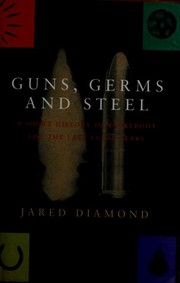
Guns, Germs, and Steel: The Fates of Human Societies
Diamond argues geography and crops explain why some societies expanded faster than others.
3,432-word summary · 15 min read

A Brief History of Time
Hawking walks from ancient spheres to big bang, black holes, and time arrows without equations.
2,210-word summary · 10 min read
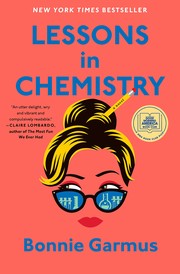
Lessons in Chemistry
Lessons in Chemistry retold: Elizabeth Zott fired, TV cooking with science, Six-Thirty helps.
1,951-word summary · 9 min read
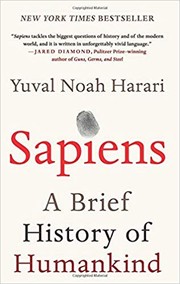
Sapiens: A Brief History of Humankind
Harari's Sapiens from cover to cover: the cognitive revolution, the agricultural bargain, shared fictions like money and nations, and the scientific centuries…
2,145-word summary · 10 min read

A Walk in the Woods: Rediscovering America on the Appalachian Trail
Bryson and friend Katz attempt the Appalachian Trail with blisters, bears, and laughs.
2,660-word summary · 12 min read

The Three-Body Problem
A physicist meets a secret from the Cultural Revolution and a game that models a dying alien sky.
2,465-word summary · 11 min read