
All Quiet on the Western Front
2,543-word summary 11 min read 250 pages in the book
- First published
- 1929
- Publisher
- Propyläen Verlag
- Pages
- 250
- ISBN
- 9780449213940
- Original title
- Im Westen nichts Neues
Reading options
What's inside (8 sections)
I came to All Quiet on the Western Front sideways, through the 2022 film, and felt embarrassed afterward that I had waited so long to read the book. The film is loud and gray and shattering. The book is quieter, stranger, and harder to shake. It was first published in book form in January 1929 by Propyläen Verlag in Germany, after running as a newspaper serial in late 1928, and it runs about 250 pages in the first edition. The English translation by A. W. Wheen arrived the same year from Little, Brown. I read the later Brian Murdoch translation from 1993, which restores passages Wheen softened or cut, and I would steer any new reader to Murdoch. The story follows Paul Bäumer, a nineteen year old German soldier on the Western Front of World War I, from keen recruit to hollowed veteran. It sold millions in its first year and change, was burned by the Nazis a few years later, and has never really gone away since.
Remarque himself had served in the war, and the book carries that weight on every page without ever turning into memoir. The subtitle of his intent, printed up front, is that this is neither accusation nor confession. It tries simply to tell of a generation destroyed by war even where the shells missed. That framing matters because the book refuses almost everything war stories usually offer. There are no heroes here, no decisive battles, no home front triumphs. There are boys in coats that do not fit, soup that matters more than strategy, and stretches of boredom broken by minutes of terror.
Paul narrates in the present tense of youth, observant and tired by turns. He enlisted straight out of school with his whole class, talked into uniform by their teacher Kantorek, a fervent patriot who called them an iron generation and made the war sound like a school prize. The names of the classmates stay with you: Albert Kropp, the clever small one; Franz Kemmerich, gentle and doomed early; Müller, practical to the point of coldness; Leer, the talker. Plus one reluctant boy, Behm, who held out against Kantorek the longest and died first, blinded and wandering in no man's land before anyone could reach him. Remarque gives you the full roster fast, the way real platoons learn names fast, because you will need them.
Kantorek's classroom and Himmelstoss the postman
The training chapters are almost a comedy until they stop being one. The boys are handed to Corporal Himmelstoss, a blustering martinet who in civilian life was the village postman, a man the boys knew and mildly pitied. In camp he becomes a small god of petty cruelty, all boots and bed corners and senseless drills. Tjaden, a locksmith turned soldier with a big appetite and a bigger grudge, takes the worst of it and gives back insolence. The boys take revenge when they can, including one night ambush outside a pub that reads like a schoolboy prank. It is funny. It is also the book's first lesson in how war scrambles every hierarchy except the one that lets men be cruel.
Kantorek never fully leaves the narrative even after the boys reach the front. He is the voice of every civilian certainty Paul later meets: that the war is glorious, that the soldiers see only their little sector, that Paris could fall if the men just pushed harder. Remarque draws him without mercy and maybe without much fairness. Kantorek is a caricature of the home front blowhard, and one of the book's few flat notes is that he never gets to be a person. But his function is clear. He represents the sentences that sent a classroom of eighteen year olds to volunteer, sentences Paul will spend the whole book unlearning one by one.
The training section also introduces the man who actually teaches Paul how to survive. Stanislaus Katczinsky, called Kat, is forty, a cobbler in civilian life, a recalled reservist with a countryman's cunning. Kat can find food where there is none, smell out danger before it arrives, and stretch a rumor into comfort. He becomes Paul's mentor and, in the truest sense of the book, his parent. Paul's real father will later prove useless to him. Kat never does. Their friendship, built on shared rations and dry humor, is the warmest thing in a cold book, which is exactly why it hurts so much later.
Life at the front, measured in soup and shells
The middle of the novel is episodic by design. There is no grand campaign, only rotations: wire parties, bombardments, gas alarms, rats, lice, latrines, rum. Remarque writes these passages with a craftsman's patience. A famous early scene has the company drawing double rations because so many men died that morning that the cook's numbers no longer match the living. They eat with the dead men's shares, feeling guilty and grateful at once. Food in this book is never just food. It is proof you are still alive, and the arithmetic of portions quietly counts the missing.
The comrades accumulate texture chapter by chapter. Kropp argues theory. Müller studies textbooks in the trenches and dreams of exams he will never take. Tjaden gorges whenever he can and nurses his hatred of Himmelstoss, which finds its strange resolution when the former postman is sent to the front and placed under Tjaden's contempt in a field kitchen scene that mixes revenge with pity. Detering, a farmer, aches for his land and his wife and grows furious at the sight of wounded horses, a tenderness for animals that the war cannot beat out of him. Haie Westhus, strong and laughing, a peat digger by trade, dies of a back wound. Each loss lands without ceremony because ceremony would be a lie. Men die mid sentence here, mid joke, mid meal.
Kat presides over all of it with maxims that are really survival tactics. When to volunteer for what. How to read a bombardment. Why a new recruit's polished boots are a death sentence of inexperience. Paul absorbs it all and slowly stops being a schoolboy. The change is not dramatic. That is the point. One day he notices he can sleep through anything except hunger. Another day he notices he no longer writes the poems he used to carry in his head. The hollowing happens between chapters, and you only see it when Paul goes home and finds the hollow all at once.
Leave, or the foreign country called home
Paul's leave chapters are the most painful in the book for me, more than any battle. He returns to his village and finds everything exactly as he left it, which is the problem. His mother is ill, possibly dying, and their scenes together are restrained to the point of breaking. She asks little. He tells her less. His father, proud and awkward, wants stories Paul cannot give and introduces him to acquaintances who lecture him on strategy. A local schoolmaster figure explains over beer how the war should be run. Civilians ask stupid, well meaning questions about the trenches and expect answers that fit on a postcard.
Paul tries to recover his old self in his old bedroom. He pulls out his books and papers, the traces of the boy who loved literature, and feels nothing. The passion is gone, burned out of him like a field after shelling. He walks the streets and realizes he does not belong there anymore. The town has not changed. He has, past the point of return. When he says he should never have come home on leave, it lands as simple fact rather than self pity. Leave gives him the one thing the front never could: proof that the civilian world he is supposedly fighting for has no room left for the person the fighting made him.
One errand on leave carries particular weight. Paul visits Kemmerich's mother. Kemmerich, shot in the leg early in the book, had his leg amputated and died slowly while Müller, with terrible practicality, already coveted his fine boots. Paul had watched all of it. Now he stands in a kitchen and lies to a grieving mother, telling her Franz died instantly and without pain. It is a mercy lie, and Remarque lets it sit without commentary. The scene shows what the war has taught Paul to do with truth: carry it himself so others do not have to.
The Frenchman in the shell hole
Back at the front, Paul volunteers for a patrol and ends up trapped in a shell hole with a French soldier he has stabbed in close fighting. The man does not die quickly. He dies over hours, gurgling and clutching, while Paul crouches beside him, pressing dressings on wounds that cannot be dressed, promising a dead man a letter to his family. It is the moral center of the novel, and Remarque stages it without flinching. Paul looks at the man's wallet photograph, his papers, his ordinary face, and understands with physical force that this is a printer or a worker with a wife, someone exactly like him, killed because ordering voices pointed them at each other.
He confesses afterward to Kat and Kropp, who comfort him the only way the front allows. They tell him it is only war, that he had no choice, that thinking about it will kill him faster than any bullet. Their comfort is both true and useless. Paul knows the logic. He also knows the man's face. The episode never resolves, and that is honest. Some things the book refuses to file away. The shell hole scene is why this novel outlasts simpler pacifist tracts. It does not argue that war is wasteful in the abstract. It shows one boy learning that the enemy has a wallet photograph, and then shows him having to keep soldiering anyway.
The hospital chapters that follow extend the same logic to the machinery around the wounded. Paul and Kropp are hit while helping evacuate civilians during shelling of a supply depot town, and both end up in a Catholic hospital far behind the lines. Kropp's leg is amputated. He contemplates the stump with a clarity that curdles into despair, talking about suicide the way other men talk about leave. Paul, with shrapnel in arm and leg, is patched well enough to return to service. The wards are full of men learning the new arithmetic of their bodies. Remarque writes the hospital with the same unsparing patience as the trenches. The nuns and orderlies are not villains. The numbers are the villain: too many broken boys, too few whole futures.
Kat, October, and the quiet report
By the final stretch the war is nearly over and everyone knows it, which makes the dying feel even more senseless. The Americans have arrived with fresh men and full bellies. The Germans are starving, short of everything, fighting only to shape the armistice. Paul watches his remaining friends fall one by one, each death smaller and larger than the last. Leer is hit. Others vanish between paragraphs. The company that enlisted as a classroom has thinned to a handful of ghosts.
Then Kat is hit. A splinter wound, seemingly survivable. Paul carries him through fire to the dressing station, a long agonizing carry fueled by love and adrenaline, only to discover on arrival that Kat took a second fragment in the head during the carry and died without Paul noticing. It is the cruelest passage in the book and the most controlled. Paul does not rage. He sits. He holds his friend's body. He understands that the last living connection to the person he was has been cut. After Kat, Paul stops hoping, stops planning, stops fearing in any active way. He notes that peace is coming and feels nothing about it. The future looks flat to him, a plain with no features.
Paul dies in October 1918, on a day so quiet the army report can find nothing to say except that all is quiet on the Western Front. Remarque gives him a calm face in death, almost content, as if relieved. The irony of the title lands without emphasis because it needs none. The whole military apparatus, which spent four years generating mountains of paper about this war, summarizes the end of Paul Bäumer in a single empty sentence. That is the book in miniature: the vast machine on one side, one boy's finished life on the other, and a clerk's phrase covering the gap between them.
What surrounds the book, and who should read it
The afterlife of the novel is part of its meaning. It was an instant phenomenon, selling some two and a half million copies in twenty two languages within its first eighteen months. Then came the backlash. Austrian authorities forbade soldiers to read it. Czechoslovakia pulled it from military libraries. Italy banned the translation. And in Germany, the rising Nazi movement recognized the book as an enemy early. Screenings of the 1930 Hollywood film version, which would win Best Picture, were disrupted by organized mobs. When the Nazis took power in 1933, the book went onto the pyres with the other condemned works. A war book that tells young men war will destroy them was never going to survive a regime built on sending young men to war.
The film versions keep coming because the material keeps working. Lewis Milestone's 1930 version took two Academy Awards including Best Picture. The 1979 television version with Richard Thomas won a Golden Globe and an Emmy. Edward Berger's 2022 German version won four Oscars from nine nominations plus a stack of BAFTAs. Each generation refilms Paul because each generation needs the reminder in its own visual language. Remarque wrote a sequel too, The Road Back from 1931, following survivors into the bewildered peace. It is worth reading but not required. This book ends where it must.
Fair criticism, because the book earns honest accounting. The episodic structure means momentum sags in places; some trench chapters blur together, and readers who need plot will find the middle repetitive. Women barely exist except as symbols: the dying mother, the French farm girls glimpsed across a river, the nurses. Kantorek is a straw man rather than a man. And Wheen's original English translation, the one most readers met for sixty years, tidied up Remarque's bluntness in ways that softened the book's edges, which is why I keep pressing the Murdoch translation. None of this dents the core. The core is Paul carrying Kat, Paul lying to Kemmerich's mother, Paul watching a Frenchman die in a hole in the earth. Those scenes do not age.
Read it if you have ever repeated a slogan about war without picturing the soup lines. Read it before Remembrance season or Memorial season makes everything ceremonial. Pair it with something from the other side of the wire, or with a modern soldier's memoir, and notice how little the details change across a century. It is not an adventure, exactly as Remarque warned. It is a record of what the adventure costs, written by someone who paid in advance and spent the rest of his life describing the receipt.
FAQ
When was All Quiet on the Western Front published?
It ran as a serial in late 1928 and appeared in book form in January 1929 from Propyläen Verlag. The first English translation, by A. W. Wheen, came the same year from Little, Brown.
Is the novel based on Remarque's own war experience?
It is semi-autobiographical. Remarque served in the war, and the book opens by saying it is neither accusation nor confession, only an account of a generation destroyed by war.
Does the book have a sequel, and why was it banned?
Yes. The Road Back followed in 1931, tracing survivors into the peace. The Nazis banned and burned All Quiet on the Western Front in 1933.
Similar books
More like All Quiet on the Western Front →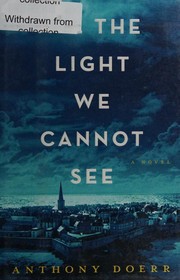
All the Light We Cannot See
Doerr's All the Light We Cannot See retold: blind Marie-Laure, Werner the radio boy, and Saint-Malo.
1,962-word summary · 9 min read

War and Peace
Pierre, Natasha, and Andrei search for meaning amid the Napoleonic wars.
2,536-word summary · 11 min read

Things Fall Apart
Proud Igbo wrestler Okonkwo rises in 1890s Umuofia, then loses standing through hard exile, a son's conversion, and British missionaries and courts remaking…
2,518-word summary · 11 min read

Their Eyes Were Watching God
Janie Crawford tells Pheoby about Eatonville life with Logan Killicks, Joe Starks called Jody, and Tea Cake.
2,230-word summary · 10 min read
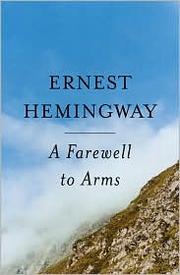
A Farewell to Arms
Frederic loves Catherine in Italy until desertion leads to Switzerland and stillbirth.
2,502-word summary · 11 min read
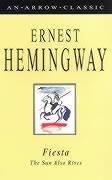
The Sun Also Rises
Jake Barnes drifts through Paris bars and Pamplona bullfights with Brett Ashley and a wounded generation.
3,187-word summary · 14 min read