
Atomic Habits
2,170-word summary 10 min read 320 pages in the book
- First published
- 2018
- Publisher
- Avery
- Pages
- 320
- ISBN
- 9780735211292
Reading options
What's inside (12 sections)
I picked up Atomic Habits mostly to see what the hype was about. By that point the book had been sitting on bestseller lists for years, recommended in every productivity newsletter I follow, and quoted so often online that I thought I already knew the argument. I did, sort of. Clear's core claim is that small habits matter more than big goals. What surprised me is how much of the book is about something else entirely: your identity, your environment, and the systems you build around yourself when motivation has left the room.
Clear writes like an engineer debugging human behavior. He is not a psychologist by training, and the book does not pretend to be an academic text. It borrows from research on learning, behaviorism, and habit loops, then turns those ideas into instructions you can follow on a Monday morning. Whether you want to exercise more, write consistently, stop checking your phone, or build a business on the side, the machinery he describes is the same.
The problem with goals
The early chapters dismantle goal setting, which feels strange at first. Clear argues that winners and losers often want the same thing. Both teams want the championship. Both writers want a finished manuscript. Goals set direction, but they do not explain the day-to-day behavior that actually produces results.
He uses the example of the British Cycling team. When Dave Brailsford took over in 2003, the program had almost no recent Olympic or Tour de France success. Instead of declaring a single grand goal and hoping for a breakthrough, his staff looked for tiny improvements everywhere: bike seats, gloves, pillows, massage gels, even the type of bacteria on riders' skin. Each change looked almost irrelevant on its own. Stacked together over a few years, they produced a run of results so dominant that rivals accused the team of cheating.
The point is not that small habits feel exciting. They do not. Clear's formula is uncomfortable at first glance: get 1 percent better each day and, compounded over a year, you end up roughly 37 times better than where you started. The math is illustrative rather than literal, but the shape of it is true. Progress is slow enough that most people quit before the curve becomes visible. He calls the gap between effort and visible results the plateau of latent potential. You work hard for weeks, see nothing, and assume the method is broken. In reality, you are storing energy the way water builds behind a dam.
Goals are fine for setting a target. They are bad as a strategy, because after you hit a goal the motivation evaporates and the old behavior returns. People run a marathon and stop running. They lose weight and regain it. Clear's alternative is to fall in love with systems, not outcomes. He puts it bluntly: you do not rise to the level of your goals; you fall to the level of your systems.
Identity is the deeper layer
The most distinctive section of Atomic Habits is about identity. Clear sets up three layers of change, like an onion: outcomes (what you get), processes (what you do), and identity (what you believe about yourself). Most people work from the outside in. They decide they want a book, then force themselves to write. Clear argues the durable route is inside out. Decide who you want to be, then prove it to yourself with small votes.
He tells a story about a cigarette offered to a man trying to quit smoking. The old script is: "No thanks, I'm quitting." The identity-based script is: "No thanks, I don't smoke." One sentence is about resisting a desire. The other is about being a person for whom the desire does not apply. Every time you act according to the new identity, you cast a vote for it. No single vote wins the election, but the pattern shifts what you are willing to do.
This framing explains why shame and force fail so often. If your self-image still says "I am bad at mornings" or "I am not a reader," a new habit fights an uphill battle against your own self-story. Habits that stick align with the person you already believe you are, or the person you are quietly becoming.
Clear is careful not to claim identity alone is enough. Votes need a system: cues, friction, feedback. Identity sets the direction; mechanics do the work.
The habit loop and the four laws
The middle of the book builds on the cue-craving-response-reward loop that goes back to William James and was popularized in modern form by researchers like Wendy Wood and, in popular writing, Charles Duhigg. Clear's version: a habit forms when a cue triggers a craving, the craving drives a response, and the response delivers a reward that teaches the brain to repeat the loop.
From that model he derives four laws, one for each stage. To build a good habit: make it obvious, make it attractive, make it easy, make it satisfying. To break a bad habit, invert each law: make it invisible, unattractive, difficult, unsatisfying. The rest of the book is largely a tour through tactics that serve one of those four goals.
Make it obvious
This is where implementation intentions earn their keep. Clear cites research by Peter Gollwitzer showing that people who specify when and where they will act are far more likely to follow through. "I will meditate for ten minutes after my morning coffee" beats "I will meditate more."
He also likes habit stacking: attach a new behavior to an existing one. After I pour my coffee, I will write one paragraph. The existing habit becomes the cue, so you do not have to rely on memory or motivation.
Environment design gets a whole section, and it is one of the most useful chapters. Clear points out that many habits are responses to what we see. A guitar left in the closet invites no playing. A guitar on a stand in the living room invites a few minutes of practice whenever you walk past. His rule of thumb: make the cues of good habits obvious and the cues of bad habits invisible. Put the book on the pillow. Move the phone charger out of the bedroom. Keep the running shoes by the door.
He introduces a habit scorecard in this chapter, a kind of audit where you list everything you do from waking to sleeping and mark each action as positive, negative, or neutral. The exercise feels tedious for two days and then becomes surprisingly clarifying. You notice how many of your actions are automatic and how few of them you chose this morning.
Make it attractive
Here Clear borrows from dopamine research, including the work of Anna Lembke and others on how anticipation often matters more than the reward itself. Temptation bundling is the practical translation: pair something you need to do with something you want to do. Only watch your favorite show while on the treadmill. Only listen to a podcast while doing laundry.
Social norms matter in this section as well. We imitate the habits of three groups: the close, the many, and the powerful. Join a culture where your desired behavior is the normal behavior, and the habit stops requiring heroism. Clear is realistic about this. If you hang around people who mock early mornings, your early morning plan will not survive long.
Make it easy
The two-minute rule is the famous idea from this chapter. When you start a new habit, scale it down until it takes two minutes. Read one page. Put on running shoes. Open the document. The point is not the two minutes of output; it is rehearsal of the identity. You are becoming a person who shows up. Mastery can wait.
Clear distinguishes between standardization and results. Standardize the start, not the finish. The person who does something every day for two minutes will, most of the time, end up doing more than the person who plans ninety-minute sessions and cancels half of them.
He also talks about reducing friction for good behaviors and increasing it for bad ones. Log out of social media. Delete the app from your phone and use the slow mobile browser version. Put the TV remote in a drawer in another room. Each extra step drops the completion rate in ways that sound trivial and are not.
Make it satisfying
Humans favor immediate rewards, and Clear argues you have to work with that wiring rather than argue with it. Habit tracking is his main tool here. A simple X on a calendar after each workout gives a small hit of completion. Never miss twice becomes the rule: missing one day is an accident; missing two is the start of a new habit.
He warns against all-or-nothing thinking and against letting a streak become so precious that you do something unhealthy just to protect it. The tracker serves you; you do not serve the tracker.
The chapter also covers accountability. Clear mentions the method where writers submit chapters to a partner who pays a fine if deadlines are missed. Money and social pressure are crude, but they fill the gap that willpower leaves empty.
Breaking bad habits
The second half of the four laws, applied in reverse, handles the habits you want gone. Make the cue invisible: no junk food in the house is stronger than resisting junk food at every meal. Make the response unattractive: reframe the habit by associating it with its costs. Clear suggests listing the short-term benefit and the long-term cost side by side until the short-term reward feels tainted.
Make it difficult: reduce access, add steps, use commitment devices. Make it unsatisfying: get an accountability partner, or add an immediate consequence. Clear is honest that some bad habits are wired tight, addiction territory, and that professional help may be needed. The book is built for ordinary habits more than for clinical dependence.
Plateaus, plateaus, and showing up
About two thirds of the way through, Clear returns to the plateau of latent potential with the ice cube example. An ice cube in a cold room sits solid until the temperature crosses zero. Nothing appears to be happening. Then suddenly it melts. People look at overnight successes and miss the years of temperature change.
He also introduces the Goldilocks rule: the most engaging challenges sit just at the edge of your ability, hard enough to stay interesting, easy enough to stay possible. Habits that never get harder bore us. Habits that get harder too fast make us quit. The skill is to raise difficulty in small steps, which is one reason the two-minute start works. It gives you a low entry point you can expand later.
The final chapters argue for reviewing and reflecting so that habits do not drift. Clear keeps a quarterly or annual review in his own practice: what went well, what did not, what will you fix next. He warns against the arrival fallacy, the belief that hitting a goal will deliver permanent satisfaction. Systems need maintenance. You do not graduate from habits.
What I took from it
The strength of Atomic Habits is that it gives you levers. Instead of telling you to want something more, it asks which law is failing. If you never start, your habit is not obvious or easy enough. If you start and quit, it is probably not satisfying, or the identity vote is missing. If you keep getting pulled back into a bad habit, the cue is still sitting in your environment waiting for you.
A few parts of the book oversell the research. The 1 percent math is a metaphor dressed up as data. Some anecdotes lean on business folklore. Readers who want deeper treatment of habit science will want to go to Wendy Wood's Good Habits, Bad Habits or to the primary literature Clear cites. And people dealing with depression, trauma, or addiction will sometimes find the tone too cheerful for their situation. The book is at its best for the person who is functioning fine and wants to restructure ordinary behavior.
What I did not expect was how often I would reread the identity chapter. Goals are easy to write down in January. The harder, quieter work is deciding what kind of person you are trying to become, then arranging your days so that the small actions match the story. Clear's argument, stripped down, is that character is just a collection of habits you have voted for long enough to believe in.
If you read it, keep a notebook nearby. Almost every chapter hands you one action to try this week. The book rewards readers who treat it as a workshop rather than as a collection of quotes for a slide deck. The ideas are simple. The discipline of applying them, day after ordinary day, is where everything lives.
FAQ
What are the four laws of behavior change in Atomic Habits?
Make it obvious, make it attractive, make it easy, and make it satisfying. To break a bad habit, invert each law: make it invisible, unattractive, difficult, and unsatisfying.
Is Atomic Habits only about productivity?
No. Clear's framework applies to health, creativity, relationships, and any behavior you want to repeat. Productivity is just the most common use case.
Does the book oversell 1 percent improvements?
Somewhat. The 1 percent math is a metaphor for compounding more than a precise model. The useful point is direction and consistency, not the exact multiplier.
Similar books
More like Atomic Habits →
Who Moved My Cheese?
A tiny parable about two mice and two little people hunting cheese in a maze, and why adapting to change beats waiting for old days to return.
2,533-word summary · 11 min read
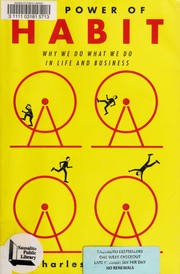
The Power of Habit
Why we do what we do: the cue routine reward loop, keystone habits, and how companies and movements use the same science, from toothpaste to the bus boycott.
2,207-word summary · 10 min read

The Subtle Art of Not Giving a F*ck
Blogger Mark Manson argues for fewer cares held better, through suffering, values, failure and saying no, with raw stories.
2,020-word summary · 9 min read
Deep Work: Rules for Focused Success in a Distracted World
Cal Newport's Deep Work in full: what focused work actually is, why shallow busyness wins by default, and the four philosophies he recommends for protecting…
2,138-word summary · 10 min read
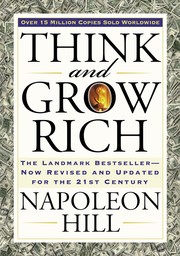
Think and Grow Rich
Hill teaches desire, faith and autosuggestion, distilling lessons from Carnegie interviews into thirteen principles for success.
2,458-word summary · 11 min read

Maybe You Should Talk to Someone
Therapist Lori Gottlieb counsels John, Julie and Rita while seeing her own therapist Wendell after a breakup.
2,234-word summary · 10 min read