
Crown of Midnight
2,255-word summary 10 min read 432 pages in the book
- First published
- 2013
- Publisher
- Bloomsbury
- Pages
- 432
- ISBN
- 9781619630628
- Series
- Throne of Glass (#2)
Reading options
What's inside (9 sections)
I read Crown of Midnight the week after Throne of Glass, which is the only sensible way to do it, because the first book ends on a dare and this one takes it. Sarah J. Maas published it in 2013 through Bloomsbury, it runs 432 pages, and it is the second book in the Throne of Glass series, picking up after the 2012 contest. The last one was a story about a girl fighting for her freedom. This one is a story about a girl doing the job she won and discovering she hates it more than the salt mines.
Celaena Sardothien is the King's Champion now. That title means she answers to the crown, she is housed and fed and dressed like a court favorite, and several times a month she slips out after dark and kills whoever the king has named. It also means she is lying to everyone she has come to care about, because her promise to Prince Dorian was never to serve the king, only to survive long enough to be useful to him. So she keeps two ledgers. One is the report she files with the court. The other is the truth, which is that most of her targets are breathing when she walks away.
The trick she has invented is simple and enormously dangerous. A body can be arranged. A witness can be paid or scared. A man can be sent out of Adarlan with a new name and instructions never to return, and the king can be told he is dead. Celaena has been running this for months, and every fake is one servant's gossip away from ending her.
The Kill She Won't Do
The job that breaks the pattern is a rebel leader's son. The order comes down in the ordinary way, a name and a room, and Celaena refuses to put a blade in him. She fakes the death instead: staged body, staged scene, the boy gone before morning. It is the first time she has openly disobeyed the crown, and the book is honest about the fact that she does it out of stubbornness as much as principle. She tells herself she is preserving an asset. She is also protecting somebody she has decided not to murder.
The double life costs her the people inside it. Every dinner with Dorian becomes a performance, every question about her night becomes a dodge, and Nehemia, who reads political rooms better than anyone at court, notices the gaps without being able to fill them. Celaena has always been a liar by trade. What is new is that she is now lying to friends who would forgive her for most of it, which means the lies are protecting her pride more than they are protecting them.
This thread gives the middle of the book its shape. Celaena has to keep smiling at dinners while a man she spared disappears into the countryside, and Maas writes the tension of that double life well. The court suspects nothing because everyone in the court is lying about something. Kaltain drifts through scenes like a woman half present. Dorian's cousin Roland is in and out of the castle, smug and useless. Duke Perrington smiles at the map. Nobody says the word rebellion out loud, which is itself the point.
Around this sit the small pleasures that made the first book readable. Celaena reads three books at once and argues about them. She bribes servants for cake. She trains at dawn and complains about dawn. Her friendship with Nehemia Ytger, the princess from Eyllwe, is still the warmest thing in the castle, and the two of them spend whole evenings on the floor with maps and Wyrdmark notes, planning a future in which Eyllwe is not a hostage state.
Never trust an assassin.
That is the line Bloomsbury hangs the pitch on, and the book spends its length proving why the warning cuts both ways. Every alliance in it, Dorian's, Chaol's, the king's own, is a wager on how much someone is lying.
Tunnels Under the Library
Chaol Westfall, captain of the guard, starts taking Celaena into the passages under the castle. The first trips are practical: he wants her somewhere safe to train without the court watching, and the tunnels under the library give them that. What they find instead is a hidden door, sealed with old marks, opening onto a network of passageways that runs beneath Rifthold and out into the wider city.
Celaena takes to the tunnels the way she takes to any lock. She maps turns, she notes drafts, she drags Chaol through gaps he will not fit through. Down there the book finds its best scenes, because the plot stops being about dresses and starts being about something the king would not want found. Old queenly warnings are scratched into stone. A riddle she has been working resolves into an answer pointing at a key hidden in a crown inside a cell, and by the time she reaches it the key is gone. The trail is dry, but the shape of it, a ruler who wants forbidden things and a kingdom built on their absence, comes into focus.
It is also where Celaena and Chaol stop pretending. Their bickering in the training yard has been the best dialogue in the series since book one, and Maas lets it turn into something real without making either of them eloquent about it. He brings her books. She waits up for him. They are two people who are good at being alone, and the book does not pretend that is a recipe for happiness.
Dorian and Chaol
The friendship between the prince and the captain curdles through this book, and it is the part I cared about most. Dorian Havilliard has power of his own, cold and unwanted, which his father keeps leashed, and it surfaces in flashes he cannot control. Chaol has duty, a bad conscience, and the growing conviction that the king is building something none of them are being told about. Both of them are in love with the same woman. Both of them are lying to each other about what they know.
The small scenes carry the damage. Dorian surprises Chaol with a horse ahead of his birthday, an act of generosity that lands as a debt. Chaol keeps Celaena's secrets and expects Dorian to keep his. When the two men finally argue, the argument is not really about her. It is about whether loyalty to a person can outweigh loyalty to a crown, and neither of them has a position the other will accept.
Dorian's own chapters run cooler. He is sent to a carnival where an Ironteeth witch named Baba Yellowlegs picks her teeth with a metal nail and tells him he can hide from fate all he likes, and Celaena's amulet goes heavy and warm while she stands in front of the wagon. It is a good scene, one of the few places where the book lets a genuine, unexplained wrongness sit in the room without Celaena narrating what it means. Dorian's magic, meanwhile, keeps pressing at whatever his father has put around it, and the pressure is clearly building toward something the next books will have to pay off.
Nehemia
Nehemia is murdered partway through, and it is the hinge the whole novel turns on. The creature that kills her was called through Wyrdmark signs, drawn where it could reach her, and it leaves a scene that no court explanation can smooth over. Celaena comes in after and finds her best friend dead in a room that should have been guarded.
The castle responds the way institutions respond, with locks, statements, and a short inquiry that names nobody. Guards are doubled, doors are watched, and nobody is permitted to say out loud what killed her. Celaena refuses visitors and stops eating in company, and the court, which has never cared about her, suddenly finds her interesting for a week. Maas is good on the texture of that, the small performances of sympathy and the faster return to schedules.
Grief in this book is not dignified. Celaena rages, then goes cold, then does the arithmetic of blame and lands on Chaol. She believes he knew threats against Nehemia existed and did not warn her, that his uniform and his orders came before a girl she loved. The confrontation is brutal. Celaena cuts him with her whip, opens him up, and walks out of the castle on her own, and the book earns every bit of it because it has spent a hundred pages showing us how much Nehemia meant and how much Chaol had been withholding.
What the scene does not earn is the aftermath, where the suspicion thins quickly once the facts arrive. And Nehemia's death, whatever else it is, functions hard as a lever for Celaena's next move. A friend with her own politics, her own plans, and her own skill set is removed and the heroine is set loose by it. Readers who have met this pattern before will spot it immediately. It still hurts. Maas writes the body and the silence well, and the pages where Celaena sings an old song over her friend are the quietest, best writing in the book.
Endovier Alone
With nothing left in Rifthold, Celaena goes to the Salt Mines of Endovier on her own, with no guards and no warrant, to find the source of the power behind the killing. It is a blunt decision and a good one, because Endovier is where the series began and where she spent a year of her life in chains. Going back unarmed tells you more about her state of mind than any speech would.
What she finds there changes her understanding of herself. She carries Fae power, older and larger than anything the court has taught her to fear, and in the middle of the challenge it takes over. She transforms. The girl who has spent the book insisting she is a killer for hire is something else entirely, and she knows it the moment it happens. The transformation is written as revelation rather than triumph, which suits a character who has been lying about her own name since the first chapter.
The mines also give the book its clearest picture of what the crown actually runs on. Slaves, guards, and a ledger. Celaena has walked these tunnels as property and now walks them as a hunter, and the reversal gives the sequence weight that the court scenes never quite reach.
The Road Out
The last fifty pages move fast and leave the pieces where the next book will need them. The king is connected to the power that drains magic from the land, and hints drop about a network of towers he is raising across Adarlan, secrets he keeps even from his own court. Celaena works out that the contest, the keys, and the silence about old magic are all part of one plan. Nothing is explained in full. The book is more interested in putting her in motion than in giving her answers.
She leaves with a campaign against the witches' king ahead of her, and the final pages hand her over to Arobynn Hamel, the man who trained her in the Guild and who has never quite believed she stopped belonging to him. Being taken back by Arobynn is the cruelest beat of the ending, because Celaena has just finished deciding who she is and who she owes, and the man who owned her earliest years reappears to collect.
What Drags and What Lands
The first third is the slowest stretch Maas has written. Dinners, fittings, visits, and long passages of Celaena choosing what to wear and what to read, while the plot waits in the hallway. The pattern existed in book one and it is heavier here, because the stakes are now murders rather than a competition, and a gown description reads as a stall. I started skimming the social chapters around the midpoint and lost nothing that the plot needed.
The romance also moves faster than the book earns. Celaena and Chaol go from sparring partners to something much closer in a short window, and while the banter supports it, the change of gear is abrupt. Readers who wanted the triangle resolved will be satisfied. Readers who like their romances built room by room may feel a wall went up overnight.
Neither issue sinks it. The middle is carried by the tunnels, by Nehemia's scenes, and by the simple pleasure of watching Celaena lie to powerful people. The final stretch, from Nehemia's death through Endovier, is the strongest writing Maas has done in this series: fast, angry, and specific. Celaena is still, irritatingly, superb at everything she attempts, and the book never lets her be genuinely wrong for more than a chapter. That is the cost of a heroine written to be admired.
I would hand this to a reader who liked the first book's pace and wanted the politics to start. I would not hand it to someone who needs a hard magic system, since Wyrdmarks still do whatever the scene requires, or to someone who wants the heroine held to account by the narrative rather than by her enemies. What stays with me is the whip, the mines, and a girl walking away from a castle because she has decided that being right about a friend matters more than being safe.
FAQ
When was Crown of Midnight published?
It was published in 2013 by Bloomsbury and is the second Throne of Glass book, following the 2012 first novel. The summary here follows that 432-page edition.
What does Celaena do as the King's Champion?
She takes the king's contracts and reports back as his Champion while secretly staying loyal to Dorian. She refuses one job to kill a rebel leader's son and fakes his death instead.
Does Celaena learn what her powers are?
She goes alone to the Salt Mines of Endovier to find the source of the power behind Nehemia's death. During the challenge there she transforms and learns that she carries Fae power.
Similar books
More like Crown of Midnight →More from Throne of Glass first, then related titles.

Throne of Glass
Throne of Glass book 1 retold: Celaena out of Endovier, the contest, Dorian, Chaol, and the castle tests.
1,926-word summary · 9 min read

Heir of Fire
Celaena hides in Wendlyn as heir Aelin and trains with Rowan, while Dorian loves healer Sorscha, Chaol doubts his king, and Manon bonds with Abraxos. Full plot…
2,313-word summary · 10 min read
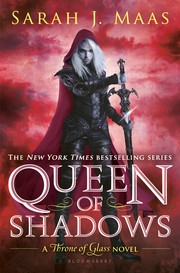
Queen of Shadows
Celaena returns to Rifthold as Aelin to free magic, face Arobynn and the Valg, and reunite with Rowan and Chaol.
4,447-word summary · 20 min read

Empire of Storms
Aelin gathers armies and faces Maeve while Elide and Manon flee Morath.
4,466-word summary · 20 min read

Tower of Dawn
Chaol and Nesryn sail to Antica for armies and healing, finding Yrene Towers and Valg darkness instead.
2,054-word summary · 9 min read

Kingdom of Ash
Aelin is chained in a glass coffin while her court fights Erawan's darkness across every front of the war.
2,078-word summary · 9 min read