
Eleanor Oliphant Is Completely Fine
2,277-word summary 10 min read 336 pages in the book
- First published
- 2017
- Publisher
- Pamela Dorman Books
- Pages
- 336
- ISBN
- 9780735220683
Reading options
What's inside (9 sections)
I started Eleanor Oliphant Is Completely Fine expecting a quirky comedy about an odd woman, and for the first fifty pages that is exactly what it is. Then the joke turns out to be load-bearing. The novel was published in 2017 by Pamela Dorman Books, runs 336 pages, and won the Costa First Novel Award that same year. It is a Glasgow book about a very controlled person, and the control is the story.
The title is the joke the whole book is built on. Nobody around Eleanor believes she is fine, least of all the person saying it, and the gap between the phrase and the life underneath it is where the novel lives. It reads lighter than it is, which is why people hand it to friends as a pick-me-up without checking what happens in the middle.
The setup is delivered with a straight face. Eleanor Oliphant is 30, does IT support paperwork in an office, and describes herself as completely fine whenever anyone asks. Her weeks have the shape of a schedule she wrote for herself and dares life to break. Frozen pizza and vodka on the weekend. A salon appointment every Friday. An email to her mother every week and a phone call every Sunday. Nothing missing, she insists, and the insistence is what makes you lean in.
Eleanor at thirty
The routine is described in enough detail that you could timetable it yourself. Work days are the same work days. She eats alone, drinks alone, and spends the weekend in her flat in a state she presents as contentment. The Friday salon appointment is a fixed point, as immovable as a religious service, and her vodka arrives on schedule behind it.
Underneath sits a voice that is very funny and very wrong. Eleanor says exactly what she thinks in offices where nobody does, blames other people's underdeveloped social skills for every awkward exchange, and narrates her surroundings with the flat precision of someone reading a manual. Honeyman plays this for comedy without ever making Eleanor a punchline. You laugh and then feel the laugh land on something cold.
Her looks are part of the armor. She keeps her hair in a severe style, dresses without interest, and never explains the burn scar on her cheek to anyone who has not earned the explanation. Colleagues find her strange. She finds them strange back. The distance suits her, because closeness would require explaining herself, and explanation is the one thing her schedule has no slot for.
Her literal reading of other people runs under every office scene. Rules, to Eleanor, are procedures that everyone else keeps failing to follow, so she corrects them and then cannot understand the frost that follows. Honeyman stages these moments as comedy in the moment and as evidence a page later. The correction is a wall she has been maintaining for years, and she is proud of the upkeep.
The scar, the foster years, and the Sunday call
The scar and the silence around it point backwards. Eleanor was in a foster home after her mother's care ended badly, and she has arranged her adult life so that the past never has to be examined. Facts she knows, feelings she does not touch. She speaks about her mother in the present tense, in the steady way of someone reporting weather.
Those Sunday calls anchor the whole structure of her week. The email goes out on schedule and the phone rings at the appointed hour, and the conversation is thin, dutiful, and somehow still the most reliable event in her life. Whatever else Eleanor lacks, she has that. The book lets you believe it for a long while, which is part of the trap it sets.
What she is doing, without naming it, is keeping a story intact. Foster care, a scar, a mother she will not describe in past tense: each piece is filed rather than processed. She has built a life with no room in it for memory, and the room is not empty. It is the loudest thing in the flat.
Sammy collapses on the street
The break in the schedule happens on a pavement outside the office. She and Raymond, the IT guy from her work, are leaving for lunch when an old man named Sammy collapses in front of them. Raymond reacts like a person who has done first aid training and knows what an ambulance is for. Eleanor reacts like a person whose routine has just been hijacked. Between them they keep Sammy alive until help arrives.
Raymond is the opposite of everything Eleanor protects herself against. He is scruffy, warm, talkative, permanently unbothered by mess. He eats badly, dresses badly, and treats her strangeness as an interesting trait rather than a problem to correct. Eleanor's first instinct is to file him under nuisance. He does not cooperate with the filing.
From Sammy the book gets its first real bridge outward. He is grateful in the uncomplicated way of a man who nearly died and wants to thank the people who stopped it, and gratitude pulls Eleanor into rooms she would never have entered. Hospital visits. A family's house. Food she did not cook and small talk she did not plan. Each outing costs her something, and each one leaves her slightly less certain that her flat is the safest place on earth.
The aftereffects reach the office too, where a woman who has always been a mannerism suddenly has a story attached to her name. Attention of that kind is its own pressure, and Eleanor handles it the way she handles everything, by returning to the timetable as fast as she can. The schedule is the only therapist she has at that point.
A cooking club forms
The friendship takes shape around meals. Raymond cooks and insists she eat real food. Sammy's household keeps pulling them back for gatherings. Somewhere in the middle of that, an arrangement hardens into a habit: these three people see each other, and the seeing is not conditional on Eleanor performing normalcy.
The cooking scenes are where the book is at its most charming and its most sly. Recipes, shopping, the logistics of feeding people. Domestic business that sounds trivial until you notice it is the first thing Eleanor has ever done for reasons other than survival. She learns that a kitchen can hold three people without anyone raising their voice. For a woman raised on vigilance, that is a strange discovery.
Raymond's friendship in particular refuses to be earned. He does not wait for her to become easier. He shows up, teases her, tolerates her corrections about his manners, and keeps inviting her. Honeyman is careful to make his patience human rather than saintly: he has his own lonely history, which surfaces later and explains why he recognizes her. The three of them together read as misfits by default, a group formed because none of them had a better offer.
The meals do something the plot never states outright. Eating together is the least efficient use of Eleanor's weekend, and she consents to it anyway. She starts to notice food rather than consume it, and she starts to notice people across the table in the same slow way. Honeyman keeps this side of the book concrete, plates and pans and recipes, so the change arrives through behavior instead of speeches about connection.
The concert, the bottom, and Raymond at the door
Running beside the friendship is Eleanor's fantasy life. She has convinced herself that she and a singer called Johnnie Lomond are destined for each other, and she has spent years preparing for the meeting. The grooming regime she starts is written with agonizing comedy: appointments, new clothes, advice from a beauty counter, all aimed at a moment she has rehearsed in her head a hundred times.
The concert kills it. Up close the man is not the sophisticated figure she invented, and the shock sends her into a collapse that the book has been warning about since the first frozen pizza. In her flat, alone, she stops functioning. I will not detail what she assembles in those days, but the book goes as far as you expect and then gets her out of it in time.
The rescue is Raymond, sent by the office because she has not shown up and has never not shown up. He finds her, deals with the mess, and does not make a speech about it. That restraint is the best writing in the novel. He helps her clean up, gets her to a doctor, arranges for her to talk to a counsellor, and keeps coming back on the days when coming back is awkward. The cat he delivers for company is a small, funny, exactly right gesture.
What Eleanor starts to remember
With the counsellor, with Raymond's steady presence, and with the weekly Sunday ritual finally under pressure, the past begins to move. Eleanor starts to remember what she had arranged her whole life around not remembering, and the memories arrive in pieces rather than one clean reveal.
She does not go gently into those sessions. Early on she treats the counsellor as another person with poor social skills, answering with literal precision and defending her life as working perfectly well. That resistance matters, because it keeps the therapy scenes from becoming a conveyor belt of breakthroughs. Progress here is slow, argumentative, and frequently interrupted by ordinary weeks.
The truth underneath is a house fire set by her own mother, a night that killed her mother and Eleanor's younger sister and left Eleanor with the scar she has never explained. The foster placement that followed was the consequence of that night, and the woman at the other end of her weekly email and Sunday call has been gone for years, kept present by a story Eleanor cannot afford to question. When the newspaper account finally lands in front of her, the whole architecture of her week becomes legible: the routine, the vodka, the refusal to be touched, the phrase she repeats about being fine.
What makes this work is how long Honeyman delays it. The comedy of the first half is structural, a portrait of a woman keeping a door shut before you know there is a door. So when Eleanor finally reads what happened, you understand why every salon appointment mattered and why she flinched at smoke and at raised voices. The book does not rush her. She keeps the counsellor. She keeps Raymond. Recovery is scheduled, like everything else in her life, which is the most Eleanor way to change.
What the book does well, and where it softens
The voice carries it. Eleanor is one of the more convincing narrators in recent fiction precisely because she does not know she is being observed. Her asides about other people's manners are funny, then uncomfortable, then sad, and the shift happens without the book announcing it. Glasgow gives the office and the flat real texture: grey days, a desk by a window, trams and shops and long walks home.
A few soft spots. The healing leans heavily on Raymond, who is almost suspiciously reliable, and readers who want their kindnesses to cost something may find his patience arriving right on schedule for the plot. The late reveal leans on suppressed memory, a device that either makes the book's design visible or reads as a tidy explanation, depending on how you feel about big structural secrets. Some of the office colleagues exist mainly to register Eleanor as odd, which keeps the focus tight and leaves the workplace thin.
The tone will also divide people. The comedy sits on top of abuse, grief, and a suicide attempt, and the book keeps reaching for warmth at moments when a colder novel would stay bleak. I did not mind it. The warmth is the argument the book is making, and it earns most of it through Raymond rather than through tidy sentiment. Readers allergic to uplift, though, should go in knowing that this one intends to leave you hopeful.
Nor is it a book for everyone who likes literary fiction. There is little in the way of stylistic risk on the sentence level, and the plotting of the reveal follows a fairly classic path toward a secret that explains the odd behavior. If you want ambiguity about whether a damaged narrator can be trusted, this novel sides with disclosure. It wants Eleanor to arrive somewhere, and she does.
It is worth naming what the book is about beneath the plot. Eleanor has mistaken survival for a life. Her schedule keeps her safe and keeps her alone, and nobody in her world has ever told her that fine is not a destination. The friendship does not fix her. It simply puts other people in the room while she does the work with the counsellor, and the ending reflects that balance. She says she is fine and, for the first time, means it. The work ahead of her is still there. She is not walking away from it, and neither is Raymond, who says he will see her soon.
I finished it on a train and put it in my bag feeling like I had been let in on someone's private weather. If you like narrators who are funny before they are sad, and stories where friendship is practical rather than magical, this earns its awards. The deadpan office comedy is the way in, and the quiet business of a woman learning that other people can be trusted with the truth is what stays.
FAQ
What is Eleanor Oliphant Is Completely Fine about?
Eleanor is a 30-year-old office worker in Glasgow whose rigid routine hides a traumatic childhood. When she and Raymond from IT help an elderly man named Sammy who has collapsed, the three slowly become friends and her past starts to surface.
Why does Eleanor insist that she is completely fine?
She says it because examining her life would mean facing the foster years and the night that left the burn scar on her cheek. By the ending she says it again and, for the first time, means it.
Did the book win any awards?
It won the Costa First Novel Award in 2017, the year Gail Honeyman's debut was published by Pamela Dorman Books. It was her first published novel.
Similar books
More like Eleanor Oliphant Is Completely Fine →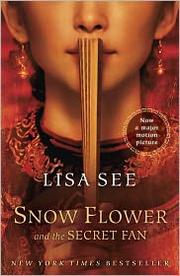
Snow Flower and the Secret Fan
Footbound Lily and Snow Flower share laotong bond through 19th century Hunan hardship.
2,557-word summary · 11 min read

My Brilliant Friend
Elena and Lila grow up in 1950s Naples bound by rivalry and love.
2,584-word summary · 11 min read

Beautiful World, Where Are You
Two friends Alice and Eileen trade letters while navigating love with Felix and Simon.
2,872-word summary · 13 min read

A Little Life
Four friends in New York orbit Jude, whose hidden past of abuse shapes every page of this 720-page epic.
1,972-word summary · 9 min read

Tomorrow, and Tomorrow, and Tomorrow
Childhood friends Sam Masur and Sadie Green build hit games from Ichigo to Mapletown while love, disability, and work strain a thirty year bond through fame…
2,464-word summary · 11 min read

The Perks of Being a Wallflower
Chbosky's Perks retold: Charlie's letters, Sam and Patrick, first year of high school in Pittsburgh.
1,951-word summary · 9 min read