Reading options
What's inside (8 sections)
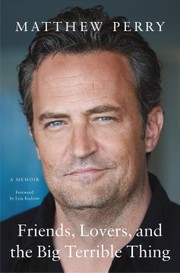
I picked this one up because Chandler Bing was part of my background noise for years, and I wanted to know what that decade felt like from inside it. What I got was less of a sitcom tell-all than I expected. Published November 1, 2022 by Flatiron Books, 272 pages in hardcover, this is a memoir about addiction that happens to have a famous sitcom running through the middle of it. Perry died on October 28, 2023, about a year after the book came out, and reading it now carries a weight he could not have planned for. I am going to treat that fact gently here and stick to what he actually put on the page.
He opens with a greeting that sets the tone for everything after:
Hi, my name is Matthew, although you may know me by another name. My friends call me Matty.
That mix of direct address and jokes that arrive a beat too fast is the whole book in miniature. He wants you close. He also wants to keep you laughing while he tells you things that are hard to sit with. Sometimes that works. Sometimes you wish he would drop the one-liner and stay still for a minute.
A kid who lived out of a suitcase
Perry was born in 1969 in Massachusetts and raised mostly in Ottawa after his parents split. His mother, Suzanne, worked as a journalist and later as a press aide to Prime Minister Pierre Trudeau. His father, John Bennett Perry, was an actor working in Los Angeles. So Matthew grew up between two households, two countries, and two versions of himself. The Ottawa kid. The Los Angeles visitor. He writes about long flights alone as a child, about being handed off and expected to be fine with it, about learning early that being funny got adults to pay attention.
His stepfather was Keith Morrison, the broadcast journalist later known for Dateline. Perry describes a house full of accomplished adults and a boy who felt peripheral in it. I do not think he is asking for pity in these chapters. He is trying to explain a feeling that follows him through the rest of the book, a fear that people he loves will leave. He names abandonment as the engine under a lot of what came later. Whether you buy that as a full explanation or not, he returns to it so often that you have to take it as his honest read on himself.
There are small, concrete scenes here that stayed with me. Smoking cigarettes far too young. Sitting alone while the adults worked. Practicing jokes the way other kids practiced free throws. Ottawa winters, tennis courts, a kid trying to earn a place in rooms where everyone else seemed to know the rules.
Tennis, then acting, then the first drink
Before Friends, Perry was a nationally ranked junior tennis player in Canada. He takes visible pride in that, and he should. The discipline it took shows up in his descriptions of practice, of traveling to tournaments, of learning how to compete. Tennis also gave him something acting never quite did, a scoreboard. You won or you lost. Nobody laughed or failed to laugh. That clarity mattered to him.
He moved to Los Angeles at fifteen to live with his father and try acting. The early credits came faster than most teenagers get: Second Chance, Growing Pains, Sydney, guest spots, a lot of auditions. He describes pilot season as a strange cattle call where everyone is young and hungry and pretending not to be scared. He was good at comedy, quick with a read, able to land a sarcastic line so it sounded hurt and funny at once. Casting people noticed.
He also started drinking at fourteen, in Ottawa, and he writes about that first experience of alcohol as relief. The noise in his head went quiet. He could talk to people. He could be the version of himself he wanted to be. He is careful, at least in retrospect, to say this was a warning sign and not a cute origin story. He drank the way he later did everything connected to substances, fast and all the way. By the time Hollywood gave him money, free time, and people willing to look the other way, the pattern was already set.
Chandler Bing and the seasons he could not watch back
In 1994, at twenty-four, Perry landed the part of Chandler Bing on a pilot then called Friends Like Us. He was the youngest member of the main cast. He describes the chemistry read, the speed at which the show caught on, the strangeness of becoming famous in a way that meant strangers felt they knew him. Chandler's speech pattern, the joke as deflection, the aside that undercuts a sincere moment, fit Perry's own timing so well that lines between actor and part blurred. He admits he sometimes brought his own fears into Chandler's voice, especially around commitment and self worth.
Friends fans often ask about behind the scenes stories, and there are some here. Table reads. Jokes that got rewritten on the fly. The particular closeness of six young actors working brutal hours while the world watched. Jennifer Aniston confronting him about his drinking at one point. The others covering for him, checking on him, getting tired. Marta Kauffman, the co-creator, is quoted on the jacket calling the book courageous, and Perry writes about her with respect. But if you come to this book only for set gossip or episode trivia, you will be disappointed in stretches. He says plainly that there are seasons he cannot really watch because he was in such bad shape while filming them.
He offers a rough guide he has used in interviews too. When his weight shifted noticeably between seasons, it often tracked what he was taking. Heavier periods tended to line up with alcohol. Thinner periods lined up with pills. Sober stretches looked different again. It is a blunt way to read a sitcom, and he knows it. He puts it in because he wants readers to grasp that the funny guy on Thursday nights was often barely holding on between takes.
One short paragraph needs to stand on its own here. He never claims the show caused his addiction. He says fame fed it, gave it cover, paid for it. The cause, as he tells it, was already in him.
The big terrible thing, in his own phrase
The title phrase is what Perry calls addiction itself. Not one bad night or one lost relationship. The whole condition. The craving, the lying, the cycle of getting clean and slipping again. He returns to those four words through the book the way some people return to a prayer, except his version is edged with dread. It is the thing waiting when the applause stops.
The medical details arrive in pieces rather than in one clean timeline, which can make this section feel circular the first time through. The through line goes like this. In 1997, after a jet ski accident, he was prescribed Vicodin. He describes liking the feeling immediately and chasing it hard. Over time he says he was taking dozens of pills a day, at one point around fifty-five, along with Xanax, along with alcohol in other periods, along with long stretches of trying to stop. He lists rehabs and detox stays in numbers that are difficult to absorb, around fifteen rehab stays and dozens of detox attempts, and says he spent several million dollars trying to get sober. Exact tallies matter less than the shape of it. Nothing held for long.
Then came 2018. At forty-nine, his colon ruptured from opioid overuse. He gives the odds he was given as two percent to live. He spent two weeks in a coma, months in the hospital, and woke to a colostomy bag and a long road of surgeries, fourteen by his count. He writes about learning to walk again, about shame, about his family sitting with him through it. These are the strongest pages in the book for me, partly because the jokes thin out. He sounds scared in retrospect in a way he rarely allows himself elsewhere.
I want to pause on how he frames all of this. He calls addiction a disease, not a failure of will, and he writes directly to readers who are struggling or who love someone who is. He does not give instructions or tricks. He describes meetings, sponsors, routines, and the choice to keep showing up. He also says helping other alcoholics helped him more than almost anything else. If you are in that situation now, his account may feel companionable, though it is no substitute for professional care or a program you trust.
Love, fame, and the Batman fixation
The middle of the book moves between romances, career swings after Friends, and Perry's long attachment to Batman. The Batman material might sound like a footnote, but he treats it as central. He collected Batman objects, studied the character, joked about wanting the cape. He connects it to a wish to be the person who saves the day rather than the person who needs saving. You can smile at that and still see why it mattered to him. A kid who felt left alone invents a hero who shows up.
The relationships he discusses include Julia Roberts, who guest starred on Friends in 1996 and dated him briefly afterward. He says he ended it partly because he was sure she would end it first, which reads as the abandonment fear talking. He writes at more length about Lizzy Caplan, his partner for several years, with a tone that sounds like regret without quite becoming an apology. He was engaged to Molly Hurwitz in 2020, and they split in 2021. He talks about wanting children and a steady partnership, and about being a difficult person to build that life with while using. He does not spare himself here, though readers who want full accounts from the other people involved will not get them. This is his version, and he knows it.
Fame after Friends was uneven. Studio films like Fools Rush In and The Whole Nine Yards did business. Later television efforts, including Studio 60 on the Sunset Strip, Mr. Sunshine, and Go On, had supporters but never became second Friends sized hits. He writes about that comedown with a mix of honesty and self pity. Money kept coming. Attention kept coming. Purpose did not, at least not in a form he could hold.
A fair criticism belongs in this section. The passages about Keanu Reeves, where Perry wonders aloud why Reeves still walks the earth while others die, were widely quoted and widely disliked. Perry later said he was a fan, apologized, and later printings removed the name. I mention it because it shows the book's weakest habit. When he feels small, he sometimes reaches for a comparison that pulls someone else down with him. An editor should have cut those lines the first time.
Getting sick, getting honest, and what stays unresolved
Toward the end, Perry describes getting to about eighteen months of sobriety before publication and trying to convert that fragile steadiness into something useful for others. He talks about wanting to run a place where addicts could get help without cameras around, about answering messages from strangers, about showing up for friends in recovery. He frames sobriety as maintenance rather than victory. Meetings. Phone calls. Early nights. The unglamorous stuff. For a performer who lived for applause, that ordinariness reads as the point.
He also writes about his parents with more softness than at the start. His mother and father show up at hospital bedsides. Morrison shows up. Friends co-stars show up. He lets himself be grateful without turning it into a speech. Those pages work because he keeps them plain. People came. He noticed. He remembered.
Reading this after his death changes some sentences. He writes about wanting to be remembered for helping people stay sober rather than for Chandler, and you cannot help reading that as a request. I will not pretend the book ties everything shut, because it does not. The hospital stories repeat. Timelines blur. The Chandler voice pops up in places where a plainer sentence would carry more weight. He is also thin on the craft of acting itself, on what he actually did to build a comic performance beyond instinct and fear. Readers who want a full history of Friends, or a strict chronology of every relapse, will find gaps.
Who is this for, then. If you watched Friends and want to understand what Perry was carrying through those years, this gives you that, in his words, with jokes intact and defenses visible. If someone close to you drinks or uses pills in a way that scares you, his description of craving and relapse may help you recognize the shape of it, though every person's pattern differs. If you want literary polish or distance, look elsewhere. This is a celebrity memoir written in a television voice, funny on purpose, evasive sometimes, frank at unexpected moments.
I finished it thinking less about Chandler's one-liners than about a line Perry repeats in different forms. He wanted to matter to people who were still in the tunnel. Whatever you make of the book's rough edges, that wish comes through clearly enough to take seriously.
FAQ
When was Friends, Lovers, and the Big Terrible Thing published?
It was first published on November 1, 2022 by Flatiron Books. Perry wrote it during about eighteen months of sobriety, roughly a year before his death in October 2023.
Do I need to be a Friends fan to read it?
No. The sitcom years fill one stretch, but most pages cover childhood, tennis, addiction, relationships, and recovery, so it reads as a memoir first.
How does the book handle addiction?
Perry calls addiction a disease, describes relapses and hospital stays without instructions or glamour, and stresses meetings, sponsors, and helping others stay sober.
Similar books
More like Friends, Lovers, and the Big Terrible Thing →
This Is Going to Hurt
Adam Kay retells his junior doctor diaries with humour and strain, from labour ward nights to leaving medicine.
2,869-word summary · 13 min read

The Autobiography of Malcolm X
Malcolm X traces his life from Michigan childhood through Harlem, prison, and the Nation of Islam to Mecca in this 1965 memoir told to Alex Haley.
2,816-word summary · 13 min read

Shoe Dog
Phil Knight tells how Blue Ribbon Sports grew from a trunk of Japanese running shoes into Nike.
2,824-word summary · 13 min read

On Writing
Stephen King blends memoir and blunt writing advice on reading daily, drafting fast, and cutting hard.
2,702-word summary · 12 min read

Just Kids
Patti Smith recalls broke young years with Robert Mapplethorpe in 1960s New York, from Brooklyn rooms to the Chelsea Hotel, art, music, and a kept promise.
2,401-word summary · 11 min read

Heaven Is for Real
A Nebraska pastor's four-year-old survives a burst appendix, then describes angels, Jesus, and relatives he never met.
2,679-word summary · 12 min read