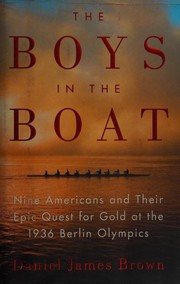
The Boys in the Boat: Nine Americans and Their Epic Quest for Gold at the 1936 Berlin Olympics
2,439-word summary 11 min read 416 pages in the book
- First published
- 2013
- Publisher
- Viking
- Pages
- 416
- ISBN
- 9780670025817
Reading options
What's inside (8 sections)
I came to The Boys in the Boat because someone at a family dinner said it was the rare sports book his father and his daughter both finished. Viking published it in 2013, 416 pages, and it follows the University of Washington eight from Seattle to the 1936 Berlin Olympics. I expected a straight underdog story with a medal at the end. What kept me reading was how much hunger and weather and plain work sit around the racing.
Brown builds the book around Joe Rantz, a tall boy from Washington State who learned early how to be alone. The racing moves from Lake Washington to Poughkeepsie to Berlin. Around it sit coaches, a boatbuilder, parents, girlfriends, and a German regime trying to use the Games as a show. I will walk through it in order, because the slow climb makes the last six minutes make sense.
A boy left in Sequim
Joe Rantz is born in 1914 and loses his mother when he is still young. His father Harry remarries Thula, a woman with her own children and strong views about how a household should run. The family moves for timber work, to Sequim and other small towns in Washington, and Joe learns to swing an axe, mend an engine, and stay out of the way.
The break comes when Joe is fifteen. Harry and Thula pack up and move away, leaving Joe in the half finished house in Sequim to look after himself. Brown describes cold rain coming through unfinished walls, a small stove, potatoes and canned milk, schoolbooks spread near the fire. Joe splits shakes for roofs, picks up farm labor, plays the violin at school dances for a little cash. Later he moves to Goldendale to finish high school, sleeping in a basement and a cookhouse, working in wheat fields and a saw crew. He tells almost no one how thin things are.
That history follows him to Seattle in 1933. He enrolls at Washington with little money, during the Depression, when tuition and meals are daily math. He tries out for freshman crew in part because the program offers a work job and filling meals. He arrives strong from manual labor but light from missed dinners, shy in a way teammates read as cold. Brown keeps returning to one habit in Joe. He wants a place in the boat and expects to lose it, so he holds himself apart.
Joyce Simdars steadies him. They meet while both are teenagers around Goldendale. She is direct, musical, unimpressed by self pity. Their letters and brief visits give Joe a fixed point. When he is sick or broke or benched, he writes to her and then shows up again at dawn on Lake Washington. Their bond gives Brown a way to show Joe softening without speeches. He learns to accept a ride, a meal, a second chance, which for him is harder than pulling an oar.
Ulbrickson and the long tryout
Al Ulbrickson coaches Washington in these years. He rowed at Washington himself, speaks in short sentences, and watches water the way farmers watch sky. His rival to the south is Ky Ebright at California, who wins often and recruits well. In the east, Navy and Cornell and Syracuse and Pennsylvania have deep money and calm courses. Washington has rain, chop on Lake Washington, floating logs, and boys who work in canneries between terms.
Ulbrickson believes a fast eight comes from timing rather than muscle alone. He spends the 1933 to 1936 seasons switching combinations. Freshman boat, junior varsity, varsity. Stroke to bow and back again. Bobby Moch, small and loud and clever, grows into the coxswain seat. Don Hume, quiet, rows stroke with a long smooth rhythm that others can follow. Joe sits at seven or six as trials shift. Around them rotate Shorty Hunt, Jim McMillin, John White, Gordon Adam, Chuck Day, and Roger Morris. Names matter here because Brown wants you to feel how fragile a lineup is. One change in the middle seats can settle a boat or ruin it.
Practices are early and wet. Rows before class in the dark, running and weights in the afternoon, hands taped and retaped. Ulbrickson keeps a logbook, writes times over measured miles, frowns, sends crews back out. Assistant coach Tom Bolles does much of the daily talking. The boys grumble about dining hall portions and sore backs, then learn to save breath.
The point Brown presses is trust. An eight moves when all blades catch together, drive together, and leave without splashing, while the shell runs level on the recovery. If one man rushes his slide, the boat checks. If one man tries to add extra with his arms, the rhythm shortens. Ulbrickson benches Joe at one stage for rowing outside the crew, all power and little blend. Joe returns, gets benched again in spirit if never in name, and slowly learns to match Hume instead of outpulling him. Teammates start to speak up for him in the boathouse. That change from lone worker to crew member carries more weight than any single dual race.
Pocock and the cedar shells
George Pocock shares the center of the book with Ulbrickson. He is an English boatbuilder who learned from his father and settled in Seattle, working in a shop beside the Washington boathouse. He picks western red cedar, cuts thin ribs, steams planks, sands hulls until the surface feels warm. His shells are narrow and light. They forgive nothing and reward clean handling.
Rowers wander into his shop to get warm. Pocock hands them tea and short advice. Do not fight the water. Let the boat do the work between strokes. Listen through your hands. He talks about swing, the state when eight men move as one and the shell seems to lift and glide. He says swing cannot be grabbed. It arrives when each man stops posing and starts matching the man ahead of him. I liked these scenes best on first read. They break up lists of times and seat changes with wood shavings and quiet talk.
Brown uses Pocock to teach rowing without a manual feel. The catch, when the blade drops near the feet. The drive, when legs push and the back swings open. The release, when hands tap down and the blade slips out. The recovery, when seats roll forward without rushing the next catch. Done well, the boat surges and then runs free. Done badly, it dips and drags. Pocock had known poverty and loss in England, and he speaks to the Washington boys, many of them loggers sons and fishermen, with plain respect. He thinks farm strength can beat polish if it learns touch.
He builds them the Husky Clipper for the eastern races, a stiffer and slicker eight they treat with care. They carry it like glass, wipe it down, check for dings. Pocock travels when he can and frets from home when he cannot. His faith that ordinary wood and ordinary boys can make something fine sets the tone Brown wants. Craft first, medals later.
Poughkeepsie and the trials
To reach Berlin the crew must win in America first. The Intercollegiate Rowing Association regatta at Poughkeepsie, New York, is a four mile test on the Hudson River. Trains ride alongside with crowds. Launches crowd the course and leave wakes. Wind and tide push boats around. Eastern papers tend to favor eastern crews, and Washington arrives as the rough western entry.
In 1934 Washington goes east young and learns hard lessons. California wins. The sophomores look strong in pieces and ragged in others. In 1935 they return and take the freshman race with pace, while the varsity still cannot close against older crews. Ulbrickson keeps shuffling. Hume settles at stroke for steadiness. Moch settles as coxswain for judgment. Joe holds a seat in the middle after more trials in pairs and fours.
The 1936 Poughkeepsie race is the middle peak of the book. Brown calls it stroke by stroke. Washington starts controlled while Navy and California jump out. Through the first mile the Huskies rate a little lower and save legs. Near the halfway mark Moch starts calling for tens, ten hard strokes, then back to rhythm, then another ten. Hume refuses to let the rate climb with the field. Joe locks behind him. Slowly Washington walks through the field. In the last half mile they pass California and hold off Navy by a narrow margin. The telegrams from Seattle, the noise in the dining car west, the sudden talk of passports, all land because Brown showed two winters of wet mornings behind them.
Then comes Princeton for the Olympic trials. Heats in heat and humidity, little rest between races, California and eastern eights hungry for the same trip. Washington rows with restraint early and sprints only when needed. They win the trial and become the United States eight. Money remains a problem. Seattle businesses, families, and the university scrape together funds for the ship and uniforms. Joe writes Joyce that it hardly seems real. Boys who counted coins for lunch now need inoculations and trunk locks.
Berlin under Hitler
In Berlin Brown widens the frame. Germany in 1936 is ruled by Adolf Hitler and the Nazi Party. The regime takes down hostile signs for visitors, posts guides, builds an Olympic village and a grand rowing course at Grunau. Leni Riefenstahl and her camera teams plan a film to show German strength. Officials want German golds, on the track and on the water, to support claims about the nation.
The Americans cross on a ship, lifting weights on deck and jogging in circles, arriving tired and wide eyed. They see clean streets and flags and bands, and they also hear quiet warnings from Americans living in Berlin about arrests and excluded athletes. Brown notes Jewish athletes kept off German teams and the debate in America over boycotting the Games. He notes Jesse Owens, the black American sprinter, preparing to spoil the host story on the track. The rowers are not political actors. They trade pins, try strange food, stare at the new stadium, and feel the weight of representing home in front of Hitler.
Rowing conditions at Grunau prove tricky. The basin is shallow in spots and open to crosswinds. Lane draws matter, with sheltered water inside and chop outside. Food is heavy. Sleep breaks with noise and nerves. Hume catches a respiratory infection that leaves him coughing and pale. Ulbrickson stayed home while his assistant traveled, sending letters with plain counsel. Make the final first. Save something for the medal race.
Heats confirm the danger. Germany wins its heat to roars. Italy looks smooth and strong. Britain rows tidy. The Americans win early but look uneven to reporters. Hume coughs through nights. Moch studies wind patterns and starting pontoons. Pocock checks the Husky Clipper for damage and keeps talk low and steady. Brown holds two facts together here without forcing them. The boys enjoy the spectacle, and the spectacle is staged by a violent state. He does not make the rowers into heroes of resistance. He shows them as observant guests who understand they must row well under eyes that wish them ill.
Six minutes and six seconds
The Olympic final is 2000 meters, far shorter than Poughkeepsie, and it rewards a quick start and a brutal middle. Six lanes. Germany draws shelter. America draws outside, where wind hits hardest. Brown sets the crowd near one hundred thousand along the shore, loudspeakers, flags, Hitler in the stands with party leaders. The boys wear mismatched nerves on their faces.
The start goes wrong for Washington. The boat drifts before the gun. The starting official holds them long. When the race fires, blades catch poorly and wash from another crew slides into their water. Through 500 meters they sit last while Italy and Germany lead. Hume, still sick, keeps the rate long rather than chasing. Moch stays calm in the stern, calling for clean entries and steady tens. Joe matches Hume and waits.
Near 1000 meters they are still fifth or sixth, several lengths down. Then the move starts. Moch lifts the rate a notch. Hume lengthens through the legs. The boat begins to run between strokes. They pass one crew, then another. With 800 meters left they sit fourth. With 500 left they sit third, closing on Italy and Germany as the middle lanes grow rough.
The last 300 meters give Brown the payoff he prepared for 300 pages. Moch asks for everything. Hume raises the cadence. The eight finds swing under pain. Oars blur. Spray lifts. They pass Germany, then draw level with Italy in the final strokes as the line comes through chop. Washington wins gold in 6:06, recorded at 6:06.4, about eight tenths ahead of Italy and about two seconds ahead of Germany. Less than a boat length after more than six minutes.
Brown handles the aftermath with restraint. The boys hang over their oars, hardly able to lift hands. They paddle to the dock, stand unsteady for the anthem, receive medals and small oak saplings meant to grow as living prizes. Hitler leaves early, by some accounts before greeting common athletes. Back in Seattle crowds meet them, jobs ease for a while, Joyce holds Joe, Pocock runs a hand along his scarred but sound shell. Owens wins on the track that same week, cutting against Nazi claims in a way the rowers admire from their own corner of the Games.
Fair criticism belongs in any honest account. The middle can feel slow when rowing detail piles up. Rigging changes, rate charts, seat swaps, pairs trials. Each matters to a coach, and Brown explains them clearly, but pages of lineup moves blur for general readers. I skimmed a little around the second Poughkeepsie buildup, then was glad I knew Hume and Moch by name when Berlin narrowed to stroke and coxswain and seven seat. Readers who came only for Hitler and gold may find the 1934 and 1935 seasons long. Readers who like craft and patience will mind less.
I closed the book thinking about practice more than prizes. Nine boys with little money learned to sit still in discomfort, to match breath and hands, to let a sick stroke set pace and trust him anyway. The 6:06 final works because Brown made me wait through rain and losses to earn it. If Depression history or team sports or workmanlike craft hold interest for you, this one earns the evenings it asks for.
FAQ
Is The Boys in the Boat only for rowing fans?
No. Brown centers Joe Rantz and Depression life, so the rowing serves the human story. Readers who like history or team sports usually stay past the technical pages.
Did Washington really win in 6:06 at Berlin?
Yes. Washington won the 2000 meter final in 6:06.4, about eight tenths ahead of Italy with Germany third. Brown builds the race from lane draws, wind, and Hume's illness.
When was the book published?
Viking published it in 2013 in a 416-page edition. The notes here follow that text.
Similar books
More like The Boys in the Boat: Nine Americans and Their Epic Quest for Gold at the 1936 Berlin Olympics →
The Prince
Machiavelli advises Lorenzo on rule through fear and love, fortune, cruelty and mercy.
2,204-word summary · 10 min read

Killers of the Flower Moon: The Osage Murders and the Birth of the FBI
In 1920s Oklahoma, Osage oil wealth makes tribal members targets for murder, forcing the young FBI under Tom White to expose the conspiracy behind the Reign of…
2,403-word summary · 11 min read

John Adams
McCullough follows Adams from Braintree lawyer to second president.
2,515-word summary · 11 min read

Between the World and Me
Coates writes to his son about the Black body in America, from Howard to the loss of Prince Jones.
2,234-word summary · 10 min read

Guns, Germs, and Steel: The Fates of Human Societies
Diamond argues geography and crops explain why some societies expanded faster than others.
3,432-word summary · 15 min read

The Devil in the White City
Architect Burnham builds the 1893 Chicago Fair while H.H. Holmes builds his murder hotel nearby.
2,020-word summary · 9 min read