
The House in the Cerulean Sea
2,039-word summary 9 min read 398 pages in the book
- First published
- 2020
- Publisher
- Tor Books
- Pages
- 398
- ISBN
- 9781250217288
Reading options
What's inside (9 sections)
I read The House in the Cerulean Sea when I needed comfort and it delivered exactly that. T.J. Klune published it with Tor Books in 2020, a 398 page fantasy that became a word-of-mouth phenomenon, a New York Times bestseller, and the defining cozy fantasy of its wave. The premise sounds like a joke. Linus Baker, a fussy middle-aged caseworker for the Department in Charge of Magical Youth, is sent to inspect an island orphanage housing six extremely dangerous children, including the Antichrist, and decide whether to close it. What follows is warm, funny, romantic, and quietly radical about who deserves family. If you want grit, look elsewhere. If you want to cry happy tears on an airplane, come in.
Linus is a wonderful creation, a rule-follower down to his bones. He lives alone with a cat he lectures, works in a gray office under gray skies, and enforces regulations with total sincerity. Extremely Upper Management notices his diligence and gives him the Marsyas Island assignment, one month, classified, with a companion guide of rules. The children there are the most dangerous in custody. Talia, a garden gnome with a shovel and a grudge. Theodore, a wyvern who hoards buttons. Phee, a forest sprite of uncertain gender. Sal, a shy were-Pomeranian who writes poetry. Chauncey, a blob of unknown species who dreams of being a bellhop. And Lucy, short for Lucifer, a six-year-old Antichrist who likes music and threatens armageddon when bored.
The caretaker, Arthur Parnassus, is hiding things, and Linus's investigation of him becomes the book's slow-burn center. Arthur is kind, evasive, devoted to the children, and clearly more than a bureaucrat. His relationship with Linus develops from professional suspicion to friendship to love with patience that romance readers will savor. Klune writes their courtship in glances, shared meals, and late conversations while the children sleep. It is gentle and adult, two lonely men in their forties finding each other, and it never feels rushed or performative.
The inspection and its undoing
The book's structure is episodic by design. Linus inspects, interviews, files reports, and each child gets showcase chapters. Talia tries to bury him in the garden. Theodore sits on him. Sal reads him a poem that breaks his heart. Chauncey carries his luggage with total dedication. Lucy requests records that may or may not summon demons. Through it all, Linus applies his rulebook and finds it inadequate. The rules say these children are dangers to be managed. His eyes say they are children to be loved. The gap between regulation and reality becomes the novel's engine.
Klune braids in the bigger world carefully. Magical beings face open prejudice, registration, segregation, all clear parallels to real bigotry that the book states plainly rather than allegorizing coyly. The village on the mainland fears the island. A developer wants it closed. Extremely Upper Management watches Linus's reports for the verdict they expect. Linus himself begins the book carrying mild versions of these prejudices, the well-meaning bureaucrat who enforces unjust rules while believing in fairness. His education, delivered by children and by Arthur, is the story. Change the rules or change yourself. He cannot keep both.
The middle act runs on island rhythms. Meals together. Lessons. Beach days. Linus learning the children's histories, each one abandoned or surrendered out of fear. Sal's backstory, a boy punished for what he is, lands hardest. Lucy's file, prophecies of the end times, reads as tragedy rather than threat once Linus knows the child. A record player becomes a recurring symbol. Music tames the Antichrist better than any regulation. The coziness is strategic. Klune makes you love the household so completely that the threat to it feels personal.
Arthur's secret and the choice
Arthur's hidden truth arrives late and reframes everything. He is not merely a caretaker. He is a phoenix, one of the rarest magical beings, and his own childhood in the Department's system was brutal. The island exists because he built a refuge from the machinery that made him. His secret explains his evasiveness, his protectiveness, and his terror of Linus's report. If the Department learns what he is, the children lose everything. The revelation is handled with care. Arthur's trauma mirrors the children's, and his love for Linus must survive Linus knowing the worst and best of him at once.
The climax brings the Department to the island. The verdict Linus was sent to deliver gets delivered, but not the one expected. Linus, transformed by his month, refuses the role of impartial inspector. He defends the children publicly, exposes the prejudice in the system, and accepts the consequences. The confrontation is more hearing than battle, words and testimony rather than magic duels, which suits the book perfectly. The most powerful force here was never sorcery. It was a bureaucrat saying no.
The ending gives the household its due. Linus stays, or rather chooses, the island over his old life, his gray office, his cat relocating too. Arthur and Linus formalize what the children already knew. Lucy continues preferring Bing Crosby to armageddon. Chauncey gets his bellhop moment. The final image, a family that chose itself, closes the book's argument. Home is not where you are placed. It is where you are known.
Lucy, music, and the Antichrist joke
Lucy deserves extended attention because he is the book's riskiest invention. A six-year-old Antichrist could have been horror, satire, or sacrilege. Klune makes him a child first and an omen second. Lucy's apocalyptic threats arrive with playground timing. He wants records, not sacrifices. His friendship with Theodore, his hero-worship of Arthur, his testing of Linus, all of it reads as kid behavior with cosmic seasoning. The joke never curdles because Klune takes Lucy's personhood seriously. Prophecy says he will end the world. The book asks whether anyone asked Lucy what he wants.
Music is Lucy's lever and the novel's recurring motif. He fixates on old crooners, demands listening sessions, and calms when melodies play. Linus, who arrives with no music in his life, learns to hear. Arthur conducts the household's soundtrack. The motif works on two levels. Plot-wise, music soothes the beast. Thematically, it represents everything regulation cannot provide. Joy. Taste. Shared pleasure. The Department measures danger. It has no metric for delight. Lucy's record collection is the book's argument in miniature. What you love reveals you more than what you threaten.
The other children orbit Lucy but never fade. Sal's poetry gives the book its most quoted lines. Chauncey's bellhop dream provides its purest comedy. Theodore's button hoard and Talia's garden warfare keep the household chaotic. Phee's quiet watchfulness balances the noise. Klune distributes attention with ensemble skill. No child is a mascot. Each gets history, humor, and at least one scene of real pain. The found-family theme requires all of them to matter. They do.
Cozy fantasy and its discontents
The book arrived at the crest of the cozy fantasy wave, and it both defines and limits the subgenre. Cozy means low stakes, warm resolutions, kindness as plot. Klune executes this perfectly. Threats dissolve. Villains relent or lose. The ending glows. Readers who came for comfort got exactly what they needed, especially in 2020. The book's pandemic-era success is no accident. It offered an island of certainty when certainty was scarce. That cultural function is real literary work, whatever the prizes say.
Critics of cozy raise fair points, and this book draws them all. The stakes never feel mortal. The Department's menace folds quickly. Arthur's secret resolves without lasting cost. Prejudice evaporates where love appears, which is hopeful and, to some, naive. Harder fantasies argue that comfort without cost is dishonest. Klune's answer, embedded in Sal's backstory and Arthur's trauma, is that cost already happened. The book starts after the worst. Healing, not struggle, is its subject. Whether healing sustains a novel is the aesthetic question cozy asks. This one answers yes, charmingly.
The sequel, Somewhere Beyond the Sea, continues Arthur and Linus's story with new threats and old warmth. Readers divided on whether continuation dilutes the standalone's glow. The first book's ending was complete. Sequels risk reopening closed doors. But the characters earn their return visits. Fans who want more island will find it. Readers satisfied with one stay can stop here. The house stands either way, cerulean and certain, waiting for whoever needs it next.
Linus, rules, and Extremely Upper Management
Linus Baker deserves a full portrait because he carries the book. Forty, fussy, overweight, rule-bound, living with a cat he scolds and a life of gray routine, he begins as a figure of fun. Klune reveals him gradually. The fussiness is care redirected. The rule-following is a lonely man's structure. His dedication to the children he audits is real, even before the island. He files reports meticulously because someone should. His tragedy is that the system he serves does not deserve his devotion. His triumph is redirecting that devotion to people who do.
Extremely Upper Management functions as the book's distant tyranny, never seen, always feared. The unseen authority is a classic technique, and Klune uses it to represent bureaucracy itself. No villain monologues. Just memos, expectations, and the threat of reassignment. Linus's defiance, when it comes, targets no person but a process. That abstraction is honest. Real systems oppress without villains. Changing them requires disobeying no one in particular and everyone in general. Linus's arc from enforcer to conscientious objector maps that journey precisely.
The village subplot extends the theme. The mainlanders fear the island's children, boycott and threaten, and must be won or faced. Klune does not redeem every bigot. Some villagers stay hostile. The developer stays greedy. But enough change to let the household breathe. The book's politics are incrementalist. Minds shift one neighbor at a time. For readers wanting revolution, this frustrates. For readers who organize school boards and town halls, it rings true. Prejudice rarely falls to speeches. It erodes through contact. Linus's reports, rewritten with honesty, are contact in bureaucratic form.
Arthur's fire and the Department's sins
Arthur Parnassus's phoenix nature carries the book's heaviest history. As a child of the system, caged and studied, he embodies everything the Department does to the different. His survival into a caretaker who builds refuge is the novel's central miracle. The revelation lands late and recontextualizes his evasions. He was never hiding guilt. He was hiding trauma. His fear of Linus was rational. Inspectors had destroyed his childhood. Trusting another one risked everything. That he loves Linus anyway is the book's bravest act.
The Department's sins are stated more plainly than in most cozy fantasies. Registration. Segregation. Experimentation implied. Klune draws direct lines to real histories of institutional cruelty toward minorities. The book does not flinch from naming prejudice as prejudice. Its coziness coexists with clear moral accounting. Comfort for the victims. Condemnation for the system. That combination is the subgenre's best possibility, and this novel achieves it more fully than most.
What works and what drags
What works is warmth with teeth. The humor lands constantly, Talia's threats, Lucy's pronouncements, Linus's fussiness. The children feel distinct and loved. The romance is mature and sweet. And the prejudice theme, stated openly, gives the coziness moral weight. This is not escapism from injustice but a fable about ending it, one household at a time.
What drags is predictability and preachiness. The plot holds no surprises. Linus will change, the report will defy orders, love will win. Readers who need tension may find the middle too gentle. The messaging occasionally lectures, with characters stating themes outright. And the coziness requires ignoring questions the book raises, about power, oversight, and what happens to dangerous children without Arthur, that a sterner novel would pursue.
Still, The House in the Cerulean Sea earns its beloved status. It does exactly what it promises, comforts, affirms, and argues that family is chosen. Read it when the world feels gray. Linus Baker will remind you that rules serve people, not the reverse, and that even the Antichrist deserves lullabies. Some books change minds. This one changes moods, which is rarer and, on the right day, more valuable.
FAQ
When was The House in the Cerulean Sea published?
Tor Books published it in 2020. The hardcover runs 398 pages and the ISBN is 9781250217288.
Who are the children on the island?
Lucy, the Antichrist, plus a wyvern, a sprite, a dryad, a were-Pomeranian, and a shape-shifter, overseen by the caretaker Arthur Parnassus.
Is it part of a series?
Yes. It is followed by Somewhere Beyond the Sea, which continues the story.
Similar books
More like The House in the Cerulean Sea →
Kingdom of Ash
Aelin is chained in a glass coffin while her court fights Erawan's darkness across every front of the war.
2,078-word summary · 9 min read

Crooked Kingdom
Double-crossed after the Ice Court heist, Kaz and his crows return to Ketterdam to take back everything.
1,949-word summary · 9 min read
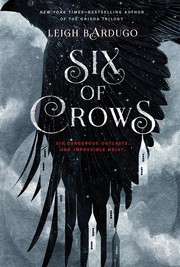
Six of Crows
Kaz Brekker gathers five outcasts in Ketterdam for an impossible heist to steal jurda parem, a drug that makes Grisha power deadly.
2,292-word summary · 10 min read

Words of Radiance
Kaladin guards Dalinar, Shallan hunts Urithiru, and the Everstorm gathers.
2,754-word summary · 12 min read

The Raven Boys
Blue Sargent joins four Aglionby boys hunting a Welsh king on a Virginia ley line.
2,537-word summary · 11 min read

The Master and Margarita
Devil Woland visits 1930s Moscow while Master writes Pilate and Margarita bargains.
2,535-word summary · 11 min read