
The Little Prince
2,492-word summary 11 min read 96 pages in the book
- First published
- 1943
- Publisher
- Reynal & Hitchcock
- Pages
- 96
- ISBN
- 9780156012195
- Original title
- Le Petit Prince
Reading options
What's inside (9 sections)
I came back to The Little Prince as an adult because I remembered it as sweet and short, almost a bedtime story. What surprised me on rereading was how sad it feels from the first pages. The narrator is a pilot who has crashed and may die. The small boy who finds him is far from home and slowly preparing to leave in a way that feels permanent. It was first published in 1943 in the United States by Reynal & Hitchcock and in France by Gallimard under the original French title Le Petit Prince. The author was himself a pioneering airmail pilot, and that experience shapes every page about sky and sand. This is a short fable of about 96 pages. Inside that small frame it holds a crash and a rose. It holds six asteroid visits and a desert crossing on Earth. It holds a fox and a well. Its farewell still divides readers.
A Crash in the Sahara
The book opens with the narrator remembering childhood. At six he drew a picture of a boa constrictor digesting an elephant. To him the shape was clear. To grownups it looked like a hat. When he showed a second drawing that revealed the inside of the snake, the grownups told him to stop drawing and to study grammar and arithmetic instead. He gave up what he calls a magnificent career as a painter. He learned to fly instead, and he says he has lived much alone among grownups without anyone to really talk with.
That early failure sets the tone for everything that follows. The pilot respects grownups for their practical skill while finding their conversation empty. He keeps his famous drawing number one in his pocket as a kind of test. If someone sees a hat, he knows not to speak of inner life.
The crash itself is plain and frightening. Something breaks in the engine over the Sahara, far from any road or settlement. The pilot has water for about eight days. He sleeps on the sand the first night. At dawn he is woken by a small odd voice asking him to draw a sheep. He sees a boy with golden hair, dressed like a prince from another world, who does not seem lost or afraid. The pilot tries to explain that he is busy repairing a serious engine failure. The boy simply repeats the request until the pilot gives in and sketches.
The drawing sequence repeats the childhood test. The pilot first draws the boa with the elephant inside, and to his shock the boy understands at once. He says no, he does not want an elephant inside a snake, since it takes too much room where he lives. So the pilot draws sheep. The first looks sick. The second has horns. At last the pilot draws a box with holes and says the sheep is inside. The boy lights up and asks whether the sheep will need much grass.
Over the following days, while the pilot works on the engine, the story comes out in fragments. The boy asks short questions and never answers questions put to him. He watches sunsets and speaks of his flower. The desert around them stays quiet and harsh. By day there is heat and work on the motor. By night there is cold and talk under stars.
The King and the Conceited Man
The little prince lives on an asteroid so small that a few volcanoes and a flower fill much of it. Before reaching Earth he visits six asteroids, each with a single grownup who embodies one narrow way of living. Each adult is polite in his own way. Each is also trapped.
The first planet holds a king wrapped in a long purple mantle lined with fur. The mantle covers the whole planet when he sits. He has no subjects except an old rat he hears at night, yet he speaks as if he commands everything. When the prince yawns, the king forbids yawning and then orders him to yawn. When the prince asks for a sunset, the king consults a thick almanac and promises a sunset at the correct hour. He claims power over the sun, but only on the condition that his orders match what would happen anyway. The prince finds this both funny and sad. He leaves because he wants to watch a sunset, and on this planet he would have to wait for permission.
The second planet holds a conceited man in a strange tall hat. He lives alone and waits for admiration. When the prince arrives, the man claps and tips his hat, and he begs the prince to clap as well so he can acknowledge the applause with another tip of the hat. Everything the prince says is turned into praise. If the prince says he admires the hat, the man hears proof of his charm. If the prince tries to explain travel, the man hears proof of his fame. The prince cannot get a straight answer about anything. He leaves quickly, thinking that grownups are very strange, and that this man confuses being seen with being loved.
The Drunkard and the Businessman
The third planet is perhaps the most painful. A drunkard sits silent among empty bottles and full bottles. He drinks to forget that he is ashamed of drinking. When the prince asks what the bottles mean, the answer goes in a circle. The man drinks to forget his shame, and his shame comes from drinking. There is no anger in the scene. There is only stillness. The prince walks away puzzled and sorrowful.
The fourth planet belongs to a businessman who is so busy that he does not look up when the prince arrives. He counts and writes figures on paper. He says he owns the stars because he was the first to think of owning them. He puts them in the bank of his mind and draws income from their number. When the prince asks what use owning stars can have, the man says it makes him rich, and being rich lets him buy more stars if anyone finds them. He counts five hundred million of them and claims this work is serious. The prince tries to compare this ownership with his own care for his flower and his volcanoes. He cleans his volcanoes and waters his flower. The businessman stares and goes back to his sums.
The Lamplighter and the Geographer
The fifth planet is the smallest of all, with room only for a lamp and the man who tends it. The lamplighter follows orders given long ago: light the lamp at evening and put it out at morning. The trouble is that his planet now spins faster each year, so day and night rush past in a minute. He must light and extinguish without rest. He loves sleep and he loves his work, and he cannot do both. Of all the grownups, the prince likes him best, because he thinks of something besides himself. The prince leaves with regret, since this is the one adult whose labor has meaning, yet whose conditions make rest impossible.
The sixth planet is much larger and holds a geographer bent over maps. He knows seas and mountains in theory, but he has never seen a river or climbed a mountain on his own world. He waits for explorers to bring reports, and he judges their character before trusting their notes. When the prince describes his own planet, the geographer notes the volcanoes because mountains do not change, and he refuses to note the flower because flowers fade quickly. The prince is struck by this. The geographer advises him to visit Earth, which he calls a planet of good reputation.
The Rose and the Fox
The rose needs a full retelling, because she explains why the prince left and why he must go back. She grew from a seed on his small planet, among simple grasses that looked much like her at first. She took her time. She chose her colors in private. When she finally opened, she was beautiful and vain. She asked for water and for a screen at night. She coughed to draw attention. She boasted of claws, meaning her four thorns, and she pretended she could face tigers. The prince cared for her faithfully. He watered her and sheltered her. Yet he was young, and he took her words at face value. When she coughed to hide tears at his departure, he almost stayed, but pride on both sides pushed him to go. He cleared his volcanoes and pulled the last baobab shoots before leaving with the help of wild birds.
On Earth he finds a garden full of roses and feels betrayed. He believed his flower was unique in the universe. Now he sees hundreds of similar blooms in one garden, and he lies in the grass and weeps at his loss. A fox arrives and changes the meaning of the scene. The fox asks to be tamed, which in this book means to create ties through patience and ritual. The fox explains the method with care. The prince should sit at a distance at first. Then he should come a little closer each day, at the same hour. Rites make one day different from other days. If the prince comes at four, the fox will begin to be happy at three. The prince follows the lesson and returns each day.
The farewell between them holds the most quoted line in the book. The fox says that what is essential is invisible to the eye, and that one sees clearly only with the heart. He reminds the prince that time spent with his rose is what made her matter.
What is essential is invisible to the eye.
The prince understands at last that his rose is singular not because no other rose exists, but because he watered her and listened to her. He decides to return to her. The fox admits sorrow at parting and says he gains the color of wheat from this bond.
The Snake and the Desert People
The prince lands in the Sahara, which is why the pilot meets him there. The first creature he meets on Earth is a snake with a bracelet gleam. The snake speaks in riddles and says it can solve all puzzles by sending people back to the earth from which they came. It claims power over distance and says it can carry the prince further than any ship. The prince does not fully understand, but he senses both comfort and danger. He touches the strangeness of Earth through this meeting, where beauty arrives with threat.
After crossing sand without finding people, the prince climbs a mountain and shouts, only to hear his own echo. He thinks Earth people lack imagination because they repeat what they hear. He finds the garden of roses, and then he meets people who pass through rather than dwell. A railway switchman tells him about express trains that rush past, carrying travelers who do not look out and do not know what they seek. The switchman sorts them with care, sending some to the right and some to the left, while the travelers chase speed itself. Only children, the switchman implies, know what they want enough to hold a rag doll close and to weep when it is taken. The prince thinks of his flower and feels the contrast between motion and attachment.
A merchant appears with pills that quench thirst for a week. He praises the saving of time, fifty three minutes per week. The prince answers that he would use those minutes to walk toward water and to find a spring.
The Well and the Return
By the eighth day the pilot runs out of water, and the two set out to find a well. This section slows down and becomes almost quiet on the page. They walk through heat that makes the sand glow. The prince speaks of his flower and of the stars that will remind him of her laughter. The pilot feels suddenly responsible, as if carrying something fragile. At night they rest and talk of thirst as more than lack of water. Thirst becomes desire for home and for care. At dawn they find a well that looks unlike desert wells in stories. It has a pulley and a bucket, and the water sings when drawn. They drink together, and the pilot says the water tastes like a feast after a long march under stars.
The return is prepared with care and feels inevitable. The prince has been visiting the snake in the evenings. He speaks of his body as too heavy for the journey home, like an old shell to be left behind. He asks the pilot to draw a muzzle for his sheep, to keep it from eating the flower, and then worries about the straps. The pilot fixes the engine at last, but joy at the repair turns to dread as he understands the plan. On the anniversary of his landing the prince returns to the place where he fell, hoping to slip back to his asteroid and to his rose.
The final night is painful to read. The prince comforts the pilot and says the stars will laugh because one of them holds his laughter. He says the pilot will love looking at the sky, since all stars will seem to smile. He asks not to be watched at the last moment because farewells are hard. There is a flash of yellow near his ankle. He falls softly on the sand, without noise. In the morning the pilot finds no body, only silence and light. He keeps the memory like a private bell. He ends by asking readers to write if the boy returns, and by pointing to the exact place in the desert where it happened.
A fair view should admit where the book strains. The planet visits repeat one pattern of meeting and judgement, and some readers tire of the sameness before the fox arrives. The moral voice can feel preachy when every adult is shown as blind and every child as wise, since real grownups live with more mix than that. Translation also shapes the effect. English versions differ on small but central lines, including the lines about the hat and about taming. Some versions sound plain while others sound lofty, and readers who love one version may dislike another without knowing why. The drawings, spare and childlike, carry much feeling, yet they can confuse new readers who expect polish. None of this removes the pull of the well scene or the fox farewell, but it helps explain why some readers admire the book at a distance rather than holding it close. It asks for patience with repetition, and it rewards that patience with two scenes that many remember for years.
FAQ
When was The Little Prince first published?
It was first published in 1943 in the United States by Reynal & Hitchcock and in France by Gallimard under the original French title Le Petit Prince.
Is The Little Prince only for children?
No. Children enjoy the travel story and the drawings, while adults tend to feel the weight of the pilot crash, the fox farewell, and the return. The book works best when read slowly by either group.
What does the fox mean by taming?
Taming means creating ties through patience and ritual, such as returning at the same hour each day. The fox uses it to show that time spent caring is what makes one rose different from hundreds of others.
Similar books
More like The Little Prince →
The Horse and His Boy
Shasta and Bree flee Calormen to Narnia with Aravis and Hwin.
2,594-word summary · 12 min read
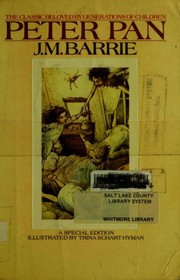
Peter Pan
Wendy, John and Michael fly to Neverland with Peter, face Hook, and learn what growing up costs.
2,502-word summary · 11 min read

The Witches
A boy and his grandmother face the Grand High Witch's plan to turn England's children into mice.
2,738-word summary · 12 min read

The Wonderful Wizard of Oz
Dorothy is carried to Oz by a cyclone and walks the yellow brick road with Scarecrow, Tin Woodman, and Lion.
3,297-word summary · 15 min read

The Voyage of the Dawn Treader
Lewis sends Lucy, Edmund and Eustace aboard Caspian's Dawn Treader to find seven lost lords, past dragon gold, dark dreams and the world's edge.
2,330-word summary · 10 min read

The BFG
Orphan Sophie is taken by the Big Friendly Giant, who blows happy dreams and eats vile snozzcumbers, and helps her stop nine man eating giants.
2,812-word summary · 12 min read