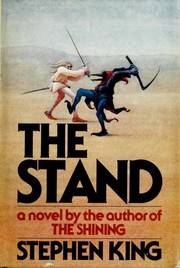
The Stand
1,959-word summary 9 min read 823 pages in the book
- First published
- 1978
- Publisher
- Doubleday
- Pages
- 823
- ISBN
- 9780385121682
Reading options
What's inside (5 sections)
I read The Stand across eleven days, carrying it like a brick, dreaming of empty highways. Stephen King published it October 3, 1978 with Doubleday. The hardcover runs 823 pages, expanded to 1152 in the 1990 Complete and Uncut edition. I read the original cut. It follows a superflu called Captain Trips that kills most of humanity, then watches good and evil gather in two towns for a last meeting.
It starts with a gate left open. Charlie Campion, sick from a lab in California, drives out with his wife and baby, coughing blood across states before his car fails in Texas. Stu Redman, a quiet factory man, touches him at a gas station and lives. Soldiers seal towns. Nurses die. Phones ring unanswered. Within weeks America empties. King writes the plague in short cuts that pile dread. A cough on a plane. A DJ dead mid song. A mother finding kids cold. Bodies in streets. Dogs loose. Power failing. No speeches. Just absence spreading.
Survivors dream. Some dream of Mother Abagail, a hundred year old Black woman in Nebraska corn, singing hymns, offering shelter. Some dream of the dark man, Randall Flagg, grinning in Vegas with crows and crosses. Dreams sort them. Stu, immune and watched by the government at first, escapes labs and walks with Glenn Bateman, a kind professor, and others toward Nebraska. Frannie Goldsmith, pregnant and brave from Maine, walks with Harold Lauder, a teen genius nursing hate. Nick Andros, deaf and mute, leads with notes and courage. Larry Underwood, a rock star who finally grows up, walks with a boy named Joe and later Nadine. Trashcan Man, burned and broken, walks toward Flagg because fire loves him back.
Boulder
Boulder becomes home for the good, though good here means tired people trying. Mother Abagail picks leaders. Stu, Glen, Frannie, Nick, Ralph, others form a council. They bury the dead in pits with tears and bulldozers. They restore power with engineers. They plant gardens. They hold town meetings to vote, arguing about law, guns, jails. King lingers on chores because rebuilding is the point. Who cleans. Who cooks. Who watches kids. Frannie vomits through mornings and keeps records. Nick writes notes to settle fights. Larry learns to show up on time. Harold smiles and takes minutes while planning murder inside.
Harold is the book's saddest turn. Fat, smart, bullied, in love with Frannie who loves Stu, he saves lives on the road then rots in Boulder feeling sidekick. Nadine, drawn to Flagg by sex and doom, feeds his hate. They plant a bomb in a council meeting that kills Nick and others. Harold crashes on a bike fleeing and dies writing I am sorry on a barn wall. I believed his hate because King gave him kindness first. He was not born evil. Neglect plus pride plus Flagg's whispers curdled him.
Mother Abagail leaves at a key hour, called by God to confess pride in the woods. She returns dying with a message. Send four men to Vegas. No guns. Walk. Stu, Larry, Glen, Ralph go, with Kojak the dog following part way. Their walk across desert, hungry and footsore, reads like pilgrimage. Glen talks philosophy to pass miles. Ralph jokes. Larry sings low. Stu breaks a leg in Utah and must stay behind with Kojak, weeping as friends walk on without him. That parting hurt me more than plague chapters. Duty splitting friends who survived the end of the world.
Vegas
Vegas under Flagg is order by fear. Power on. Drugs flowing. Fighters training. Crucifixions on the highway for doubters. Lloyd Henreid, a crook Flagg freed, serves with dog loyalty. Whitney, Jenny, others enforce. Trashcan Man drags a nuke across desert because Flagg promised fire. Flagg floats a little, reads minds a little, loses temper a lot. His evil is not grand plan but appetite. He rapes Nadine, who came to him dreaming of queenship and finds cold use. She throws herself from a balcony pregnant with his seed, choosing death over his child. That fall turns Vegas colder. Even loyalists flinch.
The four walkers enter Vegas and are seized. Ralph dies of seizure fits Flagg mocks. Glen is shot for laughing at Flagg in court. Larry and Ralph? Actually Larry and Glen? Let me keep straight. Glen shot. Larry caged with Lloyd. Stu waits broken legged with Tom Cullen, a kind simple man who spied for Boulder and now guides Stu home. The climax is not a gunfight. Trashcan Man wheels the bomb into town, Flagg's power falters as faith wavers, a hand of God, or chance, detonates light over Vegas. Larry dies singing. Flagg vanishes as fire takes his city. Good does not win by force. Evil eats itself when fear slips.
After, Stu finds Frannie's baby born healthy, immune. Tom brings him home through snow with Kojak pulling a sled. Boulder votes on, buries, plants. Mother Abagail dead, Nick dead, Glen dead, but children laugh in streets again. Stu and Frannie leave for Maine to raise their family away from committees, choosing small over system. The book closes with Flagg waking on a tropical beach with no memory, gathering natives with new tricks. Evil returns because people forget. King ends not with peace but with watchfulness.
What holds at 823 pages is people. Stu's dry courage. Frannie's diary honesty. Nick's silent leadership. Tom's pure heart. Larry's slow growth from selfish star to man who dies singing to comfort a friend. King writes Americans with love and judgment. Racists, addicts, saints, all coughing together. The plague erases money and titles, leaving habits. Who shares. Who hoards. You learn fast.
What drags. Middle Boulder meetings repeat power debates. Some subplots, like Dayna's spy run, thrill then vanish. Flagg's magic rules blur. Trashcan Man's schizophrenia is dated in language. If you want fast horror, the first hundred plague pages deliver, then the book becomes western, then fantasy. That genre drift is the point for fans, but newcomers may tire in Utah miles.
Still, as 1978 epic that launched Flagg and King's universe, it stands. I closed it tired and oddly hopeful. Not because Vegas burned. Because Boulder voted, buried, planted, sang. Captain Trips took bodies. Choices kept souls. Read it in chunks, keep water near, mark dreams. You will check coughs for weeks, then remember Stu's shrug and Frannie's lists. Walk on. Share food. Do not follow grinning men to desert lights.
Glen, Ralph, Tom, and Kojak
Glen Bateman deserves more time because he voices the book's ideas without stopping story. Retired professor, arthritic, funny, brave. He walks with Stu from Vermont, debating law, farming, and God while burying bodies. In Boulder he chairs meetings with jokes that calm rooms. On the walk to Vegas he explains that evil needs showmanship while good needs plumbing. Flagg shoots him for laughing, and he dies laughing, which is the point. Ideas outlive men who mock them. His dog? No, his mind stays in Stu's choices after. I missed his voice for the last hundred pages the way Boulder must have.
Ralph Brentner is the good handyman every town needs. Farmer, fixer, driver, kind to a fault. He wires power, buries dead without complaint, jokes to lift crews. He walks to Vegas knowing he will likely die, telling Stu his truck will start when needed. He dies of fits Flagg sends, faithful to the end. His plain courage balances Glen's talk. Do the work. Show up. Die kind if you must. King loves such men and writes them without condescension. They hold towns while talkers plan.
Tom Cullen is the book's purest heart and its spy. Simple, gentle, devoted to Nick, sent to Vegas to watch because enemies dismiss him. He memorizes signs, counts cars, repeats M O O N spells to remember. Caught and nearly killed, he escapes with help and guides Stu home through snow when Stu breaks his leg. His chapters, told in simple language, never mock. They honor. Laws? He spells slowly. Loyalty? He lives fast. When he brings Stu to Frannie, bald and grinning, I cried. The least powerful man saves the strongest through snow.
Kojak, Stu's dog, earns a paragraph because animals keep humanity alive here. Found starving, fed from cans, loyal through miles, he pulls Stu's sled when Stu cannot walk, hunts rabbits, warns of wolves. His presence lets Stu talk aloud without madness, grieve Glen without shame, keep warm without fire. King writes dogs well across books, and Kojak is among the best. Loyal without worship. Brave without orders. When Tom and Stu leave him safe at a farm on the way home, promising to return, you believe towns will have dogs again, which means homes again.
Nadine's fall needs a final honest note for readers troubled by her arc. Young, pretty, chosen by Flagg in dreams for queenship, she resists through teaching and care for Joe, then yields to fear of being ordinary. Her sex with Flagg is cold and punished with pregnancy that terrifies her. She jumps rather than bear his child, a choice King frames as reclaiming self, not just despair. It reads dated in places, linking female worth to purity, but her last laugh at Flagg as she falls gives her back power. She denies him heir and story. That denial matters in Vegas where he writes all stories.
Stu and Frannie's love deserves a grounded note amid epic talk. They meet on the road, share watches, argue about leadership, fall quietly. She is pregnant by another man who died. He accepts the child as his without speeches. He reads her diary with permission. She mends his shirts. Their fights are about committee hours and fence posts, not destiny. When Stu leaves for Vegas with a broken heart and whole duty, Frannie stays to birth and record. Their reunion on the road home, thin and grinning, with baby and dog, is the book's true happy ending. Not thrones. A family walking to Maine to plant gardens.
Dayna's spy run into Vegas deserves a brave paragraph often skipped in summaries. Tough, smart, grieving, she volunteers to watch Flagg's town, poses as willing recruit, sleeps with knives near. She learns troop counts, fuel stores, execution schedules, then is caught and tortured. She kills herself with glass to protect Boulder rather than break. Her death, lonely in a cell, buys the walkers time without headlines. King honors such unmarked courage throughout. Not leaders on stages. Watchers in rooms who pay full price quietly. Boulder holds a minute of silence for her that still echoes when I reread.
Larry's road from selfish star to steady man needs a final clear beat because his change anchors hope. He starts using women and songs for ego, abandons a boy he was supposed to guide, arrives in Boulder expecting applause. Mother Abagail assigns him work with trash crews, not stages. He shows up late, then on time, then early. He learns Joe's name, then his fears. He sings to comfort rather than impress. On the walk to Vegas he carries Glen's pack when Glen tires, shares water without counting. His death singing to calm a friend is not performance. It is practice made character. People can change after the world ends. So can we before.
Mother Abagail's woods confession needs a reverent close for faith readers. Hundred year old, she walks into wilderness on God's call, fasting, praying, doubting her pride in leading. She returns dying with clear orders. Send four walking. No guns. Trust. Her death in Boulder, surrounded by singing, steadies the town more than any speech. She was wrong to enjoy power briefly and right to confess it fully. That honesty models leadership King respects across books. Admit pride. Amend. Send others forward. Rest.
FAQ
When was The Stand published?
Doubleday published it October 3, 1978. It runs 823 pages in hardcover, expanded to 1152 pages in the 1990 Complete and Uncut edition.
What is Captain Trips?
Captain Trips is the weaponized flu that escapes a lab and kills most of humanity in weeks. Survivors dream of Mother Abagail or Randall Flagg.
Who is Randall Flagg?
Randall Flagg is the dark man ruling Las Vegas with fear and crucifixions. He first appears here and returns in Eyes of the Dragon and the Dark Tower books.
Similar books
More like The Stand →
The Scorch Trials
Thomas and the Gladers cross a burned wasteland to reach haven while WICKED watches.
2,097-word summary · 9 min read

The Road
A father and son walk through ash America with a cart and a pistol, repeating carry the fire.
3,243-word summary · 14 min read

The Outsider
Coach Terry Maitland's DNA and witnesses point to an impossible murder, until Ralph Anderson and Holly Gibney trace it to El Cuco.
2,586-word summary · 11 min read

The Green Mile
Guard Paul Edgecombe watches John Coffey show healing miracles on death row in 1932 Louisiana.
2,549-word summary · 11 min read

11/22/63
A Maine teacher steps through a diner portal to 1958 to stop the Kennedy assassination, and learns the past resists change while a new life pulls him in.
2,799-word summary · 12 min read

'Salem's Lot
A writer returns to Jerusalem's Lot as an old house fills with vampires.
2,046-word summary · 9 min read