
Winter Garden
2,983-word summary 13 min read 394 pages in the book
- First published
- 2010
- Publisher
- St. Martin's Press
- Pages
- 394
- ISBN
- 9780312364120
Reading options
What's inside (8 sections)
I came to this one after The Nightingale and The Four Winds, mostly because I wanted to see what Hannah did before she became the wartime novelist everyone names first. Winter Garden was published in 2010 by St. Martin's Press, and the first edition runs 394 pages. A friend told me it was the sad mother book. That turned out to be true, but it missed how much of the story sits in Washington apple country before it ever gets to Russia.
The setup is simple on the surface. Meredith Whitson stayed home. She married her high school love Jeff, raised kids, and helped run the family orchard company on the Columbia River. Nina Whitson left. She became a photojournalist, the kind who flies toward fires while other people fly out, and she has spent years keeping everyone at arm's length. Their mother Anya has always been cold. Not busy cold. Distant in a way that made both girls stop trying early. Their father Evan was the warm one, the bridge. When Evan gets sick, the bridge starts to go.
Evan makes them promise something strange on his deathbed. Anya used to tell the girls a Russian fairy tale at night, about a peasant girl and a prince, and she never finished it. He asks that they sit and hear it all the way to the end this time. It sounds small. It ends up opening everything.
The House With No Warmth
Belye Nochi is the name of the family place, which means white nights, after those summer nights around Leningrad where the sky never quite goes dark. It is a big house in orchard land, built a bit like a dacha from what I gather, with apple trees in rows and a separate walled garden Anya keeps for winter. There are columns in that garden with Cyrillic letters cut into them. Anya is color blind, so she cannot see the reds and greens other people point out there. She sits out in the cold anyway.
That detail stuck with me. A woman who cannot see color, tending a garden meant for color. Hannah never explains it flatly, which I liked. You just see Anya out there in a coat, smoking, staring, while Meredith worries about heating bills and Nina takes pictures of frost.
Other odd pieces pile up early. Anya hoards food. Not in a television way. She keeps bread, cans, little packets, tucked where a rich woman has no reason to tuck them. She does not know her own age, or will not say it. Her hair has been white since the girls were small. She looks younger than her years in the face and older in the eyes, if that makes sense. Evan always smoothed this over. He told the girls their mother loved them in her way. He rescued her, the family story goes, from a German prison camp after the war, married her, brought her to America. No one asked much beyond that because Anya shut down questions with a look.
Meredith and Nina never got close the way some sisters do. Meredith sees Nina as the one who got to leave. Nina sees Meredith as the one who got to belong. When Evan dies, they are stuck in the same house with a mother who still offers no comfort, and who starts saying strange things. Soup from leather belts. Chairs burned for heat. A baby on a train. Meredith thinks it might be dementia. Nina thinks it might be memory finally leaking out. Their doctor uses careful words. The girls fight about selling the house, about care, about who owes what. It felt true to me, that part. Grief makes old sibling scores louder, not quieter.
What breaks the freeze is vodka, of all things. Nina starts pouring small glasses at night to get Anya talking. Meredith disapproves, then joins in. Anya will only tell the story in pieces, and only at night, and only as a fairy tale at first. So they listen.
The Fairy Tale That Never Finished
As kids, the girls heard this story in bed. There was a peasant girl named Vera, poor and stubborn, living in a Snow Kingdom that was dying. There was a handsome prince. There was a Black Knight, cruel and strong, who wanted to crush them. Meredith once loved it so much she staged it as a Christmas play for the orchard company party, with a fake streetlamp and a tulle skirt for a gown and Jeff roped into acting. In the excerpt Hannah includes from that night, little Meredith narrates Vera's entrance with total confidence. It is sweet until you learn what the tale was covering.
In the present, Anya tells it differently. Slower. Less like a bedtime story and more like someone translating as she goes. Vera meets the prince. They fall fast. The Black Knight comes with soldiers and hunger and bombs. The kingdom freezes. Anya stops at the same place every night for a while, right when things turn dark. The girls get frustrated. I did too, a little. But it made sense once I understood she had never told the ending aloud to anyone, maybe not even to Evan in full.
Hannah cuts between these night tellings and daytime life. Meredith tries to keep the orchard business steady while her marriage to Jeff goes thin. They love each other, I think, but they have become managers of a house rather than partners. They sleep turned away. They talk about schedules. Jeff says plainly at one point that he feels invisible in his own home, and Meredith hears it as criticism instead of an ask. Nina keeps her phone close, waiting for an assignment, and keeps Danny, a fellow photographer she has loved off and on, at a safe distance. Danny wants more steadiness than Nina can give. Nina calls it freedom. It reads more like fear.
I should say the middle here is slow on purpose. It is dishes, orchard meetings, doctor visits, nightcaps, fragments of tale. The fragments got sharper as I went. The Snow Kingdom started to sound less like magic and more like a city with bread lines.
Leningrad Becomes Real
Then the tale drops its cover. Vera is not in a storybook kingdom. She is a young woman in Leningrad before World War II, living with her parents, her sister, and her grandmother in a crowded apartment. Her father is taken during Stalin's terror. That part is told quickly and it lands hard because there is no trial worth the name, just a knock, papers, absence. The family learns not to ask, not to cry where neighbors hear. Silence becomes a habit that will follow Vera across an ocean decades later.
When the Germans surround Leningrad, the city becomes a trap. Hannah spends a lot of pages here, and these are the strongest in the book. Food shrinks to bread that is more sawdust than wheat. Ration cards mean life. People boil leather belts for soup. They burn books, chairs, floorboards for heat. They carry water from holes in ice. The cold gets into walls and stays. More than half a million civilians died in that siege, which lasted about 900 days, and Hannah does not let you forget the scale while she keeps the camera on one family.
Vera falls in love with Sasha, a kind young man with writer dreams, and marries him as the world narrows. They have children. I will not list every loss in order because the book itself tells it in waves, and because some of the pain is in how Vera cannot hold the sequence straight when she speaks. What stays with you is the apartment growing emptier, the grandmother weakening, the sister trying to stay brave, the parents gone or failing, and Vera making choices no one should have to make about who eats, who goes, who stays.
One choice centers on trains. When Stalin orders children evacuated, mothers pin names to coats and put small kids on trains with no clear promise of return. Some of those trains roll toward German guns and bombs. Vera faces that decision with her own small children, and the telling of it is where Anya's voice changes most. She stops calling her Vera for stretches. She says I. Then she catches herself and goes back to she. Meredith notices first. Nina writes nothing down for once, which tells you how shaken she is.
Sasha and Vera try to keep each other alive with small rituals. Tea from nothing. Stories. A saved crust. He writes. She memorizes. Neighbors die in rooms next door and are carried out wrapped in curtains. Friends disappear. The building freezes floor by floor. People stop burying properly because the ground is iron. I had to put the book down twice in this stretch. Not because it felt false. Because it felt plain, and plain was worse.
What She Did To Live
This is the part reviewers argue about, and I want to be honest about it without spoiling the exact shape of the last turn. Vera survives things that kill almost everyone around her. She does not survive them cleanly. She takes food when she should share. She leaves when she should stay. She stays silent when speech might have helped. Later, in America, she will punish herself by refusing softness, as if warmth would be a betrayal of the dead.
There is a baby. There are two children at different points, depending on which night of telling you trust, and Hannah lets that blur sit for a while before she sharpens it. I found that blur upsetting in a good way. Memory under hunger and grief is not a timeline. Anya contradicts herself. Meredith wants dates. Nina, the journalist, wants sources. Anya gives images instead. Snow on a coat. A name tag with string. Hands too weak to hold a cup. A door that will not shut.
Evan enters late in the past story. He is an American soldier or aid worker near the end of the war, depending on how you read one short passage, and he finds Vera in a camp displaced persons system after Leningrad, after loss, after illness. He feeds her. He waits. He offers a new name and a new country. Anya is the name she takes for America. Vera stays buried under it. They do not talk much about what came before because Evan senses that questions could kill what little strength she has. He loves her steadily. He never pushes her to say I love you back in words. He accepts food kept in drawers, tears that never come, a wife who loves him but cannot show their daughters the same ease.
That explains, without excusing, the cold house the girls grew up in. Anya flinches at childish crying because crying once meant danger. She corrects manners sharply because carelessness once meant death. She cannot praise because praise once drew eyes. She loves Evan because he saw her at her thinnest and did not look away. She does not know how to love small girls who have never been hungry. It is painful to read as a parent. It is also, I thought, fair. Hannah lets you be angry at Anya for a long time before she asks you to understand her.
A small note on craft here. Hannah uses food and cold as memory triggers better than most writers I have read. Bread crust, boiled water, a warm coat, a shut door. When Anya pockets rolls at a family dinner in Washington, Meredith feels shame. Later you learn it is reflex, not rudeness. When Anya opens windows in winter, Nina thinks it is odd. Later you learn stale warm air once meant sickness and death. Those links land because they are shown many times before they are explained.
Alaska And The Last Piece
The last third moves north. I will keep this vague where the book wants surprise, but the shape is public in the jacket copy. The sisters learn that part of Vera's past did not end in Leningrad. There is a thread tied to Sasha and to Alaska, to Sitka, to carving and memorial. Meredith, Nina, and Anya travel together, which would have been unthinkable at the start. The trip is awkward, funny in spots, and tense. Three women who never learned how to share a car, let alone a past, stuck with airports and boats and cold rain.
There is a scene with a man carving a totem pole for a lost son that unlocked the book for me. Meredith watches him cut grief into wood day after day and realizes Anya has been doing the same with the fairy tale. Telling and retelling, shaping loss into figures that can be looked at without going blind. Nina photographs him without asking first, then asks, then listens, which shows how much she has changed. Early Nina shoots and leaves. Here she stays.
Sitka holds the meeting the discussion guides hint at. I will not name names because the force of it is in recognition, not biography. Someone living knows Vera's other life. Someone kept letters, or a story, or a face in memory. Sasha waited, in his way, as Evan waited in his. That line from the reading guide about Sasha waiting until death for Anya to return sounds sentimental out of context. In context, after 300 pages of hunger, it reads as fact. People waited. Many waited for nothing. A few waited and were met.
The final telling happens back home, I think, or on the way home, in a quiet room without vodka this time. Anya finishes the fairy tale. The Black Knight wins battles. The prince does not save everyone. Vera lives when others do not, and living becomes the wound. Anya says the words Meredith and Nina have waited a lifetime to hear. I will not quote them because they work through placement, not polish. What matters is who speaks first, who answers, and what is not asked to be forgiven on the spot.
I cried, and I also felt Hannah tying a bow slightly too neat. Kirkus called the ending manipulative and contrived back in 2010, and I get why. Too many threads land. A cynic could say grief rarely resolves in one trip and one talk. I kept my tears and my doubt together.
What Holds And What Wobbles
What holds is the siege writing and the mother portrait. The Leningrad chapters have weight without showing off. Hannah researched deeply, reading diaries, letters, survivor accounts, and histories of Stalin's terror and the blockade, and she folds that work into rooms and bodies rather than speeches. You learn about ration cuts because Vera's hands shake more. You learn about fuel shortage because the apartment shrinks to one stove. You learn about the children's trains because a mother sews a tag with shaking fingers. That is how history should enter a family novel, through chores.
Anya holds too, even when she is cruel. Color blindness, white hair since youth, hoarding, silence, sudden Russian phrases about soup and wood. These quirks could have been decoration. By the end they read as scars with habits attached. I thought of her in the garden after I finished, unable to see the colors she tends, staying out in cold that once tried to kill her. That image does more than several speeches about healing.
Meredith and Nina hold less firmly for me, though I cared about them. Meredith's arc is the stronger of the two. A woman who ran an orchard company and a household and forgot she was also a wife and a separate person. Her talks with Jeff are plain and sad. He does not want a divorce. He wants a wife who looks at him. Meredith does not have an affair or a big speech. She starts to pay attention again, to ask questions, to admit she used work and kids as cover. It is quiet and believable.
Nina wobbles more. The fearless photographer who cannot settle is a type I have met before. Her shift in Alaska moved me, but the romance with Danny resolves fast. One talk and fear lifts. I wanted one more backslide to trust it.
Pacing is uneven by design, and your patience will decide a lot. The present story moves slowly while the past story burns. Some readers will skim Meredith's board meetings and Nina's airport runs to get back to Vera and Sasha. I skimmed a few orchard pages myself around the middle. The book also repeats certain beats. Another night, another glass, another fragment, another pause. That repetition is true to how trauma telling works, but it can feel like stalling if you read fast.
Content notes matter here. This is not a cozy family drama all through. There is starvation in detail, children dying, bodies in streets and stairwells, bombing, a camp system after, grief that turns physical, an aging parent showing confusion, and marital strain with talk of divorce. There is no graphic sexual assault center stage the way some war novels include, but there is fear, coercion, and loss around women. Teen readers could manage the present story, yet the siege chapters are heavy. I would hand it to older teens with warning and to adults without much pause.
Who should pick it up. If you liked The Nightingale but wanted more mother and daughter and less battlefield maneuver, this fits. If you like stories where the past explains the present without excusing it, this fits. If you want a war novel told mostly through soldiers and maps, this will feel domestic. If you need every thread loose and literary, the tidy close may irk you. I fall in the middle. I wanted the past. I stayed for the orchard.
FAQ
Is Winter Garden part of a series?
No. It is a standalone novel published in 2010 by St. Martin's Press, separate from The Nightingale and her other books.
What is Anya's fairy tale really about?
It recasts her youth as Vera in Leningrad during the German siege, including hunger, family loss, and marriage to Sasha.
How long is the book?
The first edition runs 394 pages. The later trade paperback reprint runs 448 pages.
Similar books
More like Winter Garden →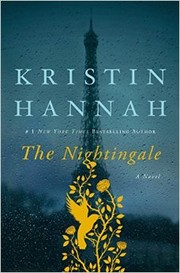
The Nightingale
Nightingale retold: Vianne and Isabelle in occupied France, hide children, run routes, trials.
1,950-word summary · 9 min read

Hotel on the Corner of Bitter and Sweet
A Chinese American boy befriends a Japanese American girl in wartime Seattle, then loses her to the internment camps.
2,973-word summary · 13 min read

Before We Were Yours
Avery uncovers her family's link to stolen orphans while Rill fights to keep her siblings together in 1939.
2,020-word summary · 9 min read

The Rose Code
Three Bletchley Park women reunite in 1947 to expose a wartime traitor in Quinn's codebreaking novel.
3,219-word summary · 14 min read

The Invention of Wings
Sarah Grimke and enslaved Handful grow up bound in Charleston, then push toward freedom and abolition.
2,996-word summary · 13 min read

Lilac Girls
Three women meet across World War II: a New York volunteer, a Polish courier turned prisoner, and a German camp doctor.
2,731-word summary · 12 min read