
The Immortal Life of Henrietta Lacks
2,139-word summary 10 min read 369 pages in the book
- First published
- 2010
- Publisher
- Crown
- Pages
- 369
- ISBN
- 9781400052172
Reading options
What's inside (8 sections)
I had known the name HeLa for years before I learned it belonged to a person. Rebecca Skloot published The Immortal Life of Henrietta Lacks with Crown in 2010, a 369 page work of narrative nonfiction that took her more than a decade to report. It tells two stories braided together. One is the story of Henrietta Lacks, a poor Black tobacco farmer from Virginia who died of cervical cancer in 1951 at thirty one, whose tumor cells, taken without her knowledge at Johns Hopkins, became the first immortal human cell line and one of the most important tools in modern medicine. The other is the story of her family, who did not learn about the cells for decades, who could not afford health insurance while billions were made from their mother's body, and who came to trust one reporter enough to tell her everything.
The facts at the center are staggering enough to restate plainly. In 1951 Henrietta went to the colored ward at Johns Hopkins with bleeding that would not stop. Doctors found an aggressive cervical tumor. During her treatment, a sample of her cancer cells was passed to researcher George Gey, who had spent years trying to grow human cells in culture. Henrietta's cells, unlike every sample before, did not die. They doubled and doubled, shipped around the world, launched industries. They carried Jonas Salk's polio vaccine into existence. They went up in the first space missions. They helped map genes, develop IVF, test drugs, and study cancer itself. Henrietta died within months, buried in an unmarked grave in Virginia. Her husband and five children knew nothing about any of it.
Skloot structures the book in three movements, and the structure matters. The first follows Henrietta's life and death through medical records, family memory, and the segregated Baltimore of the 1950s. The second follows the cells, the science, the money, and the slow revelation to the family. The third follows Skloot herself trying to earn the family's story, especially the trust of Deborah, Henrietta's daughter, who spent her life haunted by a mother she never knew. The effect is unusual for science writing. The science never floats free of the people it touched.
Henrietta, Clover, and Hopkins
Henrietta's early life is reconstructed with care and gaps honestly marked. Born Loretta Pleasant in 1920 in Virginia, raised mostly in Clover picking tobacco alongside cousins, she married her cousin David Lacks, called Day, and moved to Baltimore for the steel mill work at Sparrows Point. They had five children. She was, by every account Skloot could gather, generous, funny, particular about her nails and her dancing, and devoted to her kids. When the bleeding started she kept working. When the pain got bad she went to Hopkins, the only major hospital nearby that treated Black patients, though in segregated wards and often as teaching material.
The treatment she received was standard for the era and brutal by ours. Radium tubes sewn to her cervix. Burns inside and out. The doctors noted the unusual aggressiveness of her tumor in their records and, following the custom of the time, took samples for research without asking. Nobody told Henrietta. The concept of informed consent barely existed, and for a Black woman in a charity ward in 1951, it existed even less. Skloot is careful here. She does not claim a conspiracy against Henrietta personally. She shows a system that treated poor Black bodies as raw material, from the night doctors of slavery folklore through the Tuskegee study running in those same years, and lets the pattern speak.
Henrietta died in October 1951 after months of agony that the book does not soften. Her autopsy showed tumors through her body. Day buried her without a stone. The children, the youngest still a baby, were scattered among relatives. And in a lab downtown, her cells kept dividing.
HeLa conquers the world
The middle of the book follows the cells, and it reads like a thriller about something invisible. Gey gave HeLa away freely to researchers, and soon the cells were everywhere. A lab in Tuskegee, staffed by Black scientists, became the factory that mass-produced them for the polio vaccine trials. Companies started selling vials. HeLa turned up in experiment after experiment, and then came the contamination scandal. Researchers discovered that HeLa was so vigorous it had invaded dozens of other cell lines around the world, ruining years of work. Scientists who thought they were studying breast tissue or liver were studying Henrietta.
That discovery is what finally reached the family. In the 1970s, researchers tracking the contamination contacted Day and the children, asking for blood samples to map the Lacks genes. The family, poor, undereducated, grieving, understood almost nothing of what they were told. They heard that part of their mother was alive in labs everywhere. They imagined her suffering, stretched across the world, experimented on endlessly. Deborah, still a teenager, began having nightmares. Zakariyya, Henrietta's youngest son, nursed a rage that never fully cooled. Skloot renders their confusion without condescension. Who would understand, told that your dead mother is alive in test tubes on every continent, that scientists mean something technical and benign?
The book widens here into bioethics. Who owns discarded tissue. Whether consent can be assumed. How the Moore case in California, where a patient's spleen became a patented cell line worth billions, changed the law without changing the underlying imbalance. Skloot interviews scientists who defend the old ways, family members who feel robbed, and lawyers who explain that the cells themselves were never property in any sense the Lacks family could claim. The money chapters land hard. Billions in HeLa-related commerce. The Lacks children unable to see doctors. No villains, exactly, which makes it worse. Just a world arranged so the benefits flow one way.
Deborah and the reporter
The last movement is the most personal and, for me, the most moving. Skloot first contacted the family in the late 1990s and was met with justified suspicion. Reporters had come before, taken quotes, published distortions, vanished. Deborah hung up on her repeatedly. What changed things was time and transparency. Skloot kept calling, kept explaining, kept showing up in Baltimore, and slowly Deborah, who had spent decades desperate to know her mother, decided this stranger might help her learn.
Their partnership drives the book's final act. Skloot and Deborah visit an old Hopkins lab together. They read Henrietta's medical records side by side, Deborah seeing for the first time what her mother endured. They travel to Clover to find the family graveyard. Deborah, devout and anxious, worries constantly about what knowing will cost her, and her health, fragile throughout, visibly strains under the work. Skloot does not hide her own role or her own guilt. She worries she is using Deborah the way science used Henrietta. She pays for Deborah's medical care at one point and agonizes over whether help corrupts consent. This self-questioning could feel performative. In context it feels earned, a reporter refusing the extractive pattern her book condemns.
Deborah died in 2009, before the book came out, and Skloot's account of their last months together is quietly devastating. Deborah got to hold a vial of her mother's cells, warm from an incubator, and said it felt like holding her. She got answers to some questions and peace about others. The foundation Skloot later created from book proceeds, funding education and medical care for the Lacks descendants, is described without fanfare, as an obligation rather than charity.
What HeLa made possible
The science chapters deserve a slower look because Skloot explains the stakes better than most textbooks. Before HeLa, researchers could not keep human cells alive outside the body, which meant every experiment had a clock running out. Gey's lab tried for decades. Henrietta's cells, aggressive from an unusually virulent tumor, solved the problem by refusing to die. Once the line stabilized, everything accelerated. The polio vaccine trials needed vast quantities of uniform cells, and a Black-staffed lab in Tuskegee grew HeLa by the gallon, an irony Skloot does not underline because she does not need to. Readers feel it themselves.
From there the list sprawls. Cancer research, obviously, since HeLa is cancer made immortal. Virology, as scientists watched viruses attack the cells. Gene mapping, after researchers fused HeLa with other cells and tracked traits. IVF, cloning, drug testing, the effects of radiation, scourges and cures alike passed through Henrietta's cells first. They rode into orbit to test the effects of space. They were the first cells ever cloned. When Skloot lists all this, the effect is vertigo. One woman's tumor became the substrate of modern biology, and she never knew, and her children learned about it from a stranger's phone call decades later.
The contamination saga gets its own extended treatment, and it reads like a detective story. In the 1960s and 70s, researcher Walter Nelson-Rees began proving that cell line after cell line, supposedly from breast or liver or prostate, was actually HeLa in disguise, having outcompeted the original cells in shared incubators. Careers wobbled. Published papers crumbled. The revelation embarrassed an entire field and forced new standards for cell authentication. For the Lacks family, the news arrived as fresh horror. Not only was their mother alive in labs, she was invading other experiments, uncontainable, unstoppable. Deborah imagined Henrietta suffering each contamination. Nobody in science had thought to explain any of it to them.
Consent, then and now
The book's ethical core sits in the chapters about tissue rights, and Skloot handles them with unusual fairness. When Henrietta was treated, taking research samples without consent was routine, and no law required otherwise. The question is whether routine was just, and for whom. Skloot walks through the history that says it was not neutral. The night-doctor stories Black Southerners told their children, rooted in real grave-robbing for medical schools. The Tuskegee syphilis study, running through those same years, withholding treatment from Black men to watch the disease. Sims's surgical experiments on enslaved women without anesthesia. Henrietta's cells entered a pipeline built on bodies like hers, and the pipeline never asked.
The modern law gets careful treatment too. The Moore decision in California ruled that patients do not own discarded tissue once it leaves the body, even when it becomes a billion-dollar cell line. Researchers argue this is necessary. If every blood draw required profit-sharing negotiations, science would stall, and most samples are worthless anyway. Family advocates answer that the issue was never money alone but knowledge and respect. The Lacks family was studied, sampled, and published about for decades without being told what was happening in language they could use. Consent forms today run pages long partly because of stories like theirs.
Skloot's own conduct becomes part of this inquiry, which is the book's bravest move. She worries on the page about whether she is another extractor, mining the family for narrative the way labs mined Henrietta for cells. She shows herself paying Deborah's bills, arranging medical care, sharing royalties through the foundation, and still questioning whether any of it balances the ledger. Some readers find this self-conscious. I found it necessary. A book condemning extraction cannot pretend authorship is innocent. Skloot implicates herself and lets the reader sit in the discomfort.
What works and what drags
What works is the braid. Science writing this clear about cell culture, vaccines, and gene mapping usually keeps people at arm's length. Family memoir this intimate usually fudges the science. Skloot does both at full strength, and the two halves correct each other. The science gains moral weight. The family gains historical scale. Deborah is one of the great nonfiction characters of recent decades, funny, fierce, fragile, devout, and the book loves her without smoothing her. The ethical analysis is genuinely even-handed, steelmanning the researchers while centering the family.
What drags, a little, is length and repetition. The contamination chapters circle the same labs and names until the acronyms blur. Some science explanations get restated for different audiences. And Skloot's presence in the final third, while honest, occasionally tips into memoir when the reader wants Deborah. A stricter edit could have cut thirty pages from the middle without losing anything.
Still, this is essential reading, the rare science book that changed the conversation it describes. After it, the NIH reached a controlled-access agreement with the Lacks family over the HeLa genome, a direct consequence of the attention Skloot brought. Read it for the science, which is thrilling. Stay for Deborah, who deserved a mother and got a mystery instead, and who faced it with more courage than the institutions that made it. Henrietta's cells are still dividing in labs tonight. Thanks to this book, her name divides with them.
FAQ
When was The Immortal Life of Henrietta Lacks published?
Crown published it in 2010. The hardcover runs 369 pages and the ISBN is 9781400052172.
What are HeLa cells?
HeLa cells, the first immortal human cell line. They helped develop the polio vaccine, gene mapping, IVF, and countless other advances.
Is it part of a series?
No. It stands alone as Skloot's debut book, a work of narrative nonfiction.
Similar books
More like The Immortal Life of Henrietta Lacks →
Between the World and Me
Coates writes to his son about the Black body in America, from Howard to the loss of Prince Jones.
2,234-word summary · 10 min read
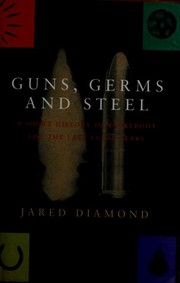
Guns, Germs, and Steel: The Fates of Human Societies
Diamond argues geography and crops explain why some societies expanded faster than others.
3,432-word summary · 15 min read

A Brief History of Time
Hawking walks from ancient spheres to big bang, black holes, and time arrows without equations.
2,210-word summary · 10 min read

Sapiens: A Brief History of Humankind
Harari's Sapiens from cover to cover: the cognitive revolution, the agricultural bargain, shared fictions like money and nations, and the scientific centuries…
2,145-word summary · 10 min read

Zero to One: Notes on Startups, or How to Build the Future
Thiel argues monopolies create value through vertical progress, not by copying competition.
2,582-word summary · 11 min read

Three Cups of Tea: One Man's Mission to Promote Peace ... One School at a Time
Mortenson fails K2 builds schools in Pakistan after Korphe kindness.
2,554-word summary · 11 min read