
Zero to One: Notes on Startups, or How to Build the Future
2,582-word summary 11 min read 224 pages in the book
- First published
- 2014
- Publisher
- Crown Business
- Pages
- 224
- ISBN
- 9780804139298
Reading options
What's inside (10 sections)
I picked up Zero to One because founders kept quoting it at me. One pitch deck said 0 to 1, the next said monopoly, and everyone nodded like the phrases were self explanatory. I wanted the source. The book is short, 224 pages in the 2014 Crown Business edition, and it grew out of the Stanford course Thiel taught in 2012, CS183 on startups, where student Blake Masters took lecture notes that spread online. Thiel, PayPal co-founder, early Facebook backer, Palantir co-founder and Founders Fund partner, rewrote those notes with Masters into this mix of memoir and manual.
That background shapes everything. Thiel writes as an insider who lived through the dot-com boom and bust, the PayPal fight for survival against eBay, and the Facebook breakout. He is confident, contrarian, and often provocative on purpose. The book gives you a clear way to judge startup ideas. It also carries his libertarian edge and his blind spots, which I will come back to at the end.
His opening question is famous in hiring. What important truth do very few people agree with you on? A good answer states something most people think is false and backs it with reasons. A weak answer repeats a safe opinion. Thiel wants founders who see a secret about the world and can build on it while others dismiss it. The rest of the book is his own answer to that question.
From 0 to 1, not 1 to n
Thiel divides progress in two. Horizontal progress goes from 1 to n. You copy something that works and spread it wider. Open another cafe on a street full of cafes, build another clone of a proven app, manufacture more of the same panels. Useful, but it does not create a new category.
Vertical progress goes from 0 to 1. You do something entirely new. The first email payment system, the first practical search engine, the first effective treatment for a disease. Thiel ties the first kind to globalization, more access to existing goods, and the second kind to technology, new capabilities. He argues America after 2000 leaned too hard toward copying. The dot-com crash scared founders away from big bets, so they built lean copies with small teams and quick launches instead of asking what valuable company no one is building.
The test is simple to apply. If the pitch works, is the world different or only slightly more crowded? A delivery app that is five percent faster is 1 to n. PayPal letting strangers send money by email in 1999 felt like 0 to 1, because the alternative was mailing checks or paying bank wire fees. Google was not the first search engine, but PageRank was so much better that going back to AltaVista felt broken. Thiel wants founders to chase that gap.
He adds that 0 to 1 companies start small by design. They dominate a narrow group with an acute need, then expand in circles. PayPal began with eBay power sellers desperate for fast settlement. Facebook began with Harvard undergrads who wanted a photo directory. Both looked trivial, which gave them room to grow before incumbents reacted.
Why monopoly beats competition
This is the most quoted and most misunderstood claim. In textbooks, perfect competition is ideal because prices fall to cost. Thiel says for a business that outcome is grim. No profits means no cushion, no research budget, and no room to plan ahead. Think of commodity restaurants, freelance marketplaces where everyone bids down rates, or solar makers selling identical cells. They work hard and keep little.
Monopoly, as Thiel uses the word, does not mean a criminal trust. It means a firm so good that no close substitute exists. Google in search in the 2000s, Microsoft in PC operating systems for years, a biotech with a patented drug that truly works. High margins, he argues, fund better pay, patient research, and long term projects.
He is sharp on how both sides misdescribe this. Monopolists claim they face brutal competition. Google framed itself as a tiny slice of global advertising to deflect scrutiny while dominating search. Failed startups do the reverse. They define a market so narrowly that they sound alone. Two noodle shops will insist one is northern Italian and the other is modern fusion, while customers just see pasta. If a founder claims a giant market with zero rivals, be skeptical. If a giant claims it has no edge at all, be skeptical the other way.
What sustains a monopoly? Thiel names four traits. Proprietary technology that is ten times better, not a small tweak, enough to overcome switching costs. Network effects, where each new user makes the product more useful, as with eBay sellers attracting buyers. Economies of scale, where serving one more user costs almost nothing, as with software. And brand, which helps but rarely holds alone without real product strength. Amazon had ten times the books of a local store. That scale plus reviews and logistics compounded.
I buy the core point and still add a caution. Thiel centers product edge and underplays capital, timing, and acquisitions. Google bought YouTube and Android. Facebook bought Instagram and WhatsApp. PayPal survived in part because eBay bought it. Regulation, hiring networks, and luck matter too. Treat monopoly as a goal, but do not assume engineering alone secures it.
Last mover advantage
Silicon Valley worships being first. Thiel says first is often a disadvantage. Pioneers educate the market, burn cash, and let a later entrant learn from their errors. Friendster and MySpace taught Facebook what not to do. AltaVista and Yahoo taught Google. Webvan proved home grocery delivery was early and costly before logistics and phones were ready.
He prefers last mover advantage. Enter a niche, win it fully, lock in technology and distribution, then widen. Amazon started with books, proved reviews and warehouses, then added music and video, then general retail, then AWS. eBay started with collectibles and hard to find items larger stores ignored. Microsoft started with BASIC, then DOS, then Windows and Office, each layer protecting the prior one.
Timing is one of his seven questions every startup must answer, along with engineering, monopoly, people, distribution, durability, and secrets. Cleantech in the late 2000s is his warning. Solyndra and peers hired serious engineers and won subsidies, yet silicon prices fell, Chinese factories scaled, and customers refused to pay a green premium. Being right about climate did not save firms that entered before costs and channels were ready.
Durability asks if the edge lasts a decade. Patents expire. Networks rot if spam rises. Scale only helps if unit costs truly fall. The durable position pairs a technical lead that is hard to copy with a channel rivals cannot rent cheaply. Tesla, in Thiel's telling, followed the script by starting with the Roadster for enthusiasts, then moving to Model S and broader models while building batteries and charging. Later execution can be debated, but the staged plan fits the model. Aim to end the contest, not merely start it.
The power law
Venture returns follow a power law, not a bell curve. Most startups return little or nothing. A few return a hundred times or more. Thiel is blunt from Founders Fund experience. One Facebook covers dozens of failures. Miss the breakout and diversification will not save the fund.
That logic cuts against normal caution. Founders keep backup plans. Investors spray small checks across fads. Job seekers pick the safe startup with higher salary over the risky one with real upside. Thiel says concentration wins when outcomes concentrate. Put intense effort into the one project or hire or channel that could be ten times more valuable than the rest, and accept looking wrong for a stretch.
At PayPal, he argues, a few calls on fraud tools, referral bonuses, and eBay integration mattered more than hundreds of small tweaks. In careers, a few choices of whom to work with shape most of the payoff. I find this clarifying, with one warning Thiel only partly gives. Power law thinking can excuse stubborn bets after the fact. Any failed founder can claim they swung for the outlier. Bet big only where you hold a specific edge, like unique insight or a locked channel, not where you only hold hope.
Secrets still exist
Thiel splits secrets into three types. Secrets of nature, like a battery chemistry physics allows but no one has shipped. Secrets about people, like an unspoken need or a hiring pattern others miss. Secrets about markets, like a pricing gap or distribution trick that looks dull until tested.
He says educated people now act as if no secrets remain. Students are taught to take small safe steps. Career risk makes big questions feel rude. Comfort assumes the easy finds are gone. Search engines create the illusion that every idea is already posted. Against that, he insists patient work still uncovers hidden truths, but only if you look where prestige does not point.
The examples carry the chapter. Airbnb looked odd until hosts proved strangers would pay for spare rooms once reviews and payments worked. SpaceX looked absurd until engineers priced raw metals and found huge middleman margins in rockets. Palantir found clients drowning in messy fraud and security data. LinkedIn looked boring beside games until recruiters paid for hiring data. None of this was visible from theory alone. It took calls, pilots, and reading contracts.
His prompts for finding secrets are practical. Find fields treated as settled where evidence is thin. Find markets where one firm profits oddly while peers starve and ask what it knows. Watch customers who build spreadsheets to cope with broken tools. Watch for inputs that just got cheap enough to cross a threshold. Then ask why you can build it. A secret without a plan is trivia. A plan without a secret is a copy. My note is that access matters more than the book admits. Thiel tested ideas with Stanford networks and a fortune. A founder without that cushion should favor low cost tests, paid pilots and concierge prototypes, over bold belief alone.
Sales matters as much as product
Engineers often treat sales with contempt. Thiel calls that a nerd blind spot. Distribution, the path by which a product reaches buyers at scale, decides survival as much as code. If you cannot name your channel in one sentence, you do not yet have a company.
He sorts sales by deal size. Complex enterprise sales means founders closing a few large contracts, as Palantir and SpaceX did with agencies and big firms, with long cycles and custom work. Personal sales covers mid size buyers reached by a growing team. Mass marketing and advertising covers products with no human close, supported by viral loops where users invite others. The trap is no channel at all, common in energy and health, where founders assume merit wins and learn that utilities and hospitals buy slowly.
PayPal needed bonuses and eBay integration, not only smart cryptography. Facebook needed school by school rollout and speed work. Xerox PARC invented much of modern computing and failed to sell it, while Apple and Microsoft packaged similar ideas for millions. Tesla built stores and chargers rather than trusting dealers. Thiel even says every firm needs someone willing to repeat the story until strangers can retell it.
The math warning is the part I underline. Paid ads only work when lifetime value exceeds acquisition cost by a wide margin. Many dot-com clones paid forty dollars to win a user who spent twenty once. The fix is a compounding channel, a sales team that learns objections, an integration that ships with someone else's product, or a network where each user brings the next. The chapter says less about onboarding and renewals than a modern reader needs, but the core stands.
Foundations, mafias, and founders
Thiel holds that beginnings dominate. A startup broken at its foundation is hard to repair. Co-founder splits, vague equity, loose hiring, fuzzy ownership, these choices compound. Later process rarely undoes them.
He favors small teams with shared history. The PayPal Mafia is his proof. After eBay bought PayPal in 2002, alumni founded or funded YouTube, Yelp, LinkedIn, Tesla, SpaceX, Palantir, and Founders Fund itself. Thiel credits shared mission and hard argument, not perks. That bond let members recruit each other again. He contrasts it with mercenary hiring for brand names and free food.
His rules are strict. Grant equity with vesting, keep cash pay modest early to select for belief, keep boards tiny to avoid theater, demand full time commitment. Hire for fit with the mission over polish. The best early people often look odd to outsiders because they care intensely about the same narrow problem.
Then comes the founder paradox. Founders tend to be insiders and outsiders at once. Bill Gates left Harvard but had rare early access to computers. Musk moved across countries and bridged engineering and business. Thiel himself moved from chess to law to trading to startups. The pattern is strong conviction paired with flexible tactics, plus a personal stake that makes quitting costly. He pairs this with a view of machines. Computers complement strong people rather than replace everyone at once. Build tools that make capable humans faster at judgment, sales, and design.
What bugged me and who should read it
The politics cannot be ignored. Thiel writes as a libertarian skeptic of government, universities, and what he calls indefinite optimism, hoping the future improves without specific plans. He praises definite optimism, the mid century habit of drafting freeways and moon missions and then building them. Readers sympathetic to deregulation will find this bracing. Others will hear a billionaire who gained from public research, Stanford, and legal protections now casting the state mainly as friction.
The contrarian style charms and limits. Competition is bad, failure is overrated, lean can mean thin. Each flip holds some truth. Many lean clones were thin. Failure without analysis teaches little. Yet the book sometimes treats dissent as proof of insight. If crowds nod it must be wrong, if crowds frown it must be brave. Real life is less neat. Sometimes consensus is right, and sometimes contrarians lose expensively.
Survivorship bias also shadows the stories. Wins get close reading, misses get less. Thiel backed companies that stumbled get little self scrutiny beside the cleantech diagnosis. Hiring through elite school friends looks less replicable after years of debate about access. Women and nontechnical founders barely appear, which says more about his circle than about who builds value. The 2014 timing also predates remote teams, app store fights, creator distribution, and the AI wave, all of which change hiring and sales math.
Who should read it? Idea stage founders gain most, especially from the seven questions and the monopoly lens. Investors can sharpen pitches with the power law and secrets chapters. Students who like tech history will enjoy the short length and Stanford roots. If you want ad tactics or hiring scripts, look elsewhere. This is a book of stances, not checklists.
I finished it in a few sittings and kept two prompts. What do I believe about my field that peers dismiss, and what would prove me wrong in six months? And who brings the first hundred users without paid tricks? Those questions repaid the read. The monopoly talk will age, but the push to build something specific that did not exist before still lands.
FAQ
What does 0 to 1 mean in Zero to One?
Going from 0 to 1 means creating something new, like the first search engine or first social network. Going from 1 to n means copying or scaling what already works.
Why does Thiel praise monopolies?
He argues monopolies earn durable profits by solving a unique problem far better than rivals, while perfect competition forces firms to fight over thin margins with no money left to plan ahead.
Is Zero to One only for tech founders?
No. Founders get the most direct use, but investors, product managers, and students of technology will find the chapters on power laws, secrets, and sales useful too.

The Lean Startup
Ries lays out Build-Measure-Learn, MVPs, pivots and validated learning for building companies under extreme uncertainty.
2,581-word summary · 11 min read
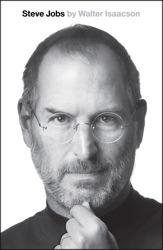
Steve Jobs
Walter Isaacson's authorized Steve Jobs: forty interviews covering the garage, the 1985 ouster, Pixar, and the return that made the iPhone.
2,415-word summary · 11 min read
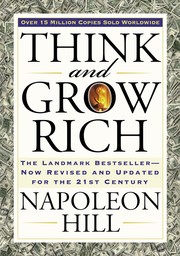
Think and Grow Rich
Hill teaches desire, faith and autosuggestion, distilling lessons from Carnegie interviews into thirteen principles for success.
2,458-word summary · 11 min read

Elon Musk: Tesla, SpaceX, and the Quest for a Fantastic Future
Ashlee Vance traces Elon Musk from a rough Pretoria childhood through PayPal, Tesla and SpaceX.
2,286-word summary · 10 min read

Who Moved My Cheese?
A tiny parable about two mice and two little people hunting cheese in a maze, and why adapting to change beats waiting for old days to return.
2,533-word summary · 11 min read
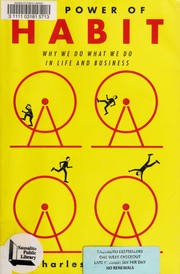
The Power of Habit
Why we do what we do: the cue routine reward loop, keystone habits, and how companies and movements use the same science, from toothpaste to the bus boycott.
2,207-word summary · 10 min read